The following is the second article in the series Trachtmaokas, Parteras, and Midwives: 100 Years of Maternal Care in Chihuahua’s Mennonite Campos
In the years following the Mexican Revolution, a Mennonite midwife, Susanna Shellenberg, whose life and work was referenced in Part 1 of this series on the history of midwifery and maternal care, was ordered by the government to stop attending births and providing the local communities of Cuauhtémoc, Cusihuiriachi, and Santa Rita with herbal remedies. What happened next was the result of a perfect storm of contemporary socio-political and religious dynamics unfolding at the national level, as well as changing sentiments about midwifery and traditional healing that coincided with the development of Mexico’s national public health system and its focus on modernizing medical treatment in rural areas.
The years following the Mennonites’ arrival in San Antonio de los Arenales (modern-day Cuauhtémoc, Chihuahua, Mexico,) from Canada in 1922, were marked by an intense period of national political and social reorganization following the Mexican Revolution. Pancho Villa’s soldiers in the north and Emiliano Zapata’s soldiers in south and central Mexico, returned home to conditions that were similar under the dictatorship of Porfirio Diaz and continued pushing for increased land reform through armed revolt and political action. Some of these conflicts played out in and near the Mennonite Campos, detailed by local historian José Luis Domínguez in his book The Other History of the Mennonites (La Otra Historia de los Menonitas), and led to the creation of the Two Hundred Colony (Colonia Dos Cientos), so called for the 200 pesos paid for in exchange for giving up their claim to land now occupied by Mennonites.1
President Álvaro Obregón, who during his term (1920-1924) granted privilegium to the Mennonites to settle in the state of Chihuahua, enforced land reform provisions that had been laid out in the 1917 Constitution, but had not implemented in practice into the Mexican government’s infrastructure. He was viewed by many as a force that quelled unrest and that navigated the unification and modernization of Mexico, while negotiating increased commercial relations with the United States. However, in years following his term (1926-1929), an armed conflict, known as the Cristero War (La Cristiada), raged in the western and central regions of the country (excluding border states like Chihuahua) between President Plutarco Calles’ anti-clerical forces that advocated for a secular state and the enforcement of punitive “Calles Laws” and the Cristeros who supported the Catholic Church. In 1928, Álvaro Obregón succeeded Calles and was re-elected president, but was assassinated soon after because of his support of Calles and his anti-Catholic policies. A peace between Calles’ forces and the Cristeros and was brokered in 1929 through a complex web of international negotiations, which included a U.S. ambassador, the Knights of Columbus, and representatives from the Vatican.2
The 1930s ushered in the beginning of a period of relative stability and the election of Lázaro Cardenas in 1934 marked an increased push to modernize Mexico, with special attention to its rural areas. This period of reorganization, while tumultuous, shaped the economic, socio-political and religious dynamics in Mexico to this day and gave birth to some of modern Mexico’s institutions such as the Ejidal public land system and the national public health system3 and serves as the historical backdrop to the following oral history testimony concerning a confrontation between a Mennonite midwife, Susana Shellenburg, two local Cuauhtémoc doctors, and the Mexican government.
Coinciding with the drafting of the 1917 Constitution, which focused on land reform, the roles and responsibilities of the secular, centralized federal government, and the protection, fundamental human rights of Mexican citizens, which included healthcare, Mexico also created the first iteration of its national department of public health (Departamento de Salubridad Pública) that focused on the provision of potable water, the prevention and treatment of contagious diseases, and the launching of vaccination campaigns. By 1931, the State Health Services (Servicio de Sanidad de los Estados) was established to build health infrastructure and access in rural areas and was the precursor to the national public health system that Mexico has today that was created in a variety of iterations beginning in the 1940s.4
The following oral history, which was shared with Casa Geburt Midwifery Training School by Susanna Thiessen, Susana Shellenberg’s great-grandaughter, occurs in the midst of these sweeping national public health campaigns and reforms.
“My great-grandmother [Susana Shellenberg] was born in Canada in 1905 and was the wife of Heinrich Shellenberg. Susana learned how to attend births and how to heal the sick with herbs from two traditional Jewish women in Canada.
In 1927, Heinrich, Susana, and their two daughters came to Mexico. At that time, there were no doctors in the Cuauhtémoc area. She immediately began to care for the sick. After some years in Mexico, she also began to provide midwifery services. She served in the Campos Menonitas, as well as in the Mexican ranches. Sometimes, people came for her in the middle of the night in a horse and buggy to take her to attend births or to heal the sick.
Many times, the people were so poor, they couldn’t even offer her a coffee. She attended many births where she didn’t receive payment of any kind. She also took along baby clothes and blankets because she knew that the people didn’t have anything to keep their babies warm.
Some years later, doctors began to arrive in Cuauhtémoc, including Dr. Cazale and Dr. Barba Cornejo. The city had grown with the passing of time. There were people who were jealous of the type of help that Susana was providing and made a legal complaint against her with the government. She had to stop helping people for a time until some Mexican people that she had helped before said, “This woman saved our families’ lives and we want her to continue helping people.” The Mexicans fought for Susana until after some time, the government gave her a permit to be able to continue working freely.”
Despite tensions surrounding land disputes between Mestizos and Mennonites during this period as well as accusations that the government was giving preference to the Mennonites as a religious group in a state that purported secular governance, Susanna’s rapport with the local Mestizo community was so strong that they came to her defense and demanded that she be allowed to continue to practice. Additionally, the local community’s support of Susanna reveals resistance of many within the rural population to embrace the modern medical infrastructure they felt was being imposed on them by outsiders from Mexico City. To avoid additional unrest in an already delicate socio-political, economic and religious environment, the government conceded to the will of local Cuauhtémoc residents and Susanna was allowed to continue to practice.
Though the Mestizo residents advocated on behalf of Susanna Shellenberg and she was given a special permit by the government to continue practicing, Susana’s story is representative of a common theme occurring at that time in Mexico. As medicine became professionalized in Mexico, midwifery was seen as a threat to medical practice the woman-centered model of maternal provided by midwives was replaced by an almost exclusively male, professional medical establishment, which in keeping with commonly held views of the time, viewed pregnancy and birth through the lens of pathology and did not provide women a voice or position within the new modern medical system.
Doctor María Graciela Freyermuth Enciso, a researcher for Mexico’s National Social Development Policy Institute (CONEVAL) and a social anthropologist who focuses on maternal health and midwifery while simultaneously chronicling the history of midwifery in Mexico writes, “Midwifery almost went extinct in Mexico….midwives were criticized by doctors and didn’t have a voice in that transition.”5 Though Susanna continued to work as a midwife and herbal healer for the remainder of her life, she was the exception not the rule.
Susanna Thiessen describes her great-grandmother’s work after she was given permission by the government to begin practicing again saying,
“My great-grandmother continued her work out of her home where she had a small clinic and saw patients freely. Sometimes, people had kidney problems and she attended to them for weeks in her home. At first, she ordered the products for her natural remedies from Germany, but there was a problem with the package delivery and she began to place orders with Mexican companies. She needed these herbs to care for sick patients. Sometimes, she sold a little of the medicine, but very cheaply, because many times people didn’t have money.
She had two books with medicinal recipes and she made many of the remedies herself. She worked into her old age. She was eighty years old when she attended her last birth and it was the birth of her great-grandson, her granddaughter’s son. This child’s mother said that this child who was born with his great-grandmother was stronger than the other children who were born in hospitals with doctors.”
By the 1980s, when Susanna Shellenberg died, births in the Tres Culturas Region with the exception of the most rural and marginalized women from Mestizo, Mennonite, and Rarámuri backgrounds, were almost exclusively attended in hospitals. The vast majority of these births were performed by C-section, which matched trends nationally. Though the national health system drastically improved health outcomes in many areas, particularly in the prevention and treatment of infectious disease, the maternal and infant mortality rates, particularly in rural areas of Mexico, remain so high that World Health Organization, federal, state and local governments, and health care workers in the public, private, and nonprofit sectors are continuing to seek the development of community health models and culturally responsive maternal care that will improve mortality outcomes.6
Part 3 of this series will explore the beginnings of the resurgence of midwifery in Mexico generally and the Mennonite Campos specifically, exploring the origins nurse midwives who beginning in the 1970s, began practicing integrating the knowledge and community trust held by traditional midwives with modern medical training, giving particular attention to the experiences of a nurse and midwife who is still practicing in the Campos today, Aganetha Loewen Wiens.
[Oral History translated from German to Spanish by Sara Banman, a graduate of Casa Geburt’s midwifery training school, also currently working in the Campos Menonitas.]
[Oral History translated from Spanish to English by Abigail Carl-Klassen.]
1. José Luis Domínguez. La otra historia de los menonitas. (Chihuahua: Ediciones Kleidi, 2015)↩
2. Michael J. Gonzales. The Mexican Revolution 1910-1940 (Albuquerque: University of New Mexico Press, 2002)↩
3. Ana Cecilia Rodríguez de Romo and Martha Eugenia Rodríguez Pérez. Historia de la salud pública en México: siglos XIX y XX. História, Ciências, Saúde-Manguinhos, no. 2 (1998): 293-310. ↩
We are living through very challenging times. 2020 thus far has been marked by uncertainty, upheaval, and loss of many kinds. For the first time in a long time, we are facing a collective hardship that requires us to make personal sacrifices for the good of society. Many have turned to history, studying events like the Spanish Flu and the Great Depression in an attempt to glean wisdom and find a path forward for our nation. At Eastern Mennonite University we can also look to the responses to these events in our own history—the Spanish Flu arrived just a year after the school opened its doors and a decade later the Great Depression tested the school just as it began to find its footing. I wrote earlier about the Spanish Flu at EMS, and today want to focus on the Great Depression. In each of these stories, we find examples of resilience that can inform our response today and give us hope for the times ahead.
October 29, 1929, better known as Black Tuesday, ushered in financial downfall all over the world and set the stage for the Great Depression. The still-young Eastern Mennonite School was not exempt from its impact. EMC historian Hubert Pellman writes in his book Eastern Mennonite College, 1917-1967 that “in the period 1929-34 the expansion of curriculums to qualify for and hold state accreditment and the decrease of enrollment and other straitening financial conditions caused by the depression made the problem of finances particularly acute.”1 But with community sacrifice, frugality, and ingenuity the school was able to survive and thrive.
Even before the Great Depression hit, faculty and staff were no strangers to low compensation, being paid only one half of what other faculty in the area made. But this financial problem would require even greater sacrifice—“on Sept. 11, 1931, the faculty heard that the school lacked the money to pay its employees.”2 The dedicated faculty and staff went above and beyond to make up the difference, offering to give up another ten percent from their already meager salaries. A select few were pressed into giving up even more–the three full-time women on the faculty, Sadie Hartzler, Ruth Hostetter, and Dorothy Kemrer, were chosen by the faculty to receive a two-thirds salary, because they were unmarried and it was determined that “those who are married should be the last to suffer.”3 (Unsurprisingly, all the married faculty were men.) Ruth Stolzfus Stauffer Hostetter said that the women, “knew through those early years that single women didn’t get the pay of married men. We recognized that it was happening. But we seldom talked about it.”4 Their reduced pay continued from 1931 until 1934, when their full salaries were reinstated.5 Hostetter claimed that there was “comfort in numbers” since so many other Mennonite institutions and their workers were feeling the same crunch, and that she just “was thankful for an opportunity to serve in a professional setting.”6
Eastern Mennonite School Faculty, 1930 Source: EMS Journal, 1930
The executive committee of EMS also thought of creative ways to reduce the number of faculty and staff without firing anyone. In addition to those working for severely reduced wages, some took on lighter course loads and others were encouraged to return to school to continue their education, with the hope that they could return once things improved.7
The dedicated faculty and staff placed the needs of the school above their own to realize the school’s mission of distinctly Mennonite education and their sacrifices did not go unnoticed or without thanks. In the August 1931 Eastern Mennonite School Bulletin, Dean C.K. Lehman wrote a very affirmative report about the faculty of EMS, praising them for “laboring under handicaps,”8 but continuing to put forth their best work as educators. H.D. Weaver, business manager at the time, also gratefully noted the ten percent reduction in salary that the faculty took.9
Cost-cutting around campus was also necessary, and this was championed by President A.D. Wenger, who “taught and exemplified frugality.”10 Even before the Great Depression, Wenger was intent on penny pinching and keeping EMS to a strict budget. Pellman reports that “students paid two cents a term for every watt of light above forty,”11 that they were expected to study together in a study hall instead of their dorm rooms to conserve electricity, and that modern conveniences like telephones and adding machines were not brought to EMS until almost a decade after the school’s inception. In the years before the depression this budget-saving tactic was effective, with quite a few years under Wenger’s administration ending in the black.12
Wenger’s frugality was essential during the Great Depression and his ingenuity was just as integral to the school’s continuing survival. To help students afford tuition and make it feasible for them to continue attending EMS, he started the Sharon Manufacturing Company along with Ernest G. Gehman and E.C. Shank. They manufactured cast aluminum toys and operated out of a farm building on EMS’s campus. The company was the “only maker of cast aluminum toys in the United States,”13 and was quite successful in its heyday, selling to large department stores like Woolworths and Kresge’s. But the greater success that emerged from this business risk was the employment of up to forty EMS students which allowed many to afford tuition and continue attending. Ultimately, however, the company met its end in 1934 when it was shut down by the U.S. Government.14
Toy cars produced by Sharon Manufacturing Company
Notice for Sharon Manufacturing Company in an EMS Bulletin Source: EMS Bulletin Vol. XII No. 8 Aug. 1933
As evidenced by the size and scope of EMU today, Eastern Mennonite School survived the Great Depression and thrived in spite of it. Its financial setbacks were great at times, but it had loyal faculty, students, and constituents who were willing to work together in order to see the mission of EMS realized. The administration succeeded through their frugality, innovation, and shrewd decision-making that required sacrifice but respected the dignity of everyone in the community. As we continue to grapple with the challenges of our times, we can find inspiration and hope in the ingenuity, tenacity, and resilience of those who came before us.
Long-lost datebooks of Holocaust architect Heinrich Himmler from 1943 through the end of the Second World War have recently resurfaced and been published. Upon opening the new volume, which clocks in at more than a thousand pages, I was startled to see that the first entry—for January 1, 1943—describes meetings between Himmler and the leading representative of Mennonites in the Third Reich, Benjamin Unruh. Historians had previously known about this encounter from letters that Unruh penned for fellow Mennonite churchmen following a three-day summit with Himmler at the commander’s SS headquarters in East Prussia. Himmler’s date calendar confirms Unruh’s reports in striking detail, offering new insight on Mennonites’ relationship with the Nazi state.1
The newly published Himmler diaries show clearly why the powerful head of the SS wanted to meet with a delegate from the Third Reich’s Mennonite denomination during the darkest days of the Nazi assault on Jews and other perceived enemies, when Hitler’s territorial control of much of Europe was at its height. Unruh had been seeking such a meeting with a high-level Nazi like Himmler for years—unsuccessfully. Yet in the autumn of 1942, it had been Himmler who had reached out to Unruh to invite him for a tête-à-tête.2 “Guess whose greetings I bring for you from Russia?” Himmler asked Unruh when the two men broke bread. “For example, from Frau Berg,” Himmler continued, naming an elderly midwife he had recently met in Nazi-occupied Ukraine.3
The German war artist Heinz Hindorf sketched an elderly Mennonite woman (Maria Dyck, born 1867) in the Chortitza settlement in Nazi-occupied Ukraine, 1943. The Mennonite midwife Helene Berg lived in the larger Molotschna colony to the southeast. Source: Mennonite Life 13, no. 2 (1958): 55.
Hearing Himmler utter the name Helene Berg must have been a remarkable moment for Unruh. The eighty-four-year-old midwife had long been a pillar of the Molotschna Mennonite colony in southeastern Ukraine, where Unruh himself had been a prominent leader prior to the First World War and the Bolshevik Revolution of 1917. Unruh, an ardent anti-communist, had been exiled to Germany after the formation of the Soviet Union. The midwife Berg, meanwhile, had remained behind with another 100,000 Mennonites in the fledgling USSR. Unruh had watched with horror from his adopted homeland of Germany as coreligionists in once thriving Ukrainian colonies like Molotschna faced hardship upon hardship: famine, collectivization, deportations, and executions.
Unruh’s separation from Berg and the other Mennonites in Ukraine had lasted for two decades. During this time, Unruh worked tirelessly to publicize their plight in the Soviet Union, which—especially after the rise of Joseph Stalin—targeted religious groups, once wealthy people, and communities of German heritage with brutal violence. Unruh assisted thousands of Mennonites to leave the Soviet Union, and he helped organize food and clothing drives for those who stayed. Sharing a conspiracy theory with the nascent Nazi movement about communism being a Jewish plot, Unruh recognized a potential partner. In 1933, he welcomed Hitler’s rise to political power.
Unruh made his first financial donation to the SS in 1933, but another decade would pass before he met in person with the notorious head of this violent organization.4 During this period, Unruh chose to remain stateless, never applying for German citizenship, which he felt might harm his ability to advocate for downtrodden Soviet Mennonites on the international stage.5 He became the official representative in Germany of several major denominational aid organization abroad. His dealings with high government officials also rendered him an invaluable asset for Germany’s own Mennonite churches, which he increasingly came to represent in the eyes of Third Reich bureaucrats. Yet not until the Second World War did Unruh achieve the full influence he sought.
Germany’s Mennonite leadership had begun trying to win an audience with Himmler or another top Nazi official in 1937. This was arguably the single most dangerous year for Mennonites’ own legal position as a tolerated denomination operating openly in the Third Reich. In 1937, several threats to Mennonite independence arose simultaneously. In that year, Nazi authorities expelled a small group of Anabaptists known as the Bruderhof. Party censors grew suspicious of Mennonite ties to coreligionists abroad, especially those who espoused pacifism (a theological position that Germany’s Mennonites abandoned). Most concerning to Unruh and his colleagues, two separate Nazi Party chapters had questioned whether members could keep Mennonite church affiliation.6
Keen to demonstrate the compatibility of Mennonitism and Nazism, Unruh and his church allies pursued every avenue. Unruh pressed Mennonites’ case as part of two delegations to the Nazi Party headquarters in Munich.7 Such efforts contributed to a ruling that “Mennonites can also be members of the NSDAP.”8 Yet issues persistently arose, especially opposition in various Reich services to exempt Mennonites from swearing oaths. Church leaders mulled a direct appeal to the Führer.9 Those with personal connections to his deputies, including Rudolf Hess and Himmler, approached these men by letter. But they met limited success. In 1938, the SS even temporarily banned Mennonites, news that reportedly “landed like a bomb” among one ministerial group.10
What changed Himmler’s mind? The SS chief had personally rejected an appeal from Mennonite leaders to allow the marriage of a preacher’s daughter with an SS man to go forward. Himmler insisted on both unusual blood purity and intense ideological commitment from female as well as male members of his SS “clan community.” In 1938, he clearly felt that “The foundations of the Mennonite sect are in no way reconcilable with the worldview of the Schutzstaffel.”11 Yet four years later, he had amended his position. The outbreak of World War II and Nazi expansion into Eastern Europe brought the large colonies in Ukraine to Himmler’s attention. “I have been in the Ukraine and seen the people there,” he reportedly told Unruh. “Your Mennonites are the best.”12
Himmler had once feared that Mennonites could contaminate the SS gene pool. His embrace of Mennonites in Ukraine during the Second World War, conversely, stemmed from a new belief that members’ blood could prove valuable for the new Aryan order that the Nazis hoped to build in Eastern Europe. When German armies invaded the Soviet Union in the summer of 1941, they discovered hundreds of thousands of German speakers living in Ukraine, including some 35,000 Mennonites. Himmler and other leading Nazis saw these local people as a “master race” that had previously been repressed by Jews and communists under Soviet rule. Himmler dispatched death squads to Ukraine to murder the region’s 1.2 million Jews, including those in Mennonite areas.13
The Nazi conquest of Ukraine cheered Unruh and other Mennonite leaders in Germany, who had long prayed for the demise of Bolshevik tyranny over coreligionists to the east. Unruh dispatched numerous letters to his old friends in Ukraine, asking for news. Among those he reached was the midwife in Molotschna, Helene Berg. This elderly woman told Unruh of her great joy in being liberated from Soviet rule. Berg’s letters described the horrors of communism as well as the new privileges that German speakers like herself received through racial warfare. Like many residents of Molotschna—which the Nazis renamed Halbstadt (a more German name, to their ears)—Berg studied Nazi propaganda and developed good relations with agents of occupation and genocide.14
A map of prewar German-speaking settlements in Ukraine (shaded black) and of areas the Nazis planned to Germanize during and after World War II. The striped area around Crimea encompasses possible borders for the hypothetical “Gotengau.” Extant settlements like Halbstadt (formerly called Molotschna and located just north of Melitopol) were either to be relocated to Gotengau, included within an expanded version of it, or built up as racially pure “strongholds” in regions otherwise populated by Ukrainians and Russians. Source: Martin Dean, “Soviet Ethnic Germans and the Holocaust in the Reich Commissariat Ukraine, 1941-1944,” in The Shoah in Ukraine: History, Testimony, Memorialization, ed. Ray Brandon and Wendy Lower (Bloomington: Indiana University Press, 2008), 264.
From late 1941 through mid-1942, Himmler enthusiastically read the reports of his functionaries as they murdered Jews and distributed aid to German speakers like Helene Berg. The Holocaust of bullets in Nazi-occupied Soviet territory soon peaked, and the weight of the genocide shifted to centralized extermination camps in occupied Poland.15 The geographical boundaries of the Nazi empire were nearly at their zenith—and the regime’s wartime administrative machinery for Ukraine expanded apace. By September 1942, the Halbstadt colony where Berg lived had come under the territorial jurisdiction of the Reich Commissariat Ukraine. Day to day activities in the settlement, however, remained under SS rule. Himmler himself would soon make an appearance.
Himmler met Berg during a six-day tour of southeastern Ukraine that spanned late October and early November 1942. The SS chief had recently held meetings with Hitler about Germanizing Ukraine, including discussions about Halbstadt and other Mennonite colonies. Himmler had given the task of envisioning Eastern Europe’s racial reorganization to Konrad Meyer, a scholar and SS officer. Meyer drew up a secret master document, General Plan East, according to which populations from Halbstadt and elsewhere would form the kernel for a new Nazi province called Gotengau. Himmler’s meetings with Hitler yielded a bevy of new ordinances for Ukraine. These, and his trip to Halbstadt, constituted the first practical steps toward the hypothetical Gotengau.16
Himmler arrived in Halbstadt at 4:30pm on October 31, 1942. He had just come from Crimea and was traveling with a retinue of high-ranking SS men. The colony’s own SS administrators had planned a full schedule. During an “Ethnic German Evening,” local youth performed a pro-Nazi pageant. Himmler then delivered a speech to village mayors, proclaiming that they would receive German citizenship and material restitution for their hardships under communism. The next morning, Himmler spoke to a general assembly (with marches from Nazi youth groups and paramilitary formations), and he visited workshops and an educational institution.17 The SS chief reportedly inducted hundreds of Mennonites into the Waffen-SS and bestowed several honors.
The midwife Helene Berg appears to have numbered among Himmler’s honorees, likely on the morning of November 1. Subsequent correspondence shows that Himmler granted her a monthly pension from SS coffers of 100 Reichsmarks.18 He chose to celebrate Berg “as a midwife, who brought over 8,000 Ethnic German children into this restless world.”19 In her eighty-four years, Berg had certainly not performed thousands of births with any express intention of expanding the biological stock of an Aryan master race. But for Himmler, this had been the result—as essential a service to Nazism as could have been rendered by any male soldier. Berg’s example justified to Himmler’s thinking the future subjugation or removal of all Halbstadt’s remaining non-Germans.
The SS architect Heinrich Himmler toured the Mennonite colony of Halbstadt in southeastern Ukraine in 1942. Among those pictured here are German Red Cross nurses who had come to Ukraine during the war. Himmler exhibited interest in matters of health and racial hygiene while visiting Halbstadt, including meetings with a local doctor named Johann Klassen and with the midwife Helene Berg. Source: Mennonite Heritage Centre, Photograph 351-2.
Himmler’s meeting with Benjamin Unruh two months later concerned plans to import Germans from abroad and to murder or expel other peoples so that much of southeastern Ukraine would be a pure German territory along the lines of the Halbstadt colony. Over three days at the Hochwald bunker in East Prussia from December 31, 1942 to January 2, 1943, Himmler dined or otherwise conferred with Unruh on six occasions. His diary shows that others present during the encounters included leading SS figures responsible for perpetrating genocide in Ukraine, for forging Ethnic German policy, and for long-range racial engineering.20 Unruh subsequently relayed Himmler’s desire to acquire more German Mennonite settlers from the Americas. “The highest importance was placed on the resettlement,” he reported, “which should be executed very generously.”21
Unruh welcomed Himmler’s vision of bringing thousands of Mennonites from the Americas for colonization in Eastern Europe, alongside other German-speakers from locations as far-flung as Palestine and Italy. Unruh had already helped arrange modest migrations of his coreligionists to the Third Reich from Brazil, Canada, and Paraguay. Sponsoring much larger waves after the war would serve Nazi objectives and Unruh’s own. When speaking with Himmler, Unruh leveraged such prospects against more immediate religious concerns. Himmler agreed to allow ordination of Mennonite elders in Ukraine, and to consider exemptions from swearing oaths. Meanwhile, he redoubled efforts to ensure the region would be “totally Germanized, that is, totally settled.”22
Nazi losses on the eastern front thwarted Himmler’s dreams for a racial Gotengau in southeastern Ukraine. The SS began evacuating German settlers in 1943. As the Red Army retook Ukraine by 1944, Himmler simply shifted colonization schemes west.23 Most Mennonite refugees found new lodging in Nazi-occupied Poland. Benjamin Unruh, now receiving a monthly salary from the SS, oversaw their contacts with high Nazi offices.24 Among his concerns was finding a suitable home for Helene Berg, who had traveled by wagon from Halbstadt to Poland and was living in a transit camp. Unruh’s SS handlers were well aware of Himmler’s personal interest in this midwife, and they helped arrange her transfer to a Mennonite home for the elderly in the city of Marienburg.25
In the end, whether Berg was grateful for Himmler’s attentions is difficult to know. As the Third Reich collapsed in 1945, surely the comforting words shared by Unruh rang hollow: “Every birth is so difficult and the birth of a new Europe especially.”26 With the Red Army bearing down on Marienburg, most of the city’s able-bodied Germans fled. They abandoned Berg and the other residents of the home for the elderly. Over the next eighteen months, Berg witnessed atrocities committed against the few Germans who remained, including the rape of her caretaker. By the time Poland expelled her to western Germany in mid-1946, Berg had little incentive to talk about Himmler, dead for over a year.27 Yet she appreciated renewed contact with “dear, good Beny.”28
The history of Himmler’s Mennonite midwife reflects a troubling intersection of denominational activism and Nazi genocide during the Second World War. For Himmler, Helene Berg and the thousands of ostensibly Aryan children she had helped deliver constituted both past and future of a violently cleansed utopia, free from Jews and other so-called racial aliens. Mennonite leaders like Benjamin Unruh participated in this project, alternately sharing Himmler’s vision or using promises of future cooperation to attain their own religious goals. And what about Berg herself? The archival documents by and about her suggest intriguing new directions for research about Mennonites, reproduction, and the elderly under fascism—topics still waiting to be explored.
Ben Goossen is a historian at Harvard University. He is the author of Chosen Nation: Mennonites and Germany in a Global Era, published by Princeton University Press. Thanks to Arnold Neufeldt-Fast for providing sources and to Madeline J. Williams for her comments.
1. The papers, discovered in a Moscow archive in 2013, have been published as Matthias Uhl, et al., eds., Die Organisation des Terrors: Der Dienstkalender Heinrich Himmlers 1943-1945 (Munich: Piper Verlag, 2020). Another section, covering the years 1941-1942, had already been found in 1990 and appeared in print as Heinrich Himmler, Der Dienstkalender Heinrich Himmlers 1941/42 (Göttingen: Wallstein Verlag, 1999). On Unruh’s meeting with Himmler, see Benjamin W. Goossen, Chosen Nation: Mennonites and Germany in a Global Era (Princeton: Princeton University Press, 2017), 147-156.
2. This invitation came on the recommendation of an SS officer and longtime scholar of Mennonites named Karl Götz, whom Himmler planned to install as the head of the Overseas Department of the Ethnic German Office after the war. Götz, who had known Unruh since 1934, apparently tried to establish a meeting between Unruh and Himmler for November 1941. Götz seems to have written to Unruh again in September 1942—during the period when Himmler and Hitler were conferring with advisors about Ethnic German policy in Ukraine. At this time, Unruh provided documents about Mennonites to Götz, who passed this information to Himmler. Benjamin Unruh to Gerhard Hein, July 25, 1943, Vereinigung, box 3, folder: Briefw. 1943, Mennonitische Forschungsstelle, Bolanden-Weierhof, Germany, hereafter MFS. Himmler’s staff then reached out to Götz on October 2, 1942, asking for Unruh’s address. Geheime Staatspolizei to Karl Götz, October 2, 1942, T-81/143, archived in Captured German and Related Records on Microfilm at the National Archives and Records Administration, College Park, Maryland (hereafter NARA). On Götz, see Benjamin Goossen, “‘A Small World Power’: How the Third Reich Viewed Mennonites,” Mennonite Quarterly Review 75, no. 2 (2018): 173-206.
3. “‘Notizen”’ über die Unterredung des Reichsführers SS Heinrich Himmler mit dem Verteter der Rußlanddeutchen in der Ukraine, Südrußland, Professor Dr. Benjamin Heinrich Unruh, Karlsruhe/Baden, an Sylvester 1943 im Hauptquartier Himmlers, in dessen Wohnwagen,” n.d., Nachlaß Benjamin Unruh, box 2, folder 7, MFS.
4. Unruh’s 1933 financial contribution made him a Supporting Member of the SS with the membership number 168,232. Benjamin Unruh to Walther Kolrep, January 30, 1940, Benjamin H. Unruh Papers, box 2, folder: Misc. Unruh Papers, Mennonite Library and Archives, North Newton, Kansas, USA.
5. Until Unruh received his invitation to visit Himmler in November 1942, he had been trying unsuccessfully through civilian channels to receive permission to travel to Nazi-occupied Ukraine to meet with Mennonite coreligionists. In September 1942, he even applied for German citizenship as a means of greasing the bureaucratic wheels. Ernst Kundt, “Einbürgerung von Professor Dr. B.H. Unruh,” September 8, 1942, R 127518, Politisches Archiv des Auswärtigen Amts, Berlin, Germany. Just as Mennonite leaders in the Third Reich struggled to gain the attention of prominent Nazis during the 1930s, however, Unruh was unable to reach wartime Ukraine for primarily religious purposes using civil service contacts. Commenting retrospectively on his 1942 rejection by the East Ministry, Unruh recalled: “At this point, it was entirely clear to me that one path alone could lead to my goal [of reaching Ukraine]: namely through the Reich Commissar for the Strengthening of Germandom [Himmler].” Unruh to Hein, July 25, 1943. Unruh never actually reached Ukraine: he planned to visit in early 1943 after his visit with Himmler, but unfavorable military conditions other factors consistently delayed his trip until the late summer, at which time the SS had begun evacuating Ukraine’s Mennonite colonies due to Red Army advances.
6. This was a new development given that Mennonites with church membership had been joining the Nazi Party since 1920. Around August 1937, NSDAP Ortsgruppe Rom temporarily stripped Paul Reymann of his membership. Emil Händiges to Daniel Dettweiler, Benjamin Unruh, Ernst Crous, Abraham Braun, and Gustav Reimer, June 23, 1938, Vereinigung, box 2, folder: Briefw. 1938 Jan.-Jun., MFS. At nearly the same time, a Nazi Party court in Tübingen questioned the membership of a Mennonite farmer named Daniel Schneider. Emil Händiges to Arbeitsausschuß der Vereinigung, September 24, 1937, Vereinigung, box 2, folder: Briefw. 1937 Jul-Dez., MFS.
7. Daniel Dettweiler, Benjamin Unruh, and Gustav Reimer visited the Brown House on July 6, 1938. During the meeting, Unruh emphasized: “As a church we unconditionally support the [Nazi] Party. In West Prussia and Danzig, the great majority of elders and preachers are members of the Party.” Gustav Reimer, “Bericht über die Verhandlung in Braunen Haus in München am 6.7.1938, betreffend die Regelung der Eidesfrage,” Vereinigung, box 2, folder: Briefw. 1938 Jul.-Dez., MFS. Hendrik van Delden, Benjamin Unruh, Gustav Reimer, and Daniel Dettweiler attended another meeting at the Brown House on March 16, 1939. Emil Händiges to Ernst Crous and Abraham Braun, April 14, 1939, Vereinigung, box 3, folder: 1939, MFS.
8. Ruling of NSDAP Kreisgericht Celle I, May 12, 1938, quoted in Goossen, “‘A Small World Power,’” 204.
9. Mennonite leaders contemplated writing to Hitler in August 1937. Emil Händiges to Ernst Crous and Abraham Braun, August 31, 1937, Vereinigung, box 2, folder: Briefw. 1937 Jul-Dez., MFS. Church leaders again considered contacting Hitler in August 1943 regarding the use of oaths in the Reich Labor Service. Emil Händiges to Benjamin Unruh, Ernst Crous, and Abraham Braun, August 17, 1943, Vereinigung, box 3, folder: Briefw. 1943, MFS. Instead of approaching Hitler, however, Unruh pursued the matter through his contacts with Himmler, who ultimately approved Mennonites’ exemption from oaths in the Reich Labor Service. Gerhard Wolfrum to Benjamin Unruh, February 28, 1944, Nachlaß Ernst Crous, folder: Briefw. 1944, MFS.
10. The precipitating case concerned a proposed marriage between SS member Heinrich Krüger and a Mennonite woman, Erika Driedger. The head of Germany’s largest Mennonite conference reported on the rejection of this marriage by Himmler: “The communication of the decision landed like a bomb in the ministerial assembly in Kalthof on June 16, 1938, especially since numerous respected members of the Mennonite ministry wear the swastika on their breast with pride and joy as [Nazi] Party members.” Emil Händiges to Daniel Dettweiler, Benjamin Unruh, Ernst Crous, Abraham Braun, and Gustav Reimer, June 23, 1938, Vereinigung, box 2, folder: Briefw. 1938 Jan.-Jun., MFS. Himmler’s decision reflected a recommendation from the head of the Reich Main Security Office that “members of this sect cannot simultaneously be members of the SS clan community.” Chef des Sicherheitshauptamtes to Chef des Rasse- und Siedlungshauptamtes, April 9, 1938, NS 2/220, Bundesarchiv, Berlin, Germany. Quick action by Mennonite churchmen ensured that by 1939, members were once again admitted to the SS clan community, albeit with some suspicion.
11. Händiges to Dettweiler, et al., June 23, 1938. On marriage and the SS “clan community,” see Gudrun Schwarz, Eine Frau on seiner Seite: Ehefrauen in der “SS-Sippengemeinschaft” (Hamburg: Hamburger Edition, 1997).
12. Quoted in Diether Götz Lichdi, Mennoniten im Dritten Reich (Bolanden-Weierhof: Mennonitischer Geschichtsverein, 1977), 141.
13. Himmler met with detachments from Einsatzgruppe D in September 1941 and Einsatzgruppe C in October 1941, shortly before these death squads began wholesale murder of Jewish men, women, and children in and around the two largest Mennonite colonies in Ukraine: Molotschna and Chortitza, respectively. Peter Longerich, Heinrich Himmler: A Life (Oxford: Oxford University Press, 2012), 533, 537. See Gerhard Rempel, “Mennonites and the Holocaust: From Collaboration to Perpetuation,” Mennonite Quarterly Review 84, no. 4 (2010): 507-549.
14. One letter from Halbstadt reported: “Naturally Frau Berg, despite her advanced age…inquired about everything; including in the political realm. She has studied the Führer’s [Mein] Kampf with appropriate interest.” Berg reportedly also met with Karl Stumpp, whose East Ministry commando worked to identify and register Germans, Ukrainians, Russians, and Jews.Hans Spittler to Emil Händiges, May 7, 1942, Nachlaß Christian Neff, folder: Briefwechsel 1942, MFS. Berg herself reported meeting with an Einsatzgruppe member (“Among the first Germans [to arrive during the 1941 invasion] was SS-Mann [Heinrich] Wiens, originally from Muntau [Molotschna], who must once have been your student.”), and she deployed casual antisemitism in her correspondence with Unruh. Berg reported that religious life in Molotschna had not yet fully recovered from the Bolshevik period; in her church, “the praying [by a Baptist minister whom Berg disliked] is terrible, all mixed up such that one imagines oneself displaced to a synagogue [Judenschule].” Helene Berg to Benjamin Unruh, ca. April 1942, quoted in Benjamin Unruh, “Nachrichten aus Rußland,” May 22, 1942, Nachlaß Christian Neff, folder: Briefwechsel 1942, MFS.
15. The economics of genocide continued to link Ukraine’s Mennonite colonies with the Holocaust: Himmler ordered that clothes and household goods taken from Jews in Auschwitz and Lublin be sent to Halbstadt, Chortitza, and other settlements. Heinrich Himmler to Oswald Pohl and Werner Lorenz, October 14, 1942, T-175, roll 129, NARA. By November 1942, twenty-seven wagons of plunder had been sent from SS-Wirtschaftslager Lublin. Himmler, Der Dienstkalender, 603. Similar aid actions for Ukraine’s Mennonites continued into 1943.
16. Himmler and Hitler met on August 9, 1942 at the Führer’s Werwolf bunker in Ukraine to broadly discuss Ethnic German questions for the Reich Commissariat Ukraine. On this meeting and its aftermath, see Wendy Lower, Nazi Empire-Building and the Holocaust in Ukraine (Chapel Hill: University of North Carolina Press, 2005), 266. Himmler and Hitler met again on September 22, 1942 to discuss settlement in and around Crimea, including plans for 40,000 Ethnic Germans in Halbstadt and 15,000 in Chortitza. Himmler, Der Dienstkalender, 562-568. On the Nazis’ Gotengau settlement plans, see Norbert Kunz, Die Krim unter deutscher Herrschaft (1941-1944): Germanisierungsutopie und Besatzungsrealität (Darmstad: Wissenschaftliche Buchgesellschaft, 2005), 72-73.
17. Upon arrival, Himmler conferred with the SS officers Hans-Adolf Prützmann, Horst Hoffmeyer, and Hermann Roßner. Then he had one-on-one meetings with SS officers Claus Selzner, Hermann Harm, and Erwin Metzner. Himmler dined, then attended the pageant and spoke to the mayors. He lodged with a Dr. Haus. Around noon on November 1, following a short lunch, Himmler departed for Zaporizhia to view the Dnieper Hydroelectric Station. Himmler, Der Dienstkalender, 603-604.
18. Benjamin Unruh to Emil Händiges, November 18, 1943, Vereinigung, box 3, folder: Briefw. 1943, MFS.
19. Benjamin Unruh to Gustav Reimer, December 3, 1943, Vereinigung, box 3, folder: Briefw. 1943, MFS. Berg’s special treatment by the SS came at the direct expense of people considered undesirable by the Nazis. The Ethnic German Office provided her with a cow and a house in Halbstadt, and when the SS evacuated this colony to a more westerly part of Ukraine in 1943, officers found a new house for Berg. The SS requisitioned such lodging by force from local Ukrainians. See for example Jakob Neufeld, Tiefenwege: Erfahrungen und Erlebnisse von Russland-Mennoniten in zwei Jahrzehnten bis 1949 (Virgil, ON: Niagra Press, 1958), 125.
20. On December 31, 1942, Himmler met at 2:30pm with Werner Lorenz, Horst Hoffmeyer, Benjamin Unruh, Konrad Meyer, Heinrich Wiepking-Jürgensmann, and Herman Wirth. Himmler, Der Dienstkalender, 660. On January 1, 1943, Himmler lunched at 2:15pm with Lorenz, Hoffmeyer, Unruh, Ernst Rode, Josef Tiefenbacher, Karl Gesele, and Werner Grothmann. At 5:00pm, Himmler met with Lorenz, Hoffmeyer, and Unruh. At 9:30pm, Himmler dined with Lorenz, Unruh, Bernhard Frank, and a Captain Rickert. On January 2, Himmler lunched at 2:10pm with Lorenz, Unruh, and Fritz von Scholz. At 5:00pm, Himmler bade farewell to Lorenz and Unruh. Uhl, et al., eds., Die Organisation des Terrors, 64-66.
21. Benjamin Unruh to Ernst Crous, Abraham Braun, Christian Neff, Gustav Reimer, and Henrik van Delden, January 6, 1943, Vereinigung, box 3, folder: Briefw. 1943, MFS. Unruh further reported: “It has been agreed that Herr Obergruppenführer [Werner] Lorenz will personally take care of our matters, naturally in constant agreement with [Himmler]…. Regarding the resettlement [of Mennonites from the Americas], which will be of unimaginable scope, I do not want to pontificate. I have just been brought into this matter, and it will likely occur as I told our [Mennonite] people when they went overseas: we will get you back again! This assurance lives in the hearts of our brethren!” Benjamin Unruh to Emil Händiges, January 22, 1943, Vereinigung, box 3, folder: Briefw. 1943, MFS.
22. Heinrich Himmler to Konrad Meyer, January 12, 1943, quoted in Czeslaw Madajczyk, ed., Vom Generalplan Ost zum Generalsiedlungsplan (Munich: Saur, 1994), 256. After Meyer drafted the General Plan East in 1942, Himmler charged him with expanding this into a General Settlement Plan for all of Nazi-occupied Europe. According to Himmler’s wishes for this expanded plan, the areas envisioned for Gotengau in southeastern Ukraine were to include “all of Crimea and Taurida.” In the meantime, occupiers’ focus remained on building up smaller Ethnic German “strongholds.” In July 1943, Meyer traveled to Halbstadt to finalize plans to deport non-Germans still living there and to import urban and scattered rural Ethnic Germans from elsewhere in Ukraine. Ibid., 277-281.
23. For example, Gerhard Ritter, “Wunschträume Heinrich Himmlers am 21. Juli 1944,” Geschichte in Wissenschaft und Unterricht 5, no. 3 (1954): 162-168.
24. Emil Händiges to Hendrik van Delden and Abraham Fast, May 27, 1944, Nachlaß Ernst Crous, folder: Briefw. 1944, MFS.
25. When Unruh reported difficulties with local authorities in Danzig-West Prussia regarding the Marienburg home, an SS contact recommend that he appeal directly to Himmler: “I suggest that you explain to the Reichsführer-SS [Himmler]—it must naturally be written in a careful way—that the handling of Mennonites in Danzig and their few private wishes would not be without significance for the attitudes of the Mennonites overseas. And that it would be of great propagandistic importance for the Mennonites overseas if one could deal very generously with the Mennonites in Danzig and their desires.” Gerhard Wolfrum to Benjamin Unruh, ca. January 1944, quoted in Benjamin Unruh to Gustav Reimer, January 12, 1944, Nachlaß Benjamin Unruh, box 4, folder 21, MFS. While Unruh intended to contact Himmler about the matter, it is unclear whether the SS chief ultimately interceded. In any event, Berg arrived at the Marienburg home by March 1944, where Unruh visited her at that time. Benjamin Unruh, “Bericht über Verhandlungen im Warthegau im März 1944,” March 30, 1944, Nachlaß Benjamin Unruh, box 4, folder 21, MFS.
26. Benjamin Unruh to Helene Berg, February 3, 1944, Nachlaß Benjamin Unruh, box 4, folder 21, MFS. Unruh offered this sentiment in response to Berg’s report that the trek from Ukraine to Poland had required “difficult, yes very difficult efforts.” Helene Berg to Benjamin Unruh, ca. late January 1944, quoted in Benjamin Unruh to Gustav Reimer, February 3, 1944, Nachlaß Benjamin Unruh, box 4, folder 21, MFS.
27. Berg’s postwar recollections say nothing of her wartime encounters with prominent SS officers. After the fall of the Third Reich, she had incentives to downplay former links to Nazism and instead to emphasize her own suffering. Berg was in this respect typical of other Mennonites from Ukraine and also of Germans generally. See Marlene Epp, Women Without Men: Mennonite Refugees of the Second World War (Toronto: University of Toronto Press, 2000), 218; Elizabeth Heineman, “The Hour of the Woman: Memories of Germany’s ‘Crisis Years’ and West German National Identity,” American Historical Review 101, no. 2 (1996): 354-395.
28. Helene Berg, Unsere Flucht (Winkler, MB: Winkler Printery, 1947), 18. Upon her arrival in western Germany and return to the broader Mennonite community, Berg (then around 88 years old) professed her intention to emigrate to the Americas. Whether she achieved this goal or remained in Europe requires further investigation. Benjamin Unruh spent the rest of his life in West Germany, a somewhat diminished but nevertheless celebrated figure among Mennonites worldwide. A biography by his son, Heinrich Unruh, Fügungen und Führungen: Benjamin Heinrich Unruh, 1881-1959 (Detmold: Verein zur Erforschung und Pflege des Russlanddeutschen Mennonitentums, 2009), gives a sanitized and hagiographic account of Unruh’s life. See Gerhard Rempel, “Book Review: Fügungen und Füherungen,” Mennonite Quarterly Review 84, no. 2 (2010): 275-278.
In an earlier post to this blog, I explored how speakers of the standard German that is written and spoken in Central Europe have often been critical of the language situation among traditional Anabaptist sectarians who live in predominantly non-German-speaking societies like the United States and Canada. And some English-monolingual modern Mennonites in North America struggle to understand how bilingualism is not a cognitive impairment that endangers speakers’ spiritual health. They consider vernacular languages like Pennsylvania Dutch, Mennonite Low German (Plautdietsch), and Hutterite German (Hutterisch) as inadequate for communicating anything beyond everyday needs. Many also assume that bilingualism is a subtractive intellectual condition: if you know one language well, that must mean you can’t speak a second language with equal facility.
The belief that Pennsylvania Dutch, Plautdietsch, and Hutterisch are impoverished linguistic vehicles is contradicted by the fact that the Bible has been successfully translated into the first two languages, and translators are currently working to produce a version in the vernacular language of Hutterites. And for those who think that bilingualism is unnatural or unhealthy, well, it is no secret to psychologists and other researchers that the cognitive, social, and emotional benefits to knowing more than one language are manifold.
Another point of linguistic criticism directed at traditional Anabaptists is one that I will focus on here, and that has to do with their knowledge of standard or High German. Consider the image below.
This is the memorial marker for an Amish woman who passed away in Bonduel, Wisconsin, in 2002. The inscription at the top of the stone, “IN DER HIMMEL ISHT RUHE,” translates as “In Heaven there is peace.” Speakers of standard German would have no difficulty understanding this. Nevertheless, the sentence is at odds grammatically and orthographically with how it would ordinarily be written: “IN DEM HIMMEL IST RUHE”. The preposition in requires here the dative form of the masculine article, dem, and the verb ist is spelled without an “h”. Although some German speakers pronounce ist with an “sh” instead of an “s” sound, in German the “sh” sound is rendered as “sch”.
When European German speakers see examples like this memorial inscription, they are inclined to shake their heads at the producers of such texts for their supposedly faulty command of their “mother tongue.” One such critic is a prominent German professor of American studies at the University of Munich who shared his negative assessment of written standard German among Plain people in a three-volume reference work titled (translated) The History of North American Culture.
[T]he mother tongue of [German-speaking] immigrants is overwhelmed by the power of English. … This even applies to groups of speakers who live relatively isolated from the English-speaking majority. The publication Herold der Wahrheit of the Amish sect in Iowa is written in a strange mishmash of English syntax and Mennonite German. (Raeithel 1992, vol. 2, p. 403)
It is true that Anabaptist varieties of High German are at odds with how the language is used by Central Europeans, and the German professor quoted here is actually correct in attributing this divergence in the North American context to two sources, namely the German-derived vernacular languages spoken by groups like the Amish, and English, which most sectarians speak with native proficiency. In the gravestone inscription, for example, the lack of a dative marking on the article is due to the absence of that case in modern Pennsylvania Dutch; and the “sh” spelling is a carryover from English. Where critics like the German professor err, however, is in presuming that such forms of German represent a fall from an earlier state of linguistic grace.
To understand why North American Anabaptist varieties of standard German differ from what is used in contemporary Europe, a historical perspective is necessary. As I wrote in my earlier post, the descriptor “High” in High German has its origins in linguistic geography. The German spoken in northern Central Europe is called “Low” because of the flat landscape; as one proceeds south toward Bavaria, Switzerland, Austria, and northern Italy, the dialects in these regions comprise “High German.” The reason why the standard variety used in schools, media, and other relatively formal settings is also called High German is because it derives historically from the written dialects used in the High German dialect area, especially the east-central regions of modern Saxony and Thuringia. Contrary to popular belief, German dialects are not descended from the standard; if anything, it is the other way around.
The beginnings of a movement to develop a more or less unified standard variety of German go back to the fifteenth century, when Johannes Gutenberg’s development of movable type in 1439 revolutionized the production of written texts. The Protestant Reformation accelerated the standardization process through the dissemination of a variety of writings, many religious, including Martin Luther’s popular translation of the Bible, which appeared in 1534. Broader access to formal education led to higher rates of literacy, which also promoted the need for a standard variety of German, as did the increasing mobility of users of the language, especially merchants during the nineteenth century.
Yet standard German has never been monolithic, even today. In Austria, for example, a potato is called an Erdapfel, while in Switzerland people purchase a Billet to ride the train. In Germany, the words for these objects are Kartoffel and Fahrkarte. Differences in pronunciation and grammar (as well as spelling, a secondary linguistic phenomenon) can also be found across German-speaking Europe. In many instances, these differences are due to the twin reasons that account for the “mishmash” used by Amish-Mennonite writers in Iowa: Erdapfel derives from the dialects indigenous to Austria, and Billet is borrowed from French, a second language spoken by many Swiss Germans.
The further back in the history of standard German we go, the less standardized it was. Recent scholarship has begun to look closely at the features of regional High German varieties (landschaftliches Hochdeutsch) in earlier eras, especially the nineteenth century (cf. Ganswindt 2017). The legacy of regional High German can be found across German-speaking Europe today in so-called “regiolects,” oral forms of the standard language used by German speakers everywhere that are marked by regionalisms, especially in pronunciation and vocabulary.
When the ancestors of today’s traditional Anabaptist groups left Central Europe in large numbers in the eighteenth century, migrating eastward to Eastern Europe and Russia and westward to North America, the standard German they brought with them in their devotional literature, especially the Bible, hymnals, and prayer books, reflected the contemporary diversity across the varieties of regional High German. At that time, when German speakers put quill to paper, they usually had little concern for uniformity in the way they wrote as long as they were understood by their readers. Going back to the early sixteenth century, even Martin Luther was inconsistent in the way he wrote German. For example, in his 1522 translation of the New Testament he spelled the words for ‘time’ and ‘and’ alternately as both zeyt and zeytt and vnd and vnnd. And Luther spelled the name of the city of Wittenberg in at least 14 different ways over the course of his life (Heine 2016). The early modern English-speaking world was no different. The family name of William Shakespeare, for example, was spelled in multiple ways, including by the Bard himself (e.g., Shaksper, Shakspere, Shakspeare). The variation in how traditionally Anabaptist names have come to be spelled (e.g., Stoltzfus, Stolzfus,Stoltzfoos, Stolzfoos, Stolsfus, Stollzfus, and Stollzfos) is reminiscent of this linguistic flexibility.
By using forms of standard German that are relatively free of strict norms, groups such as the Old Orders, Old Colony Mennonites, and Hutterites are thus heirs to a linguistic tradition with deep roots in Central Europe. That is not to say that traditional Anabaptists in North America are not aware that the High German they read, sing, recite, and on occasion write is different from what speakers of European German use. Recognizing that difference, some will express opinions similar to that of a Hutterite who once remarked to a visitor from Austria, “Mir sein jå kolla Teitschverderber” (We are just German-spoilers; Lorenz-Andreasch 2004). Yet in the same way that traditional Anabaptists are content with living lives that are different from those of outsiders, they are just as satisfied with how they use the German language. In that respect, they are not unlike Swiss, Austrians, and Germans who speak and write their mother tongue in ways that are also uniquely their own.
References
Ganswindt, Brigitte. 2017. Landschaftliches Hochdeutsch. Rekonstruktion der oralen Prestigevarietät im ausgehenden 19. Jahrhundert. Wiesbaden: Franz Steiner.
Lorenz-Andreasch, Helga. 2004. „Mir sein jå kolla Teitschverderber“: Die Sprache der Schmiedeleut-Hutterer in Manitoba/Kanada. Vienna: Edition Praesens.
Raeithel, Gert. 1992. Geschichte der nordamerikanischen Kultur (3 vols.). Cologne: Parkland.
In the early summer of 2020, I began drafting this essay about the Atlanta Mennonite House in the early 1960s as a vignette of the Civil Rights Movement and the Mennonite community. Created by black Mennonite leaders Vincent and Rosemarie Harding in 1961, the Mennonite House was both the organizational center of a voluntary service unit and an influential place in the geography of the Civil Rights Movement. However, the brutal murder of George Floyd on May 25, 2020, the spectacular resurgence of the Black Lives Matter movement, and the outburst of violence against people of color have thrust the needs and demands for racial justice to the forefront of the American social conscience once again. In such a contemporary situation, this short article has taken on increased pertinence and purpose. Although this study remains focused on the past, it is also an opportunity to reflect and learn about our present situation. Perhaps, in this time of turmoil, with the potential for significant change on the horizon, American Mennonites and others can find contemporary guidance in the early history of the Mennonite House. Significantly, this vignette of the Civil Rights Movement and the Mennonites highlights the importance of creating place and opening space for the cause of racial justice. As was the case in 1961, this process often requires institutional support, buy-in, and the funding of ideas to make a meaningful impact. To begin such a study of the Mennonite House, we must first understand the people who created such an significant place—Vincent and Rosemarie Harding.
Vincent Harding joined the General Conference Mennonite Church in 1957 and was soon appointed as a pastor at Woodlawn Mennonite Church in Chicago. His entrance into the Mennonite fold was rooted in his fascination with sixteenth-century Anabaptists, whom he discovered during his graduate studies at the University of Chicago. He was drawn to the “discipleship, self-sacrificing love, [defiance of] the power of kings and rulers . . . [and] willingness to accept death rather than inflict suffering” demonstrated by early Anabaptists, and he was eager to apply the ethics of “peacemaking, reconciliation, and nonviolence” to the burgeoning Civil Rights Movement.1 While at Woodlawn, Vincent met Rosemarie Freeney, a public school teacher in Chicago who had been attending a congregation in the “old” Mennonite Church, another Mennonite denomination, since 1951. They were married in 1960 and created the Mennonite House in Atlanta that next summer.2
Together and as individuals, the Hardings were “involved in trying to encourage that traditional peace church community to think more fully and creatively about how it could relate to the Freedom Movement,” and to see the “natural connection” between the Movement and Mennonite theology.3 Indeed, the Hardings’ dual identities positioned them to be effective agents for pushing Mennonites further to seek integration, practice nonviolence, and witness to society. On the one hand, the Hardings’ leadership, faith, and action within the church made them Mennonites among Mennonites. On the other hand, they were black people born outside of the Mennonite fold. This gave them a distinctive vantage point to guide white Mennonites toward their unrealized potential and criticize them for their shortcomings. The Hardings’ unique identity, personal investment in the Civil Rights Movement, and strong advocacy for Mennonite involvement in the Movement were critical in creating the Mennonite House.
Vincent and Rosemarie Harding. Source: The Mennonite, March 20, 1962, 207.
In the late summer of 1961, the Peace Section of Mennonite Central Committee (MCC) established a voluntary service (VS) unit at 504 Houston Street, Atlanta, Georgia.4 The Peace Section appointed Vincent and Rosemarie Harding as its first directors, and as the first black directors of any MCC VS unit.5 Such an appointment was natural, as the Hardings had long been agitating for a greater Mennonite presence in the heart of the Freedom Movement. The Atlanta unit, which identified almost exclusively as “the Mennonite House,” was formed to “witness to the Christian way of love and self-sacrifice in all aspects of life.”6 This was part of MCC’s response to the Hardings’ charge for Mennonites “to think more fully and more creatively about how it could relate to the Freedom Movement.”7 This open-ended commission reflected the Peace Section’s recognition of the theological and social space the Hardings had carved out for themselves among socially-reticent white Mennonites. Indeed, the Hardings, with the support of MCC, created the Mennonite House with the explicit purpose of establishing a Mennonite presence in the Freedom Movement and connecting Mennonite volunteers with the work of the Movement. The MCC Peace Section recognized the importance of establishing a physical presence in the South to facilitate meaningful work. By 1961, Mennonites had made progress in the way of race relations, but much of that progress had come in the form of conferences, study groups, and statements. In 1961, much work remained to be done. Boldly, the Peace Section recognized that “Christian obedience may at times lead to violation of government laws and regulations.”8 Such a statement was reflective of Mennonites’ theological and practical departure from their traditional posture of nonresistance during the civil rights era.9
The Hardings’ dual identities helped imbue the Mennonite House’s work with a respectful, just, and Christ-centered spirit of volunteerism, rather than one of ‘white savior’ patronage. “The privilege is really ours to be allowed by God and by our brothers of the South to share in so noble a climb [toward justice],” the Hardings wrote, advertising the Mennonite House. “They urge us to come, not to carry them, not to patronize them, but simply to add our own lives to the brave company of persons who believe that God calls men to a better way than the path of segregation, discrimination, and hatred.”10 The Hardings placed volunteers—often numbering in the thirties during the summer months—with local social work organizations and community centers, the nationally known Southern Christian Leadership Conference (SCLC), and the Student Nonviolent Coordinating Committee (SNCC).11
Although the Mennonite volunteers who came to Atlanta did so with a desire to participate in the Freedom Movement, many quickly were forced to face the racism and classism that existed in their own hearts and minds. Living and working in Atlanta often came as a rude awakening for the volunteers, known colloquially as VSers. Many were struck and even staggered by the realities of racial injustice in the city. The Hardings found such attitudes and feelings unsurprising, seeing that many of these volunteers came from rural, white, Mennonite communities in the Midwest and Canada. They worked diligently to enlighten their volunteers. Reflecting on her time with the VSers at the Mennonite House, Rosemarie believed that their VSers did good meaningful work and were transformed for the better while working in Atlanta.12
Under the Hardings’ leadership, the Mennonite House certainly fulfilled its charge from MCC to connect Mennonites to the Freedom Movement. But the Hardings made the Mennonite House something far more than a home and organizational office for Mennonite VSers involved in the Civil Rights Movement. It became, in Vincent Harding’s words, “a kind of Movement center.”13 In the context of the Movement, the Mennonite House was unique in that it was the only place in Atlanta where white and black people lived together in community. “That life together,” Vincent remarked, “was a project in itself.”14 In addition to the Hardings and Mennonite volunteers, dozens, if not hundreds, of neighbors, scholars, theologians, and activists spent time sitting around the Hardings’ dining room table engaging in lively discussion, debate, and reflection. Those who gathered at the Mennonite House included Staughton Lynd, director of the SNCC; Andrew Young, SCLC leader and later prominent politician; Howard Zinn, a young American historian; and Fannie Lou Hamer, a well-known civil rights activist.15 Moreover, activists from the Civil Rights Movement, the Nation of Islam, and the Black Power movement came together under the Mennonite House’s roof. Among the most prominent and frequent guests at the Mennonite House were Martin Luther King, Jr. and his wife Coretta Scott King, who lived just around the corner. Coretta would often visit to spend time with Rosemarie and the volunteers. Rosemarie believed that Coretta found their “little community house relaxing, maybe even a bit of a refuge.”16 Most of those who spent time at the Mennonite House found it to be a place of solace, a place where white and black people alike could share their experiences, process their emotions, and grow together.
The close relationship the Hardings developed with the Kings while in Atlanta became a central feature in the Hardings’ participation in the Civil Rights Movement. Not long after the Hardings’ arrived in Atlanta in 1961, King approached them with an invitation to join the SCLC and “help keep this a Christian movement.”17 Throughout the summer of 1962, Vincent and Rosemarie Harding traveled back and forth between Atlanta and Albany, Georgia, splitting their time between their Mennonite House responsibilities and the Civil Rights Movement. They did similar work with King and the Movement in Birmingham, Alabama, in the summer of 1964.18 Rosemarie recalled that while in Albany, they “quietly encourag[ed] conversation between black organizers and sympathetic whites, counsel[ed] movement participants, help[ed] to write speeches, and participat[ed] in the mass meetings, protests and marches at the Movement’s heart.”19 Through all of this, the Hardings felt called as Mennonites to teach and converse with others about peace and nonviolence—both as a tactic for the Movement and as a personal, faith-centered way of life.20
The Mennonite House, however, did not shelter those living there from the ugly realities of racism. In the early 1960s, those on “the front lines” of the Civil Rights Movement were often emotionally spent, physically exhausted, and at times severely wounded. The Mennonite House quickly became a place of physical and emotional healing. Fannie Lou Hamer originally came to the Mennonite House because she had been “brutally attacked [and] badly bruised” while working in Mississippi.21 Instead of being taken to a hospital, Hamer was brought to the Mennonite House by Andrew Young and others for a few days of rest and healing. Moreover, while this project of interracial community-building found wide acceptance among those sympathetic to the Freedom Movement in Atlanta, it was still a place that challenged a racist status quo. One VSer recalled that police cars would often slowly drive back and forth in front of the Mennonite House, “trying to check out what was going on” in there.22
The Mennonite House, at 504 Houston Street, Atlanta Georgia. Source: The Mennonite, March 20, 1962, 207.
The Hardings had a distinct vision for what the Mennonite House should be—a center for the Movement which existed in a context far broader than that of the Mennonite community. They understood their work in Atlanta to be groundbreaking on several fronts. First, they were pushing the boundaries of how Anabaptist-Mennonite theology could be understood and practiced. Second, as Rosemarie reflected, the importance of the Mennonite House was that it “was one of the places, perhaps one of the few, where interracial conversations and community was being consciously created in the South. Our work encouraged that impulse in the life of the city of Atlanta and in the life of the Freedom Movement.”23 The Hardings surely fulfilled their commission to “witness to the Christian way of love and self sacrifice in all aspects of life” in ways that few—if any—Mennonites at the time would have.24 During their time with the Mennonites, the Hardings pushed Anabaptist-Mennonite theology and social action outward in the cause of racial justice. In terms of their work at the Mennonite House, this pioneering occurred in the theological and social space the Hardings had carved out for themselves among Mennonites.
Reflecting today upon the early history of the Mennonite House, American Mennonites (and others) can find significance in what the MCC Peace Section did and did not do. The creation of the Mennonite House in Atlanta was a direct result of the early agitation of the Hardings. To a large degree, the Peace Section put their institutional, material, and spiritual support behind the Hardings’ Atlanta project while simultaneously providing the Hardings space to explore and realize new social applications of Anabaptist-Mennonite theology. This space, however, was conditional and more a result of the Hardings’ constant efforts than the benevolence of white Mennonites. For example, the Peace Section demanded that Vincent Harding account for and report on how he spent his time as leader of the Mennonite House.25 Despite such limitations, it was in this place and space that the Hardings created something important not only to the Mennonite community, but also to the Freedom Movement.
In our contemporary situation, guidance can be found in the Peace Section leaders of the early 1960s and—more importantly—in the Hardings. We must listen to and learn from our black brothers and sisters—both within and beyond our own denominational fold; create physical place and share material resources in the cause of racial justice; and, open intellectual, theological, and social spaces so that people of color can work for justice in ways white Mennonites never can. In the early history of the Mennonite House, the creation of place and opening up of space occurred because of the agitation and hard work of the Hardings. Although the institutional and financial support of the MCC Peace Section was necessary for the creation of the Mennonite House, the Hardings were the pioneers, not the white Mennonite leadership. Today, we can and should dare to do better. In these times of turmoil, white American Mennonites must turn inward to interrogate our own prejudices, turn backward to learn from our past, turn upward to understand what our faith calls us to do, and turn outward to learn from and support those fighting for freedom and justice. In Vincent Harding’s call to those seeking to serve in Atlanta comes a powerful commission—one simple in words, challenging in practice, and worthy of striving toward. “Above all, we will seek to understand our brothers [and sisters of color]. We will seek to share their living and dying; we will seek to help them in whatever ways we can. We will walk with them.”26
1. Vincent Harding, “Vincent Harding: A Black Historian,” in Peacemakers: Christian Voices from the New Abolitionist Movement, edited by Jim Wallis (San Fransisco, CA: Harper & Row, 1983), 88; Harding and Harding, “Biography, Democracy, and Spirit,” 689.
2. Vincent and Rosemarie Harding’s association with the Mennonite church ended by the end of 1966. It was a schism primarily caused by Vincent Harding’s growing frustration with the degree to which his faith community would abandon their traditional nonresistance and separatism for the cause of social and political activism. The Hardings’ leadership in and break from the Mennonite community lies outside this more specific study of the Mennonite House but is nevertheless important to note. For more on Vincent Harding’s time with the Mennonites, see Tobin Miller Shearer, Daily Demonstrators: The Civil Rights Movement in Mennonite Homes and Sanctuaries (Baltimore, MD: The Johns Hopkins University Press, 2010)and Tobin Miller Shearer, “Moving Beyond Charisma in Civil Rights Scholarship: Vincent Harding’s Sojourn with the Mennonites, 1958-1966,” Mennonite Quarterly Review (July, 2008), https://www.goshen.edu/mqr/2008/07/april-2008-millershearer/.
3. Rachel E. Harding and Vincent Harding, “Biography, Democracy, and Spirit: An Interview with Vincent Harding,” Callaloo 20, no. 3 (Summer, 1997), 688-689.
5. Rosemarie Freeney Harding with Rachel Elizabeth Harding, Remnants: A Memoir of Spirit, Activism, and Mothering (Durham, NC: Duke University Press, 2015),128.
6. Quoted in Perry Bush, Two Kingdoms, Two Loyalties: Mennonite Pacifism in Modern America (Baltimore, MD: The Johns Hopkins University Press, 1998), 213.
7. Harding and Harding, “Biography, Democracy, and Spirit,” 688-89.
9. For Mennonites, the postwar era was one of acculturation and politicization. See Bush, Two Kingdoms, Two Loyalties; Leo Driedger and Donald B. Kraybill, Mennonite Peacemaking: From Quietism to Activism (Scottdale, PA: Herald Press, 1994). My research has located the Civil Rights Movement as the first challenge to and a significant catalyst of the half-decade long transformation of Mennonite theology and social action. See Alec Loganbill, “A New Responsibility: The Awakening of the Mennonite Social Conscience During the Civil Rights Era, 1950-1965,” Mennonite Life 73 (2019), https://ml.bethelks.edu.
10. Vincent and Rosemarie Harding, “Come to Atlanta,” The Mennonite, March 20, 1962, 205.
11. Harding and Harding, “Biography, Democracy, and Spirit,” 689.
Robert Friedmann was born into a Jewish family in Vienna on June 9, 1891, and by the time he was twenty-three years old he had earned an engineering diploma and aspired to continue his education. His father, Dr. Peter Friedmann, was a physician and wanted Robert to become an engineer or physicist. But at the beginning of World War I in 1914 Robert Friedmann’s life took a different turn, and he became an officer, and eventually a lieutenant at the Italian front, in the army of Austria-Hungary for four years until 1918. Following the collapse of Austria-Hungary after WWI, in 1920 Robert Friedmann enrolled at the University of Vienna where he studied history and European philosophy, completing a dissertation on German philosophy in 1924, and then teaching for the next thirteen years at various colleges and technical schools in Vienna.1
Robert Friedmann (Provided by Author)
In November of 1938, during the Anschluss when Austria was being annexed by Germany, Robert Friedmann was imprisoned by the SS, just after the Kristallnacht on the morning of November 10. He writes of his imprisonment in a pseudonymous account published in the Neue Wege.2 After twelve days of imprisonment he and his wife were mysteriously released, and in the early days of 1939 Robert Friedmann and his wife Susi fled Austria, first spending six weeks in Switzerland and then staying in Sussex before immigrating to the United States. Friedmann’s arrival in the United States was orchestrated by Roland Bainton, a professor at Yale University, and after a short stay at that institution Friedmann connected with Harold S. Bender.3 Bender recalls the moment when Robert Friedmann and his wife Susi stepped off of the train in Goshen, Indiana, and into a new life “at 10:30 pm on a warm July night in 1940.”4 New to the United States, the Friedmann family attended Eighth Street Mennonite Church in Goshen, although Robert and Susi had joined the Reformed Church before leaving Europe. From 1940 to 1943 Robert Friedmann was a visiting lecturer and research fellow in Anabaptist Studies at Goshen College, but in 1944 his wife Susi died after a serious illness.
From 1945 onward Robert Friedmann taught at Western Michigan University in Kalamazoo. Although he had become interested in Anabaptism in the 1920s when he was working on Hutterite codices,5 and although he authored over two hundred articles on theological and historical themes in the Mennonite Encyclopedia, Friedmann had a long-standing interest in European philosophy and literature, particularly German philosophers like Immanuel Kant and Friedrich Nietzsche and literary figures like Leo Tolstoy and Fyodor Dostoevsky. This interest endured from his doctoral studies in the early 1920s to his time at Western Michigan College (later renamed Western Michigan University) where he taught introductory courses in history, philosophy, and ethics.
During that time, Friedmann taught a philosophy course on ethics and values called “Design for Living.”6 This course is exceptional for many reasons, not least of which is that few Mennonites taught philosophy courses in the 1950s.7 Robert Friedmann’s friend Leonard Gross recalls that Friedmann would diligently prepare for his lectures, but then would use only a few written notes instead of following his prepared material.8 His course called “Design for Living” was taught from 1948 to 1960, but in the middle of that time, in 1954, after the end of the school term, a student approach him and gave him a copy of his lectures that she had typed out. This came as a great surprise to Friedmann, and he used the opportunity to edit the text for publication, revising and rewriting the original oral lectures so that they would read well as a book. Unfortunately, Friedmann’s efforts to publish the manuscript as a book in 1956 were met with failure, and presumably he gave up on the manuscript in favor of other projects.9
Shortly before his death in 1970, Robert Friedmann gave copies of two book manuscripts to his friend Leonard Gross, with the hope that he would publish them. The first manuscript is one that he is well known for: The Theology of Anabaptism: An Interpretation, published by Herald Press in the Studies in Anabaptist Mennonite History Series in 1973. The second book manuscript, however, was Design for Living. Unlike Theology of Anabaptism the manuscript for Design for Living was rejected for publication by the Mennonite publishing house. In a letter dated March 13, 1972, an editor for Herald Press wrote to Leonard Gross, stating that they would not publish the manuscript because of the “limited market,” adding: “Now this sounds commercial, but if we can get no one to buy the book then no one will read it and it lies on our inventory shelves and this is not very pleasing to the publisher.”10 And so the manuscript for Design for Living sat in the Mennonite Church USA Archives from 1972 onward, being cited only a handful of times by Levi Miller and J. Lawrence Burkholder.11
In 2013 I began a research project on the relationship between Mennonites and philosophy, part of which meant I went looking for any use of philosophies or philosophers by Mennonite thinkers. After reading about Friedmann’s manuscript in J. Lawrence Burkholder’s entry on ‘Philosophy’ in the Mennonite Encyclopedia I acquired a digitized copy of Design for Living from the Mennonite Church USA Archives.12 In 2015 I began to work on an edited version of the manuscript, and by early 2017 I had secured a contract to publish the book with Wipf and Stock. While in contact with Robert Friedmann’s friend Leonard Gross and his sons John and Martin, I began to prepare the manuscript for publication, editing the text and adding some additional references. The more I worked on it the more I realized that the manuscript contained a wealth of insight into the very existential questions that initially spurred me toward graduate work in Religious Studies and the Philosophy of Religion. A scholarly exercise in doing editorial work on an old manuscript soon became part of my own moral convictions. In reading Friedmann’s lost manuscript I became convinced of its value because of its combination of Anabaptist and Mennonite values with the works of secular, philosophical, and literary figures.
Friedmann’s insight in Design for Living is that the good life is about regard, concern, service, and love.13 Friedmann wants to educate the heart, and he begins by citing Ezekiel 36:26 and its promise of a new heart of human flesh rather than a cold and inflexible heart of stone (1). His first goal in the book is to make more sensitive the hearts of his readers without avoiding the challenges and complexities of life, and the seriousness of the task of living. Design for Living implores the reader to examine their values and priorities – and Friedmann defines values as those things we prioritize and put first, those things we spend our time and energy on, and those things we sacrifice other things for. For Friedmann the most important concern that we ought to have is for the meaning of life, and he thinks that the quest to understand life’s meaning requires a reorientation of the heart and the mind amidst the violent conflicts of the world (2-3). Friedmann calls out to his readers, arguing against apathy and disinterest, contending that life is about more than gaining personal pleasures like money, sex, or power (11-19), and challenging the hegemony of self-interest (20-23). Against hedonism and conventional morality, Friedmann pushes his reader to move beyond mere reception of values, and toward intentional living (23-26).
Friedmann begins by establishing a minimum ethics: a basic moral standard to which all people ought to be held. At base he argues that we should be decent to each other (26-29), although I worry that language of ‘decency’ is still too embedded in the colonial project of propriety and education. Friedmann argues within a western Jewish and Christian paradigm, suggesting that his reader should consider the Ten Commandments and the Golden Rule to be basic standards of secular morality (29-36). For Friedmann, without these foundational guides we are already missing something, and he argues that we cannot afford to be indifferent, given the seriousness of our task to figure out what exactly it means to live, and to discern what is morally required of us (37-40). For Friedmann, mutual responsibility is basic, and without it we cannot ascend toward the goal of a truly meaningful life.
Preparing his reader for the ascent to his positive answer, chapter 2 of Design for Living insists that the reader look outside of themselves and consider the needs and suffering of others in the world that we share. Through confession (chapter 3) and an acknowledgment of the inherent difficulty of life (chapter 4), Friedmann builds a four-part framework upon which he argues we should scaffold our moral life, our religious life (if any), and our everyday life. Anticipating objections with a substantial preparatory section, Friedmann provides four steps that build upward toward the meaning of human life. He begins with Regard, which “means to take the other person fully as a person” (119). When we look at another person, we need to see them for who they are, rather than reducing them to an object or dehumanizing them by considering them to be less than ourselves. This is the first step, required of all people so that those from different backgrounds can live well together, both politically and socially. The next step is Concern, which “affirms our interrelatedness, our belonging together” (119-120). Concern means that we not only understand the other as a person, but that we take another step toward them by caring for them. I can see someone else as human, but it may take some effort, self-awareness, and education of desire to feel care toward them. The third step requires the first two. Friedmann writes that “service presupposes the two earlier steps: regard for the fellow human being as a person, and concern for this fellow person and their affairs by an inner participation. In service these steps now become activated into a doing” (120). When we act on our care for others by actually serving them and taking care of them, then we move to Friedmann’s penultimate step on the ladder of human meaning and purpose – his design for living.
The final step on the ladder is Love, and Friedmann understands that love cannot be commanded or legislated without defeating its aspirations. For Friedmann, love “is the crowning of all endeavors to fill life with value and meaning and to be interrelated with our fellow people.” (120). After presents his fourfold principle in summary, Friedmann concludes the book with a postscript that begins with a quotation by H.E. Fosdick: “Life consists not simply in what heredity and environment do to us but in what we make out of what they do to us.” (169).
These issues are not abstract for him, for he struggled to find work in America after he fled Austria in 1940, and many of his job applications were rejected because he was a refugee. The Mennonite Church USA Archives preserves papers that document his struggle to find work in a culture that was suspicious of European immigrants. Prejudice lived then, and it does now. Friedmann saw this and understood it. But he did not become bitter and resentful, despite the difficulty of trying to support a family on a low income. Without resorting to a cheap redemption narrative that covers over suffering and violence, and contrary to contemporary politics of resentment, Friedmann became resilient and turned his negative experiences into fuel for a critical and positive philosophy of human values, encouraging his students at Western Michigan University to consider their social responsibility for those around them.
At its best, this is exemplary of the underground tradition of philosophical and secular humanism in the Anabaptist Mennonite tradition. As I looked into his life, I found that Friedmann’s identity was much more complex than it is often presented, and cannot be fully captured by the Mennonite name. Throughout his career Friedmann’s identity shifted and changed and I explore some of these changes in my preface to Design for Living.14 But there is more work to be done exploring the complexities of Friedmann’s self-understanding. He identified as a “Jew who sides with Christ” in the 1930s, he situated himself between religious socialists and Anabaptists in the 1950s, and he regularly attended a Quaker meeting in his late life.15 In a footnote to his work on Hans Denck, Clarence Bauman makes an intriguing suggestion:
Robert Friedmann, more than any other Anabaptist scholar, recognized in his own educated heart [a reference to the first chapter of Design for Living, which Bauman read] the implicit Jewishness of Anabaptist spirituality, though in his writings he himself hardly dared to make this connection explicit – possibly for personal reasons – and, instead, identified the genius of Anabaptist ‘existential Christianity.’16
It is not out of the question, then, to consider Bauman’s suggestion that Friedmann’s identity may have been more than just primarily Mennonite, but also may have been akin to the Jewish Marrano phenomenon. Elsewhere, in a forthcoming book chapter titled “Secular Mennonite Social Critique: Pluralism, Interdisciplinarity, and Mennonite Studies”, I argue that complex identities like Friedmann’s must be considered within the scope of Mennonite Studies, both because they challenge the dominant narrative of Mennonite identity from within and because they show the entanglement of philosophical and secular sensibilities within a Mennonite figure.
Maxwell Kennel is a PHD candidate in the Department of Religious Studies at McMaster University where he has taught courses on religion and violence and methodological approaches to the study of religion. He has published articles on postsecular approaches to time and history in Studies in Religion, Telos, rhizomes, and Political Theology, and articles on Mennonite topics in Literature & Theology, Mennonite Quarterly Review, and Journal of Mennonite Studies. In 2017 he edited Mennonite historian Robert Friedmann’s manuscript Design for Living: Regard, Concern, Service, and Love (Wipf & Stock), and in 2021 he will edit a special issue of Political Theology on Mennonite Political Theology. His dissertation is on ontologies and epistemologies of violence in the works of Jacques Derrida, Mennonite philosophical theologians, and the late work of philosopher of religion Grace M. Jantzen.
1. Robert Friedmann, Das Harmonieprinzip in der Metaphysik, ein problemgeschichtlicher Versuch, dargestellt an Haupttypen [The Principle of Harmony in Metaphysics: A Study in the History of Philosophy] Doctoral Dissertation, University of Vienna, 1924. 128 pp. Examined by J. Döller, F.E. Suess, and R. Much. A copy of the dissertation can be found in Box 20 of the Robert Friedmann Papers, housed in the MCUSA Archives, in Elkhart, Indiana.
2. Robert Friedmann (pseudonym Peter Worb), “Gott shuf den Menschen nach seinem Bilde [God Created Man in his own Image].” Neue Wege (1939): 335-337. Trans. Elizabeth Bender. Mennonite Quarterly Review 48 (April 1974): 174-176.
3. “Conversations with Robert Friedmann,” Mennonite Quarterly Review 48 (April 1974): 141-173.
5. See his description in Robert Friedmann, “Ein persönlicher Bericht als Vorwort,” in Die Schriften Der Hutterischen Täufergemeinschaften: Gesamtskatalog Ihrer Manuskriptbücher, Ihrer Schreiber, Ihrer Literatur 1529-1667. Zusammengestelt von Robert Friedmann, unter mitarbeit von Adolf Mais (Hermann Böhlaus, 1965).
6. For his lecture notes see Box 60, 4/48 “Ethics, Design for Living Course” and 4/49 “Design for Living,” Robert Friedmann Papers.
7. See the brief survey of Mennonites who taught philosophy courses in Delbert Weins, “Philosophy and Mennonite Self-Understanding” in Mennonite Identity: Historical and Contemporary Perspectives. Ed. Calvin Wall Redekop with Samuel J. Steiner (London: University Press of America, 1988), 117-135.
8. See Leonard Gross, “Foreword: Robert Friedmann: His Life, His Philosophy,” in Robert Friedmann, Design for Living: Regard, Concern, Service, and Love. Ed. Maxwell Kennel (Eugene, OR: Wipf & Stock, 2017), x.
9. The Friedmann Papers collection, Box 28, contains reader reports for the publisher Rider and Co. (then an imprint of Ebury publishing, which is now a part of Penguin), dating from June 1956. Of the two reports, one recommends publication and the other recommends rejection. Presumably, the manuscript was rejected by Rider and Co.
10. Box 25. Letter from Herald Press to Leonard Gross, dated March 13, 1972.
11. Levi Miller, “Leo Tolstoy and the Mennonites.” Journal of Mennonite Studies 16 (1998) 163-180.
15. Astrid von Schlachta, “Robert Friedmann—Searching for the Meaning of Faith for the World,” in Robert Friedmann, Hutterite Studies: Celebrating the Life and Work of an Anabaptist Scholar. Ed. Harold S. Bender. 2nd Ed (MacGregor, Manitoba: Hutterian Brethren Book Centre, 2010).
16. Clarence Bauman, “Denck’s Spirituality,” in The Spiritual Legacy of Hans Denck: Interpretation and Translation of Key Texts (Leiden: Brill, 1991), 44, note 139. I am grateful to Jamie Pitts for bring this to my attention.
Recently a post on the Brethren in Christ historical website caught my attention: “’I am about to go abroad as a Missionary’: H. Frances Davidson’s Passport Application and what it tells us about Brethren in Christ Life.”1 I was captured by the fine pensmanship of the witness: Mrs. Mary M. Yoder. Denominational historian Morris Sider has characterized Davidson as “one of the most extraordinary and striking persons to have held membership in the denomination.”2 Who was the witness that attested Davidson’s bold declaration of life-long commitment to mission, underscored by the striking of the “entire section of the form dealing with returning to the States!”3 Are there clues that suggest why Frances chose Mary to accompany her to the notary’s office on that October day in 1897? In the bigger picture, will discovering more about Mary provide further insights into the Brethren in Christ of the time?
I knew Mary Yoder to be Frances’s half sister, the eldest of their father Henry Davidson’s thirteen children. Geneological research has revealed that she was among his numerous offspring who exited the Brethren in Christ denomination.4 It also suggests that she was the namesake of her paternal grandmother Mary (Young) Davidson. Mary Mathilda Davidson was fifteen when Frances was born; by the end of her step-mother Fannie (Rice) Davidson’s child-bearing years, Mary had become the eldest of thirteen. Married at age twenty-two to Christian B. Yoder, she gave birth to Effa when Frances was eight years old; by the time Fannie birthed her last child, Ida, Mary was mother to three.5 The birth of LeRoy Isaiah would complete the family. Edwin’s death as a small child must have torn at Mary’s heart; her decision to name her two younger sons for her full brothers William and Isaiah, likely brought her comfort and suggests the closeness of the larger family circle which had been wrenched with the death of their biological mother Hannah (Craft) Davidson when Mary and her siblings were still children.6
Mary would continue to suffer and navigate significant losses. In 1893, four years before she signed her sister’s passport, she had been widowed; she was not yet fifty. Mary’s married name suggests that her husband Christian B. Yoder had Amish roots. They were both raised on farms close to Smithville, Ohio, where they had met and married. Christian had practiced a variety of trades including building, contracting, and grocering, ultimately becoming a hotel manager. The purchase of Eastern House in the nearby city of Wooster brought him to the pinnacle of his career. Only a year before his death he had become “proprietor of the hotel bearing his name,” Hotel Yoder, described in Caldwell’s Atlas in 1897 as “the Oldest Reliable Hotel in the city.”7
Although it remains unclear what role Mary played in Christian’s business enterprise, her identity as entrepreneur is underscored by her decision to hold Christian’s funeral at Yoder House, rather than the Methodist Episcopal Church where they were members. Shortly, Mary M. Yoder herself became the proprietor of Yoder House where,,with the assistance of her sons William and Roy, she continued to run the hotel renovated and branded by her husband Christian only a year before his untimely death.8
Eighteen months later tragedy again devastated Mary and her family. Twenty year old Roy succumbed to typhoid; Mary lost her son to the same disease that had taken her mother Hannah forty years earlier. Demonstrating a strength of character reminiscent of that for which her sister Frances is known, Mary continued to run Yoder Hotel with her remaining son William as manager.9 Census records reveal that Mary employed eleven live-in servants and employees – a laundress, cooks, chambermaids, waitresses, a porter and a solicitor – to keep the establishment running.10
Why did Frances Davidson, the renowned Brethren in Christ pioneer missionary, have her sister, the Methodist Episcopal owner of a prestigious downtown hotel, witness her first passport? Why did Frances choose Mary to attest to subsequent passports? A brief exploration of the Methodist Episcopal Church where Mary and Christian Yoder held their membership gives a clue. The denomination was a strong proponant of missions overseas and at home, working in “some of the most deprived urban areas of the nation.”11 Was Mary an active supporter of the local missionary societies in the Wooster Methodist Episcopal Church? Confirmation would require further research.
The 1914 Brechbill Reunion in Garrett, Indiana, while Frances was on furlough writing South and South Central Africa
What is becoming clear is Mary’s unflagging support of her younger sister’s mission. Not only was Mary Davidson Yoder recorded as witness on each one of Frances’s passports through the latter’s twenty-four years in the Rhodesias (now Zambia and Zimbabwe), it is quite likely that we have Mary to thank for Frances’s travelogue.12 As Frances noted in her journal on 26 December 1908, “Sister Mary writes that she wants me to be sure and keep up my diary. Well, I have never kept a diary only these few jottings in a journal which are so few that they give only a general outline of our life and scarcely that.”13 A few months later, she confided to her journal: “I have not told any one of my resignation except I wrote it to Sister Mary, as also some of the particulars. She is away from the rest.”14
Does this sideline into family history have anything to tell us about the history of the Brethren in Christ? Brethren in Christ history has been assessed and written, for the most part, by insiders, to build a denominational identity.15 The excerpts from Frances Davidson’s journal published in Brethren in Christ History & Life some decades back were edited for just this purpose. Missing excerpts, which can now be found on the Brethren in Christ Historical Library and Archives website, if read closely, reveal just how important Frances Davidson’s family relationships were, including the many siblings and nieces and nephews outside of the denomination.16
Elsewhere I have argued that Mary’s and Frances’s father Henry Davidson used his influence as editor of The Evangelical Visitor to bring the denomination into the burgeoning nineteenth-century mainstream evangelical movement with its promotion of education and mission.17 While family history suggests that their father was disappointed that so few of his children remained in the Brethren in Christ denomination, Mary M. Yoder’s signature on Hannah Frances Davidson’s passport confirms a closeness and common vision for mission between the two sisters.18
This brief glimpse into the life of the witness to a late nineteeth-century passport that symbolizes dramatic changes in the Brethren in Christ, leaves significant questions. What influence did Mary Mathilda (Davidson) Yoder have on her father Henry Davidson? Did her immersion in mainstream culture by virtue of membership in a prominent evangelical church ultimately influence the direction of the Brethren in Christ? Although history is still silent on this count, the Davidson family’s decision to lay their father to rest next to his first wife and Mary’s mother Hannah (Craft) Davidson, in the circle that included her husband Christian and sons LeRoy and Edwin Yoder hints at the relationship of father and daughter. Mary’s unflagging support of her sister Frances Davidson during the latter’s twenty-four years in the Rhodesias suggests a heretofore undiscovered cheerleader and supporter for her sister held up by the Brethren in Christ for her role as pioneer missionary.
1. Devin C. Thomas, “’I am about to go abroad as a Missionary’: H. Frances Davidson’s Passport Application and what it tells ua about Brethren in Christ Life.” Brethren in Christ Historical Society https://bic-history.org/i-am-about-to-go-abroad-as-a-missionary-h-frances-davidsons-passport-application-and-what-it-tells-us-about-brethren-in-christ-life-2/ ; National Archives and Records Administration (NARA); Washington D.C.; Roll #.496 – 01 October 1897-31 October 1897, Ancestry.com ,U.S. Passport Applications, 1795-1925 [database on-line]. Lehi, UT, USA: Ancestry.com Operations, Inc., 2007; Accessed 14 May 2020. Thomas has made several insightful observations about what the passport can tell us about the mindset of the Brethren in Christ of the late nineteenth century, especially as he put it, Davidson’s “unwavering commitment to her church’s foreign mission endeavor.”
2. Nine Portraits: Brethren in Christ Biographical Sketches (Nappanee, Indiana: Evangel Press, 1978), 159.
3. Thomas declares this to be his favourite part of the document.
4. Earl Brechbill, “The Ancestry of John and Henrietta Davidson Brechbill: A Historical Narrative” (Greencastle, PA: printed by author, 1972), 26, 34.
5. “Henry R. and Frances (Fannie) Rice Davidson: Life and Vision, Brethren in Christ History & Life XLI, no. 2 (August 2018), 115-117, n. 2, 3 4, 10, 11; Brechbill, “Ancestry,” 52, 55-57.
6. “Our Dead, Christian B. Yoder,” Evangelical Visitor, Vol. II, no. 6 (1 March 1893), 80; reprinted from The Wayne County (Wooster, Ohio) Herald (9 February 1893); Year: 1870, Census Place: Orrville, Wayne, Ohio; Roll 14593_1280; page 242B, 1870 U.S. Federal Census [data base-on-line], Provost, USA, Ancestry.com operations, Inc. Accessed 13 June 2020.
8. Although “Peace to his Ashes,” ibid., gives no inkling of church affiliation, it does tell us that “’Christ’ Yoder was a quiet, unassuming Christian gentleman who enjoyed the confidence of all with whom he did business, a father who loved his family and lived for them.” The obituary in the Wayne County Herald gives a brief nod to his membership in “the M.E. Church;” reprinted in “Our Dead, Christian B. Yoder,” Evangelical Visitor (1 March 1893), 80; “Our Dead,” LeRoy Yoder, Evangelical Visitor (1 November 1894), reprinted from Wayne County Herald.
9. Brechbill, “Ancestry,” 56; LeRoy Yoder obituary, Wayne County Herald, cited in “Our Dead,” Evangelical Visitor (1 November 1894).
10. “Our Dead, Christian B. Yoder,” Evangelical Visitor, Vol. II, no. 6 (1 March 1893), 80; Wm. W. Yoder, 1900 US Federal Census, Census Place: Mansfield Ward 6, Richland, Ohio, 13, Ancestry.com, 1900 US Federal Census database on line], Provo, UT, USA, Ancestry.com Operations, Inc. 2014, Accessed 18 May 2020.
11. Justo L. Gonzalez, The Story of Christianitiy: Vol. II The Reformation to the Present Day, revised and updated (NY: Harper and Collins, 2010), 339; see also Diarmaid McCulloch, Christianity: The First Three Thousand Years (London: Penguin Books, 2009), 903; “Woman’s Foreign Missionary Society of the Methodist Episcopal Church,” https://en.wikipedia.org/wiki/Woman%27s_Foreign_Missionary_Society_of_the_Methodist_Episcopal_Church Accessed 11 June 2020.
12. The photo, labeled Brechbill Reunion 1914, took place in Garrett, Indiana, while Frances was on furlough writing South and South Central Africa (Elgin, Ill: Brethren Publishing House, 1915). The photo is scanned from “The Journal of Frances Davidson. Part V: The Later Years (1908-1931), Brethren in Christ History and Life IX, no. 3 (December 1986), 286. Images of Davidson’s passports appear in Ancestry.com. U.S. Passport Applications, 1795-1925 [database on-line] (Lehi, UT, USA: Ancestry.com Operations, Inc., 2007); Original data: Selected Passports, National Archives, Washington, D.C. Accessed 15 May 2020.
14. Ibid. HFD Diaries 6 (April 21, 1909). Their father Henry Davidson’s obituary reveals that the Brethren in Christ contingent of the family lived in Abilene, Kansas and Garrett, Indiana. Mary had remained in Ohio. Wooster Weekly Republican, (25 March 1903), p. 4, col. 3, p. 5, col. 1.
15. Wendy Urban-Meade’s perspective on the Brethren in Christ mission in the Rhodesias (Zimbabwe and Zambia) as an outsider to the denomination has illustrated the inward focus of most history of the Brethren in Christ. Please see “An Unwomanly Woman and Her Sons in Christ: Faith, Empire, and Gender in Colonial Rhodesia, 1899-1906,” 94-116, in Competing Kingdoms: Women, Mission, Nation, and the American Protestant Empire, 1812-1960, edited by Barbara Reeves-Ellington, Kathryn Kish Sklar, and Connie A. Shemo (Durham & London: Duke University Press, 2010); and The Gender of Piety: Family, Faith, and Colonial Rule in Matabeleland, Zimbabwe (Athens, Ohio: Ohio University Press, 2015); Morris Sider’s recently published retrospective “Finding Vocation and Mission: Reflections on Writing Brethren in Christ History,” Brethren in Christ History & Life Vol. XLIII, no. 1 (April 2020) gives helpful insight into his motivation for dedicating his professional career to advancing the history of the Brethren in Christ.
17. “Henry R. And Frances (Fannie) Rice Davidson,” 148; Mark A. Noll, David W. Bebbington and George A. Rawlyk, Evangelicalism:ComparativeStudiesofPopularProtestantisminNorthAmerica,TheBritishIsles,andBeyond,1700-1990 (New York and Oxford: Oxford University Press, 1994), 6, 9.
18. Brechbill, “Ancestry,” 142; I have told of my search for Henry Davidson’s burial site in “Life and Vision,” 117, n. 9.
The National Archives in Kew, London seems an unlikely place to find records for Mennonite history; Mennonites have never been a major presence in the UK and the London Mennonite Centre closed in 2010.1 But documents are funny things and end up in odd places. On a visit to check out some material related to early modern migrations, I typed in ‘Mennonite’ to find a series of documents held by the Foreign Office and the Dominions Office, relating to Mennonites in Mexico and Europe in the twentieth century.
One cache of documents deals with British discussions about European Mennonites who were part of the complex negotiations over displaced persons and refugees after the Second World War.2 Others discuss emigration plans after World War Two.3 One very rich collection, and the focus of this piece, relates to the back and forth conversations in the 1930s between Mennonite communities in Mexico, the British Consulate, and Mexican and Canadian authorities.4 Some items are official reports of government representatives, others handwritten scrawls by individual Mennonites. The documents reveal a story about changing definitions of identity, shifting borders and nations, and movement in the interwar period, and how Mennonites tackled these challenges. Focusing in on these allow us to examine the way in which citizenship changed as the British Empire disintegrated and as states and nations redefined themselves. And it also reminds us of the complex archival remnants which are the legacy of movement and migration.
FIgure 2: One of the folders with documents related to Mennonites in Mexico, THe ational Archives. Image Kat Hill.
Moving to Mexico
Around 8000 Mennonites left Manitoba and Saskatchewan to head to northern Mexico in the early 1920s. Demands placed on Canadian communities by a series of governmental acts, including the use of the English language in schools and compulsory attendance at recognized educational establishments, drove some Mennonites to seek out a location where they could avoid these restrictions.5 After investigating possibilities in several south American countries, they were able secure privileges from Álvaro Obregon, president of Mexico.
But in the 1930s, dissatisfaction set in. The threat of similar restrictions on schooling and Mennonite ways of life from the Mexican authorities, as well as increasing violence and conflict with indigenous Mexican communities, prompted restlessness and thoughts of migration. Some talked of a return to Canada, but in a letter to British Consul-General Joseph Pyke, P.H. Peters also mooted the possibility of transplanting communities to Australia.6 As they considered the possibility of return, Mennonites asked for British passports: Canada was an independent British Dominion. In the end, a mass return to Canada never happened, but the stack of papers housed in south west London give glimpses into the decisions, negotiations, and the lives of theses communities in myriad ways.7
New Languages of citizenship and movement
As some Mennonites in Mexico sought to return to Canada, they navigated a political landscape of shifting nations, empires and states which deployed novel and emergent vocabularies about citizenship and migration in the interwar world. Many nations hardened their borders and tightened up controls after World War One, at the same time as economic transformation and political upheaval caused mass movement of people, with rising numbers of refugees and migrants.8 Vocabularies reflected this reality. Writing to Gerhard D. Klassen in April 1936, the Acting British Consul-General J.D. Murray listed the evidence needed for British nationality, talked about naturalization, and underscored the importance of authorized documentation.9 In October of the same year, the Canadian Department of External Affairs made it very clear that a medical officer and immigration official had to assess any returning migrants to stop the entry of ‘undesirable’ individuals.10
Figure 3: Extract from Laurent Beaudry’s letter to the British Consul-General, 29 October 1936.
Living in a country recently torn apart by revolution and coming from an independent Dominion of the British Empire, Mennonites in Durango and Chihuahua encountered the structures and institutions of the British, Canadian and Mexican authorities. They also looked back to their lives under Tsarist rule before they had emigrated west at the end of the nineteenth century. The documents lay bare the reality of living lives across borders and regimes. Jacob Klassen, who wanted a British passport, was born in Lekopol, Russia in November 1876, and naturalized in Canada in 1908, with papers to prove this. He counted as a British subject, and his wife and child, born in Saskatchewan in 1923, could also be included in this definition as long as records of the marriage and birth could be verified. Being a British subject mattered when dealing with the authorities, but it remains unclear how important this categorization was for the Klassen family’s own sense of belonging.11 The demands of citizenship and the language of nationalism also hint at some of the tensions in new classifications which did not always sit easily with Mennonite conceptions of community. Being a national subject was at odds with many of the ways in which Mennonites perceived themselves as separate communities who resisted the demands of nations and states. Yet these games of belonging mattered in official discussions. Writing to Pyke, Cornelius D. Fehr signed off as ‘Your very friend and British subject’ and gave his passport number, appealing to Pyke’s emotional and national loyalties.12
Documenting identity
Klassen and Fehr’s cases underscore the reality that movement between regimes and authorities required the right papers. Different regimes had different ways of indexing identities, whilst Mennonites themselves kept their own records. The archives reveal the way in which the requirements of documentation by nations and states intertwined and often clashed with the record-keeping practices of Mennonites communities. Mennonites requesting the right of return to Canada and negotiating for British passports had to prove the dates and locations of births and marriages. John P. Wall, Mennonite representative for the Durango church, wrote to Pyke in April detailing responses to Pyke’s questions about the documentation kept by the Mennonites. Their original records had stayed with the church in Canada, but they did have copies.13 Even if Mennonites could prove the details of births or marriages from their own church records, registered with the Mennonite elders, these may not have been verified by the various local authorities and would not be considered proof in their own right. The question of children who had been born in Mexico and to a couple whose marriage may not have been recognized by the relevant authorities was particularly fraught. Pyke wrote to W.C. Rempel of the Blumenort church to say that for children to be considered legitimate, he needed an endorsement from the Mexican authorities that any marriages were legally contracted and officially recognized as such by the Mexican authorities. The official date had to predate the birth date of any children.14
As Fehr’s signoff in his letter to Pyke indicates, definitions of identity inscribed on papers and forms were complex and confused. A Mexican identity card for Margarethe Dyck reflected the entanglements and compromises across cultures, citing her nationality as Canadian but her religion as Mennonite; the identity card itself was of course written in Spanish for the Mexican authorities.15 What these differences meant for lived experience and subjectivities is harder to uncover, although Fehr’s letter hints at the way in which ideas about belonging changed and could even be used by Mennonites. As they have always done, confessional belief, birthplace, language, and culture all shaped notions of belonging, but these practices and expressions were also applied in new ways as they intertwined with the demands of national sovereignty.
Migrant lives, culture and violence
Finally, the documents reveal something of the migrant lives of Mennonite communities, both in the contents of their letters and the materiality of the documents themselves. The very fact these records have ended up in London in The National Archives, with other documents residing in Mexican and Canadian archives and others undoubtedly in family collections, bears witness to the types of archives which resulted from migration. Each document, too, in its physicality tell us story. We can contrast the neatly typed missives of the authorities and official, sometimes adorned with offhand marginalia, with the poorly expressed hand scribbled note of an individual Mennonite.16 Archivalities always tell their own stories.
Figure 4: Extract from Gerhard D. Klassen’s note to the British Consul-General, 21 April 1936.
Figure 5: Marginal Note by Canadian Under-Secretary of State for External Affairs
There are of course silences in the records and stories not told. This is a record of men and their negotiations – the women and children who are talked about so often in the documents do not feature as individuals. A marginal note on a letter from the Canadian Under-Secretary of State for External Affairs reveals the dismissive attitudes: on the subject of wives and unmarried children joining family heads established Canada, exempt from certain immigration conditions, he merely writes ‘Presumably does not arise!’17 And there is the deafening silence of what local Mexican communities made of the presence of Mennonites in their landscape, who also battled for land and rights, or who entered into violent altercations with the neighbors who remained very distant despite their physical proximity. But this remarkable set of documents, in their detail and their silences, their contents and their materiality, give us a window onto questions of land, movement, violence and identity which continue to be asked in the present day.18
[4] TNA DO 35/679/7; DO 35/814/8; FO 723/720; FO 723/721.
[5] Luann Good Gingrich, Out of Place: Social Exclusion and Mennonite Migrants in Canada (Toronto: Univeristy of Toronto Press, 2016),15; Royden Loewen, Village Among Nations: “Canadian” Mennonites in a Transnational World, 1916–2006 (Toronto: University of Toronto Press, 2013), 40–79.
[6] TNA, FO 723/271, 2 June 1935, P.H. Peters to British Consul-General Joseph Pyke.
[7] Other places also featured as suggested destinations. For more details on the discussions over a possible return and the situation in the 1930s see Loewen, Village Among Nations, 120 –165
[8] See for example Daniela L. Cagliotti, ‘Subjects, Citizens, and Aliens in a Time of Upheaval: Naturalization and Denaturalization in Europe during the First World War’, The Journal of Modern History 89 (2017), 495–530; John Torpey, ‘Coming and Going: On the State Monopolization of the Legitimate ‘Means of Movement’, Sociological Theory 16.3 (1998), 239–259; Claudena M. Skran, Refugees in Inter-War Europe: The Emergence of a Regime (Oxford: OUP, 1995).
[9] TNA, FO 723/271 28 April 1936, J.D. Murray Acting British Consul-General to Gerhard D. Klassen.
[10] TNA, FO 723/271 29 October 1936, Laurent Beaudry Acting Under-Secretary of State for External Affairs Canada to British Consul-General, fo. 1.
[11] TNA, FO 723/271 16 September 1936, Laurent Beaudry Acting Under-Secretary of State for External Affairs Canada to British Consul-General, fo. 1.
[12] TNA, FO 723/271 2 April 1936, Cornelius D. Fehr to Pyke to Joseph Pyke British Consul-General, fo. 2.
[13] TNA, FO 723/271, 6 April 1935, John P. Wall to Joseph Pyke British Consul-General.
[14] National Archives, FO 723/271, 28 March 1936, Joseph Pyke British Consul-General Pyke to W.C. Rempel.
Rowena Lark teaching Bible school. Lark’s husband, James, was the first African American minister ordained in the Mennonite church (1944). [Caption edited 6/19/2020]
The brutal murder of George Floyd has exposed again the systematic injustices perpetrated by institutions of power against black and brown people in the United States and around the world. We, the board of Anabaptist Historians, are enraged and heartbroken. To stand in solidarity with those protesting police violence and interrelated forms of institutionalized racism, we have put together the following Anabaptist Anti-Racist Reading List. We have been inspired by other anti-racist reading lists recently circulated, and we hope our contribution will be as useful as possible for readers. We have thus compiled specifically Anabaptist ways of saying: Black Lives Matter.
This Anabaptist Anti-Racist Reading List features short and online-accessible articles and essays on the relationships between Anabaptist history and matters of race, racism, and violence. Each thematic section also includes suggestions for further readings, including articles and books that may require purchase. In such cases, we recommend supporting local bookstores, ordering used copies, or you can submit a purchase or interlibrary loan request through your local library. And of course, if you like what you read, be sure to share recommendations with friends and family!
Overview
Anabaptists over the past five hundred years have been deeply entangled with racism and racial violence. From European imperial expansion and the Dutch slave trade to settler colonialism and displacement of native peoples, the origins and development of Anabaptist churches have been shaped and reformed in crucibles of injustice. As individuals and as communities, Anabaptists have struggled with these contexts, often developing sophisticated ways of naming and resisting state violence although more typically deploying such strategies to serve themselves than others.
If the story of Anabaptism is inextricably bound to race and racism, then the process of doing Anabaptist history must be understood as an anti-racist calling. The readings highlighted below share a common mission to bring about a more equal church and a more just future. Historians may take different approaches toward this end. Some uncover troubling examples of racism in the church. Others explore cases when Anabaptists meaningfully spoke truth to power within their own denominational contexts or beyond. All recognize that these stories resonate today.
We acknowledge the profound incompleteness of this anti-racist reading list. The brokenness of our wider society impedes efforts to fully grasp systemic injustice. Working toward restitution will mean changing how we think about the Anabaptist past alongside reformulating our public institutions. We invite readers to submit further reading suggestions in the moderated comments section. We also welcome submissions and pitches for short historical essays and think-pieces. Anabaptist Historians looks forward to publishing a new anti-racism series over the coming year.
Regina Shands Stoltzfus, “The Unexpected and Complicated Presence of African American Women in Mennonite Churches” (PhD diss., Chicago Theological Seminary, 2017).
Jeffrey Phillip Gingerich, “Sharing the Faith: Racial and Ethnic Identity in an Urban Mennonite Community” (PhD diss., University of Pennsylvania, 2003).
James Lehman, Mennonites, Amish, and the American Civil War (Baltimore: Johns Hopkins University Press, 2007).
Anthony Siegrist, “‘Part of the Authority Structure’: An Organizational History of Mennonite Indian Residential Schools in Ontario,” Mennonite Quarterly Review 93, no. 1 (2019): 5-38.
4) Anabaptists, Immigration, and Nativism
Felipe Hinojosa, “Place Matters,” Anabaptist Historians, September 22, 2016.
Felipe Hinojosa, “Hazel’s People,” Anabaptist Historians,January 12, 2017.
Philipp Gollner, “How Mennonites Became White: Religious Activism, Cultural Power, and the City,” Mennonite Quarterly Review 90, no. 2 (2016): 165-193.
Steve Heinrichs, ed., Unsettling the Word: Biblical Experiments in Decolonization (Maryknoll, NY: Orbis Books, 2019).
Anicka Fast, “Sacred Children and Colonial Subsidies: The Missionary Performance of Racial Separation in Belgian Congo, 1946–1959,” Missiology: An International Review 46, no. 2 (2018): 124-136.
Drew G. I. Hart, Trouble I’ve Seen: Changing the Way the Church Views Racism (Harrisonburg, Herald Press, 2016).
We hope that these readings offer entry points into deep, long-lasting movements that address racism and violence in Anabaptist communities and beyond. We see scholarship and education as elements of larger struggles against structural injustice that also include organizing, protests, voting, and other strategies for systemic change. We hope that this Anti-Racist Reading List will inspire fresh research into the subjects covered here as well as new areas like Anabaptism and policing. If you are conducting such scholarship, please contact us about featuring your work.
This Anabaptist Anti-Racist Reading List was compiled by the Board of Anabaptist Historians: Ben Goossen, Simone Horst, Ted Maust, and Christina Entz Moss, as well as by Coordinating Editor, Joel Horst Nofziger. Thanks to Rachel Waltner Goossen and Madeline J. Williams for providing comments.

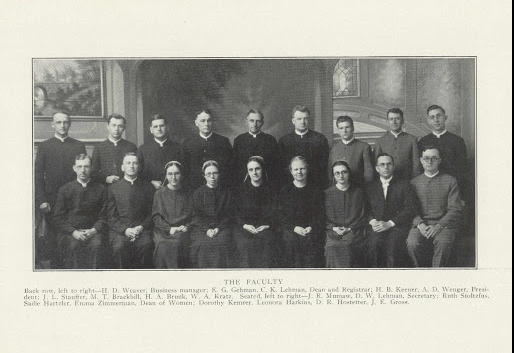

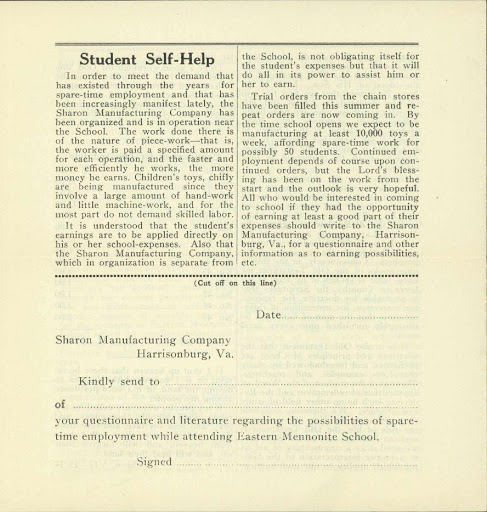
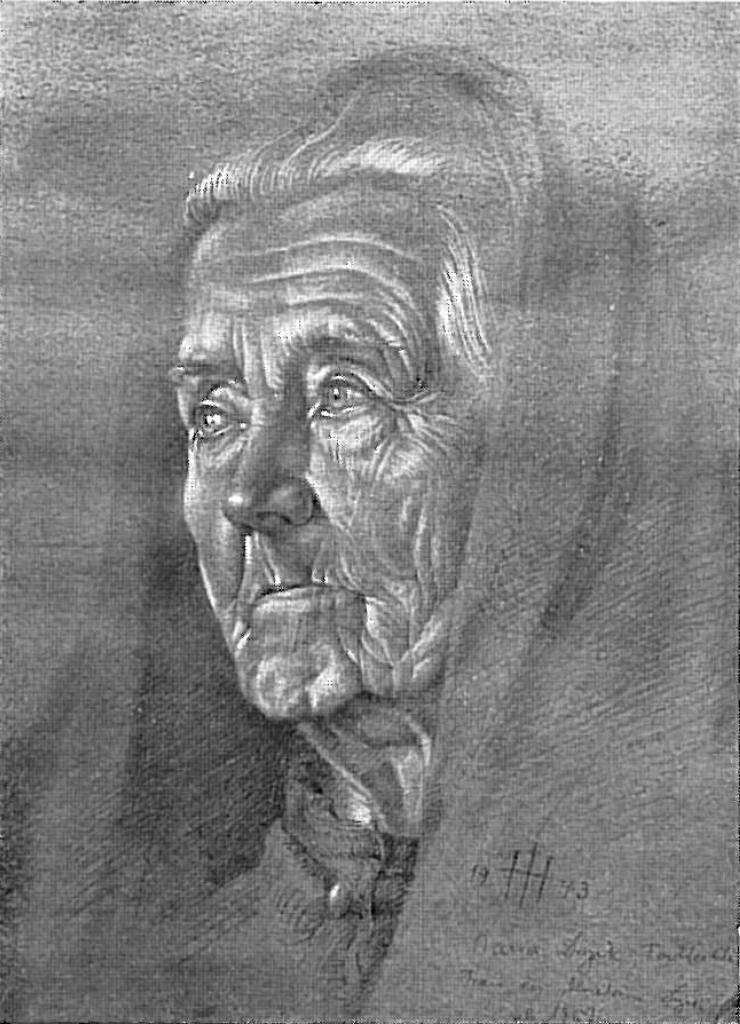
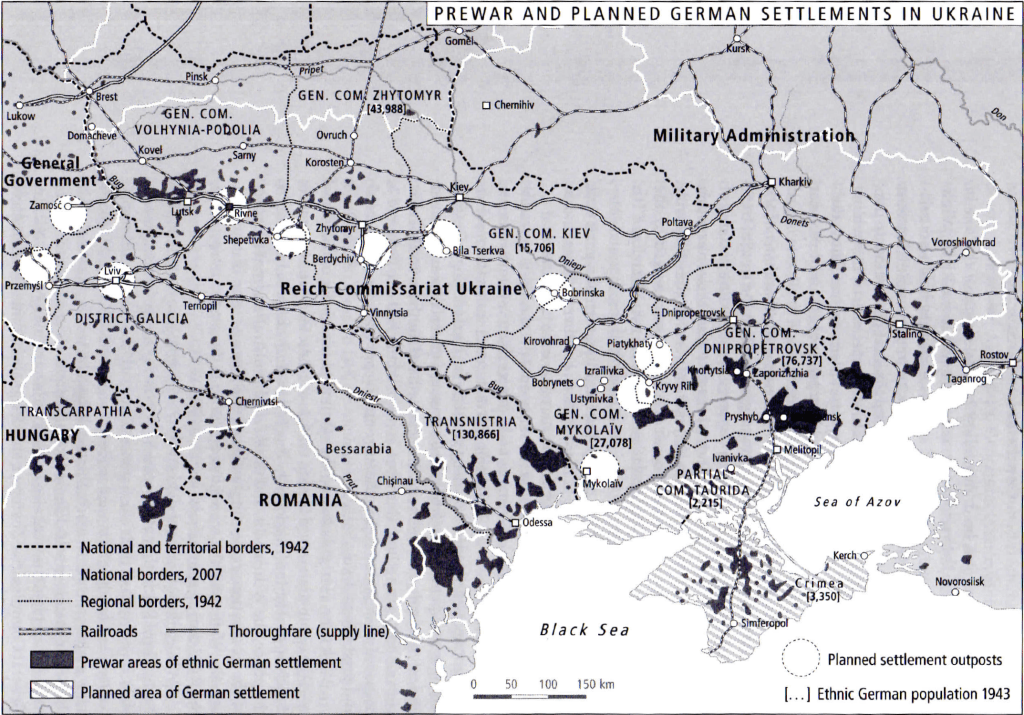
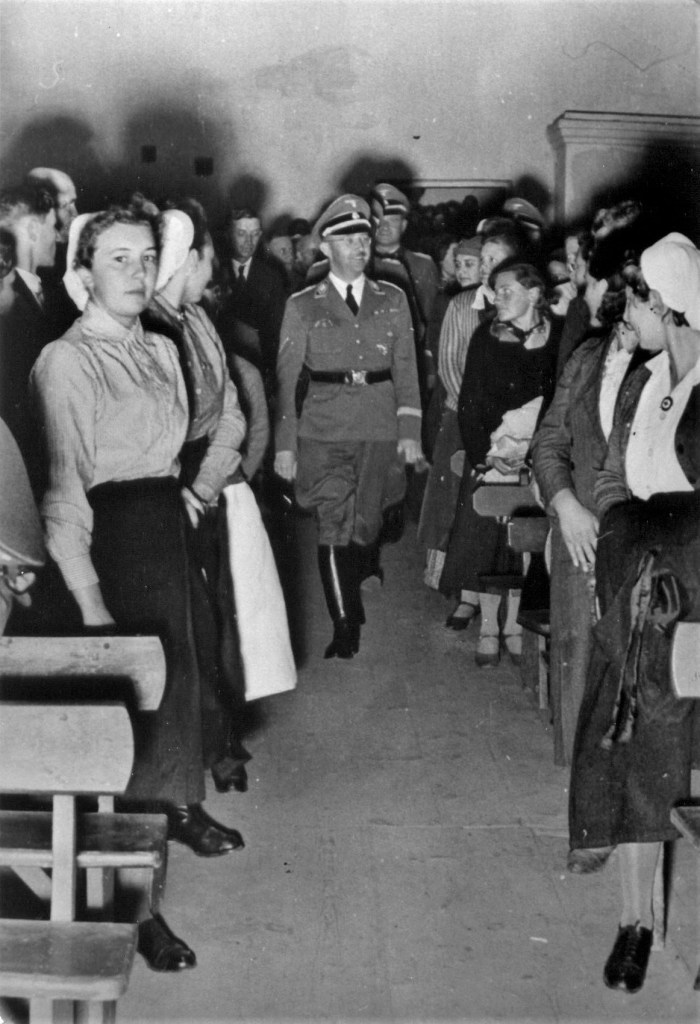

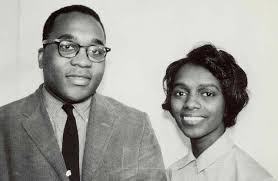
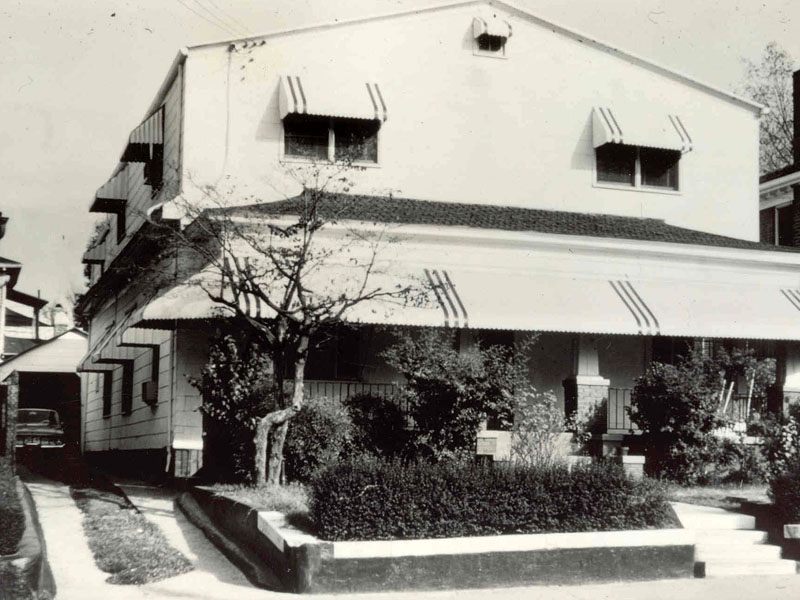
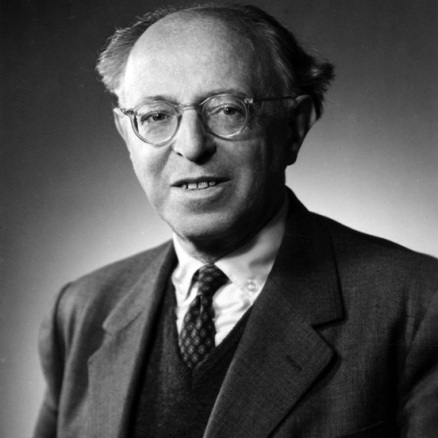



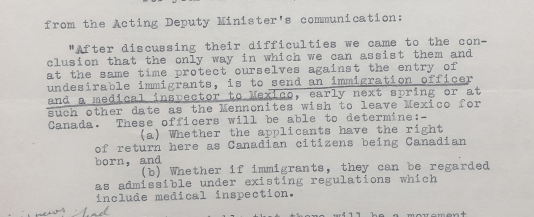
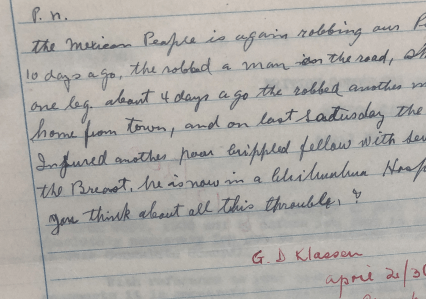
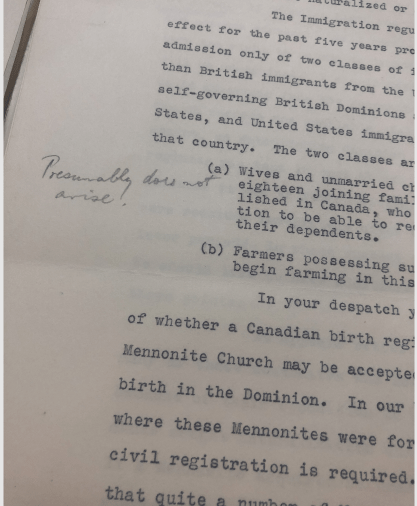
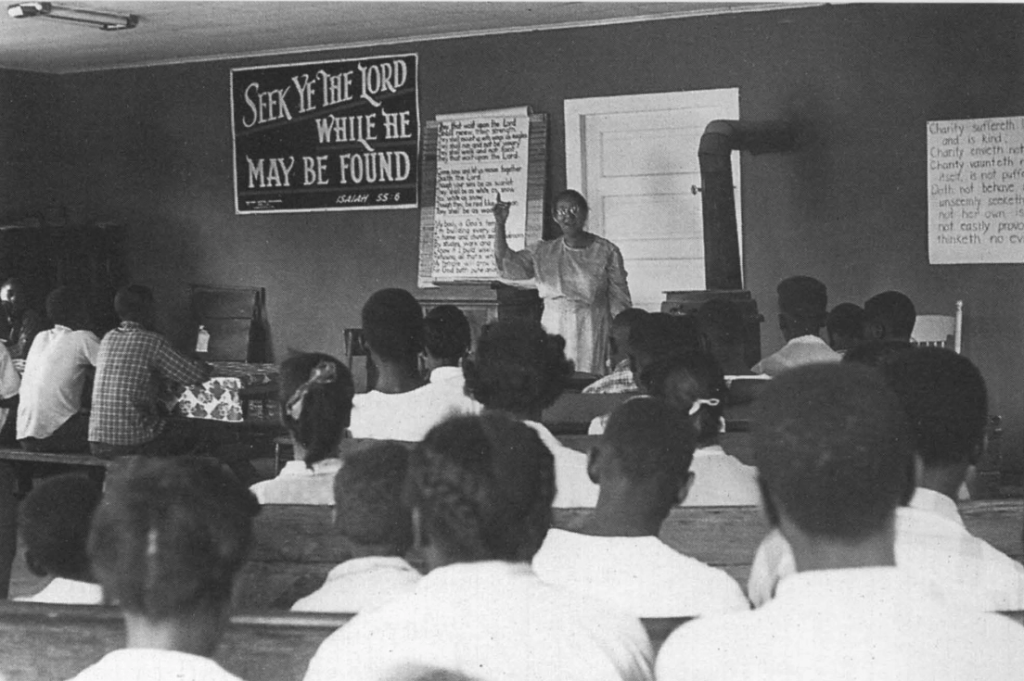
 Anabaptist Historians