Mennonites and the Holocaust: “Neighbors, Killers, Enablers, Witnesses”

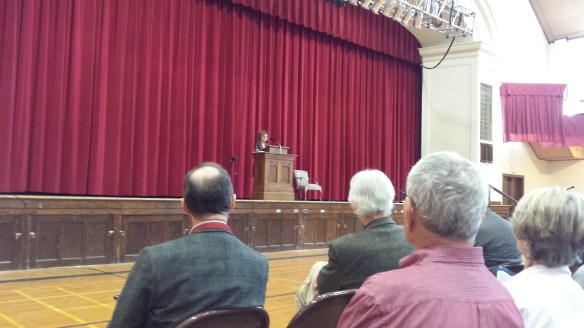
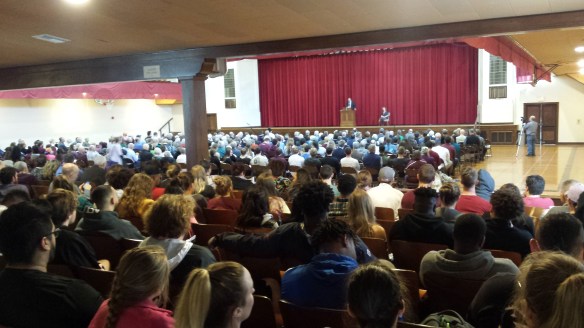
20180316_110912Bookending Doris Bergen’s lecture “Neighbors, Killers, Enablers, Witnesses: The Many Roles of Mennonites in the Holocaust” was the call for more scholarship. Her talk, the keynote of the Mennonites and the Holocaust Conference and convocation for Bethel College, focused on the challenges of doing Holocaust scholarship.  Bergen—who is Chancellor Rose and Ray Wolfe Professor of Holocaust Studies at the University of Toronto—explored five specific challenges, increasing in difficulty, with the note that “like those nesting dolls”, each opens new issues even as the resolve others.

The first challenge looked at insider/outsider scholarship, including its costs and benefits. Mennonite scholars come with some advantages–they have access to some sources, especially oral memories–that could not be found by outsiders. Insiders also make special note  of details others might miss: Bergen recounted being at a talk about the nature of the guards at Auschwitz, and in the general spreadsheet of place of origin and other statistics was a column on religion; one Mennonite was listed. “As an insider you notice and care,” noted Bergen. However, insiders face disadvantages. She singled out the push and pull of mythologies, especially “the myth of Mennonite innocence,” as a factor that can lead scholars to attack, defend, or censor themselves.

The second challenge was the question of definitions, specifically “what is a Mennonite” and “what is the Holocaust?” For the former she gave two guidelines. First, a warning to avoid “the temptation to define to distract” where you become so caught up in the words that you lose sight of the matter at hand. Second, she stressed the importance of having a functional definition of identity, not one based on fluid individual identities, but one that accounts for accounts for all ages and genders, covers communal bonds and how Mennonite identity can be constructed. She also included an admonition not to forget the women, “as defining, narrating, and performing Mennonitism has largely been the work of women.” For the latter, she noted that a proper definition of the Holocaust would consider a chronological range, encompassing both the prewar years and the immediate postwar period, as well as  being constructed by the identity of the perpetrators not the victims.

Bergen’s third challenge was to maintain a clear focus on the way Jews maintained a particular place of destruction in the Holocaust, being mindful of anti-Semitism. It is especially important for Mennonites to examine how Jews and anti-Semitism are built into our narratives. As one example, she recounted hearing how “Mennonites were [like] Jews” being told as the description of their experience; an inversion common across genocides where people take on the identity of victims “as a way of erasing their memory of their roles as victimizers.” She also noted how in Mennonite literature, especially in texts in the 1920s and 1930s, Jews become narrated as villains. The solution to this held up by Bergen was to incorporate literary scholars into the research to help analyze texts deeply, as opposed to taking them at face value. She also highlighted the need to have multiple sources, not just Mennonite and German ones, but Jewish, Roma, and more as well.
20180316_110409The fourth challenge was the questions “how do we avoid writing scholarship that is moralistic or judgemental?” Bergen’s response was to start by noting that studying genocide does not imply that she would personally have done better had she lived in a genocidal context, but “scholarship is about analyzing and understanding–how could people like us behave certain ways?” She also warned against the tendency to use avoiding judgement as a way to avoid discussion. This also gets caught up with the maintenance of Mennonite mythology. One solution given was to use the tools of genocide scholarship, which use comparison. “Mennonites were not unique, though distinctive, many of the issues we explore have been and are being confronted by many other people,” said Bergen, “These can be humbling and extremely liberating.”

The final challenge, as articulated at the beginning, was the need for more scholarship, particularly work “that will contextualize the topic, that will be discipline, that will look for unknown unknowns” an use a broad range of sources and tools. While this is an impossible task for an individual, it becomes possible if many become involved. Specific topics of research named included the Stutthoff concentration camp (situated among Mennonite communities), interactions between Mennonites and Roma, pre-war relations with Jews, and the role of singing and music.

Professor Bergen’s research focuses on issues of religion, gender, and ethnicity in the Holocaust and World War II and comparatively in other cases of extreme violence. During the keynote, she confided that she had not grown up with an innate interest in Mennonite history–indeed she actively avoided it–but it found her nonetheless via the topics she researched; at every turn, Mennonites popped out of the archive. Bergen’s books include Twisted Cross: The German Christian Movement in the Third Reich (1996); War and Genocide: A Concise History of the Holocaust (2003); The Sword of the Lord: Military Chaplains from the First to the Twenty-First Centuries (edited, 2004); and Lessons and Legacies VIII (edited, 2008).1


  1.  http://history.utoronto.ca/people/doris-bergen 

Mennonites and the Holocaust: Conference Opening and Session One

Bethel College

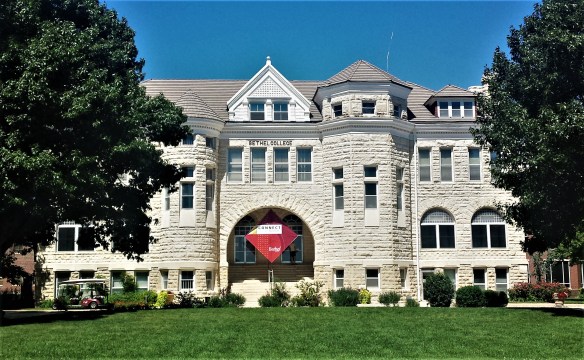
Over two hundred participants gathered today for the “Mennonites and the Holocaust” conference, held at Bethel College in North Newton, Kansas. Bethel President Jon Gering welcomed the assembly for a packed day to discuss challenging topics. Conference co-organizer John Thiesen offered some brief background, noting that this is the third conference in a series dedicated to interrogating the history of Mennonites’ relationship to National Socialism. The first event, which focused on Mennonites and Nazism in Germany, took place in Münster, Germany, in 2015. The second, held in Filadelfia, Paraguay, dealt with the history of Mennonites and Nazism in Latin America. A fourth conference on the topic of “Reading the Bible after the Holocaust” is being planned for the spring of 2020 at Anabaptist Mennonite Biblical Seminary in Elkhart, Indiana.

Seeds planted by this multi-year international dialogue across and beyond the Mennonite church bore fruit today. Many speakers at this “Mennonites and the Holocaust” conference had been present at previous events and made reference to work produced by colleagues in those contexts. Presenters hail from five countries—Canada, Germany, Netherlands, Ukraine, and the United States—and attendees have arrived from across North America. Because this event is sponsored by seven church and educational organizations, discussions have engaged participants with diverse interests and expertise, transcending disciplinary, professional, and faith boundaries. Topics addressed this weekend include: Mennonite-Jewish relations, theology and anti-Semitism, war crimes, postwar refugee experiences, memory, and literature.

Numerous participants expressed gratitude that this event is being held publicly and with formal church sponsorship. The fact that such a conference on Mennonites and the Holocaust is occurring only now in 2018 also highlights, however, the enormous opposition—official or otherwise—that this topic has faced from within the Mennonite community over the past seventy years. In that regard, the current conference is also an imperfect vessel, with many of us still learning how to appropriately, respectfully navigate the best ways to talk and learn about Mennonite complicity in the Holocaust. Today included an impromptu teach-in from a Jewish individual, whose own family had suffered during the Holocaust, who critiqued audience members for laughing at inappropriate moments and encouraged Mennonites to keep the victims of Nazism—not themselves—at the forefront of their minds when talking about anti-Semitic atrocities.

The conference will continue tomorrow with further presentations—and the progress set in motion here will also continue for many months afterward via further dialogue, research, and publications. Here at Anabaptist Historians, we are pleased to be providing full coverage of this groundbreaking event. Be sure to watch this site over the next days and weeks for updates, including new posts with panel summaries, narrative reports, and participant reflections.

Panel Summary

Session One: Pre-War Denominational and Organizational Themes

“Anti-Semitism and the Concept of ’Volk’: The Mennonite Youth Circular Community at the Beginning of the Nazi Dictatorship”
Imanuel Baumann, Haus der Geschichte Baden-Württemberg

  • In the first paper of the conference, Imanuel Baumann provided an analysis of round robin letters circulated between Mennonite youth groups in Germany at the start of the Third Reich. Participants included men and women and were of diverse backgrounds.
  • The concept of “Gemeinschaft,” meaning community, helped provide a bridge to Nazism for many of the writers, who since the 1920s often sought a strong sense of belonging. Nazis aimed to provide this desire for coherence with a new specifically “racial” community.
  • Within the circular letters, anti-Semitic measures in the Third Reich mostly drew silence or positive assessments. Even in cases where Mennonite writers opposed these acts, they only condemned Nazi focus on race as an idol, without questioning racial logics as such.

“Mennonite Scholarship in the Third Reich: From Knowledge Production to Genocide”
Ben Goossen, Harvard University

  • My paper examined the writings of a small but influential cohort of Third Reich academics who produced hundreds of books and articles about Mennonites, often praising members of the denomination as possessing unusual German racial purity
  • These mostly non-Mennonite scholars developed interest in the denomination in the context of a 1929 refugee crisis in the Soviet Union. The temporary “return” of thousands of Soviet Mennonites to Germany generated major public and official interest
  • Nearly all leading Nazi scholars of Mennonitism went on to participate in ethnic cleansing during the Second World War, often deploying concepts they had developed when conducting racial studies on Mennonites to help segregate Germans from non-Germans

“An Illusion of Freedom: Denominationalism, German Mennonites, and Nazi Germany”
Jim Lichti, Milken Community Schools, Los Angeles

  • Drawing on his 2008 book, Houses on the Sand? Pacifist Denominations in Nazi Germany, Jim Lichti discussed the legal and administrative structures of Mennonites in the Third Reich, comparing them with Quakers and Seventh Day Adventists.
  • Mennonites in Nazi Germany identified as members of a “Free Church.” This term could be contrasted with Protestant or Catholic “state churches” as well as with the word “sect,” which was an undesirable designation in the Third Reich.
  • Religious opposition to Nazism more often came from state churches, since Free Churches welcomed Nazi emphasis on separation of church and state. They often also supported Nazi anti-Bolshevism, of particular interest to Mennonites with relatives in the Soviet Union.

America’s Pastor among the “Quiet in the Land”: Billy Graham and North American Anabaptists, Part I

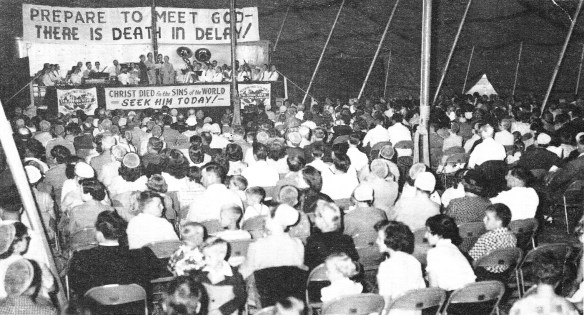
In the summer of 1951, two Mennonites from Virginia — brothers George and Lawrence Brunk — and a team of workers erected a large tent capable of seating 6,000 people in a field in Lancaster County, Pennsylvania. For the next seven weeks, area Mennonites flocked to the tent to hear George preach and Lawrence lead the singing. The services featured all the trappings of had come to define the American revivalist tradition: expressive preaching, compelling music, modern methods of advertising and promotion, and invitations for listeners to leave their seats, walk down the aisle to the altar, and experience a religious conversion. According to reports, hundreds of people came forward at the Lancaster meetings to convert to Christianity for the first time, to renew their covenant as members of the Mennonite Church, or to make a deeper consecration as Christians.1

A man stands with his back facing the camera. He is preaching to a large crowd under a large white canvas tent.

George R. Brunk II speaks during a revival service in the 1950s. Note the large crowd sitting under the massive tent, as well as the signage at the front of the stage. Both of these elements, along with elements of Brunk’s preaching style, are borrowed from another mid-century revivalist: Billy Graham. (Source: Theron F. Schlabach Photograph Collection [HM4-378 Box 1 Folder 4 photo], Mennonite Church USA Archives, Goshen, Indiana)

After closing the event in Lancaster, the Brunk brothers traveled east to Souderton, Pennsylvania, where they held a five-week series of meetings. An article in the Gospel Herald reported that 2,500 people attended the meetings on weekday evenings, an an additional ten to twelve thousand on weekends or closing nights. Those who came to the altar confessing sin and seeking a conversion experience were invited to share their testimony. And yet, attuned to Mennonite expectations about decorum, the Gospel Herald writer also made clear that the meetings were conducted appropriately and without excessive emotionalism.2 From Souderton, the Brunk brothers conducted campaigns in Orville, Ohio and Manheim, Pennsylvania, before the end of 1951. Their crusades continued throughout the 1950s and 1960s.3

The Brunks’ work inspired others. In 1952, after attending the Brunks’ services in Ohio the previous year, Mennonite preachers Myron Augsburger and Howard Hammer each began careers as evangelists, adopting a style cribbed from the Brunk Brothers.4 Also in 1952, a Brethren in Christ minister from Mount Joy, Pennsylvania — John Rosenberry — launched the Living Hope Gospel Campaign and began holding revival meetings in the local area. Rosenberry and his team borrowed the Brunks’ tent for their first series of meetings.5

A large crowd of people sit under a large canvas tent watching a preacher behind a podium. Large signs are posted behind him, proclaiming Christian messages.

A scene from one of John Rosenberry’s Living Hope Gospel Campaign tent meetings, probably in the early 1950s. Note the use of a large canvas tent (just like the Brunk brothers and, before them, Graham) and dramatic signage. (Source: Brethren in Christ Historical Library and Archives, Messiah College, Mechanicsburg, Pa.)

One scholar has noted that these revival meetings “were a dramatic change from traditional Mennonite experience.”6 While revivalism per se was not new to Anabaptists, the style of these mid-century meetings — massive tents, dramatic signage behind and in front of the pulpits, branded materials such as logos, the use of technology such as speakers, and more — were clearly different than those used by previous generations. Anabaptists in the mid-twentieth century were embodying a modern revival style.7

What inspired these Mennonites and Brethren in Christ to launch revival meetings? The answer, quite simply, is Billy Graham.

Today, in popular memory, Graham — who died last week at the age of 99 — is remembered as an evangelist, a presidential confidant, and an influential icon of American evangelicalism. As then-President George W. Bush noted in 2007, Graham was “America’s pastor.”

Moreover, in the historiography of American Christianity, Graham has come to symbolize conservative Protestantism’s move from fundamentalist isolationism to irenic neo-evangelicalism. Graham’s ascendance to the national stage in the late 1940s and early 1950s marked a public “resurgence” (to use the language of Joel A. Carpenter) in conservative Protestantism. Christians from various denominational backgrounds flocked to Graham’s rallies, subscribed to Graham’s periodicals, listened to Graham’s radio program, and watched Graham’s films. In a way, Graham served to unite those communities fragmented by sectarian differences and fundamentalist-modernist schisms.

Indeed, Graham was a symbol of this conservative Protestant resurgence after World War II. But he also modeled a style that characterized this resurgence — a style emulated by well-intentioned imitators such as the Brunks, Hammer, Augsburger, and Rosenberry. As his biographer, the Duke Divinity School historian Grant Wacker, has argued, Graham was a product of his age — an evangelist who rose to fame amid the midcentury rise of mass popular media, youth culture, and organizational efficiency. From the start of his ministry Graham delivered his sermons in a crisp, compelling, and direct manner that mirrored the style of contemporaries such as the news broadcaster Walter Winchell. His preaching was backed up by heartwarming testimonies and toe-tapping music. Moreover, Graham was tall and handsome, perfectly suited to captivate audiences and appear on newsprint pages and glossy magazine covers. And behind him stood the well-oiled Billy Graham Evangelistic Association machine, comprised of a small army of professionals and staffers who promoted Graham’s services through slick advertising, organized and streamlined his growing throng of volunteers, and armed his old-fashioned tent-style meetings with dramatic signage that grabbed the attention of the audience almost as much as Graham’s preaching.8

This period newsreel from Graham’s first revival crusade, held in a Los Angeles field under a big canvas tent in 1949, showcases some of the style that captivated audiences and inspired Anabaptist imitators.

Of course, these methods evolved over time: Graham’s first crusade, held in a Los Angeles field under a big canvas tent in 1949, was a far cry from the stadiums and amphitheaters he filled later in his career. But for midcentury Mennonites and other Anabaptists, this early style was simple enough — yet also sufficiently modern — that they believed they could borrow it, adapt it, and deploy it effectively in order to bring about what they saw as much-needed spiritual renewal in their churches.

Yet it was more than just the would-be Anabaptist evangelists who were drawn to Graham’s style. As the Goshen College historian John D. Roth recently observed in an article for The Mennonite, Graham influenced not only imitators within the Anabaptist fold but also directly inspired the many Mennonites, Brethren in Christ, and other Anabaptist laypeople that attended his crusades:

Long before Mennonites were comfortable with the “ecumenical movement,” they were participating fully in the Billy Graham revival crusades. Many of us were attracted by the biblicism, clarity and simplicity of Graham’s message, and the “altar call” fit well with our conviction that following Jesus should be a public decision. Not least, the Billy Graham crusades offered Mennonites a chance to enter alongside their neighbors into the evangelical mainstream. The long-term impact of Graham’s impact on the Mennonite community has been profound.

As Roth’s comments suggest, many Mennonites embraced Graham, his message, and his style. The work of the Brunks, Hammer, Augsburger, and Rosenberry reflects this positive assessment; they saw his success and the response to his message and style, and sought to emulate it. And the activities of these Anabaptist evangelists would make an important impact on mid-century North American Anabaptism, especially in terms of their relationship to the wider evangelical Protestant world.

But not all Mennonites held such a positive view of Graham or American evangelicalism — or their influence on North American Anabaptism. In my next post, I want to explore some of the negative reactions to America’s pastor. Then, in a final post, I want to use these reflective comments about Graham’s influence as a jumping off point for thinking about one of my major areas of research interest: the relationship between Anabaptism and evangelical Protestantism in twentieth century America. Stay tuned!

NOTES:


  1. Harold S. Bender and Sam Steiner, “Brunk Brothers Revival Campaign,” Global Anabaptist Mennonite Encyclopedia Online, 2009, and Maurice E. Lehman, “The Lancaster Revival,” Gospel Herald, September 4, 1951, 852-853, cited in Beulah Stauffer Hostetler, American Mennonites and Protestant Movements: A Community Paradigm (Scotdale, Pa.: Herald Press, 1978), 281-282. 
  2. Paul M. Lederach, “Revival in Franconia,” Gospel Herald, September 18, 1951, 902-903, cited in Hostetler, American Mennonites and Protestant Movements, 281-282. 
  3. Bender and Steiner, “Brunk Brothers Revival Campaign.” 
  4. James O. Lehman, Mennonite Tent Revivals: Howard Hammer and Myron Augsburger, 1952-1962 (Kitchener, ON: Pandora Press, 2002). 
  5. E. Morris Sider, Called to Evangelism: The Life and Ministry of John L. Rosenberry (Nappanee, Ind.: Evangel Press, 1988), 90-92. 
  6. Sam Steiner, “Brunk, George Rowland (1911-2002),” Global Anabaptist Mennonite Encyclopedia Online, 2016. 
  7. This point regarding revivalism is especially true of the Brethren in Christ, who were engaged in such religious activity as early as the late nineteenth century. See Morris N. Sherk, “Tent Evangelism Among the Brethren in Christ,” Brethren in Christ History and Life 11, no. 2 (August 1988): 157-204. 
  8. This assessment of Graham’s style comes from Grant Wacker, “Billy Graham’s America,” Church History 78, no. 3 (September 2009): 500-504. See also Wacker, America’s Pastor: Billy Graham and the Shaping of a Nation (Cambridge, Mass.: Bellknap Press of Harvard University Press, 2014). 

King William I Allows Mennonites to Serve as Noncombatants, Forcing Mennonites to Chose Emigration or Military Service in Some Form

Mennonites Accept and Contest Military Service in the German East: A Sesquicentennial Series

The five Mennonite elders who had spent over a week in Berlin at the end of February had petitioned the king for an audience on February 20 and used that audience to press their case for a full exemption in exchange for additional cash or medical services provided as civilians. If that was not possible, they wanted a temporary reprieve from the draft which had been imposed by law on November 9, 1867, in order to sell their farms and households before emigrating. The result of their visit and other currents swirling in Prussian politics was that on March 3, 1868, the king signed an executive order granting them the right to serve as non-combatants, a deal that satisfied the vast majority of Mennonites while around fifteen percent ended up emigrating to Russia or the United States. This momentous cabinet or executive order is quoted here in full:

The High Royal Executive Order of March 3, 1868

Because the Confederation law On the Requirement to Serve in the Military, dated November 9, 1867, revoked the Mennonites’ former exemption from personal military service, I declare that the members of the older Mennonite families who do not volunteer to perform normal military duty shall, in accordance with your report of February 29 of this year, be trained to fulfill their military obligations as medics, militia clerks, artisans, and teamsters I hereby permit the Mennonites drafted as militia clerks to be released from firing range training. You are charged with arranging the necessary details.
Berlin, March 3, 1868
(signed) William
To the Minister of War and the Minister of the Interior
(signed) von Roon (signed) Count Eulenburg1

The tussle over how to implement the new draft law for Mennonites had involved the two bureaucracies most responsible for implementing it, the Ministry of War and the Ministry of the Interior, which administered the draft. War Minister Albrecht von Roon, and his temporary replacement, Theophil von Podbielski, thought Mennonites should be spared, since they believed that their religious concerns were genuine and their legal case, that royal privileges trumped parliamentary laws and even constitutions, was valid. It was, in short, a convenient way to forward their political program of maintaining monarchical power. Interior Minister Friedrich zu Eulenburg insisted that the law be followed and that the debate in the North German Confederation Diet had made clear that the lawmakers wanted the Mennonites drafted. Using the Mennonites, he could advance his political program of strengthening the rule of law over the power of the king. The tie breaker in this cabinet disagreement was Chancellor Bismarck, who did not want to be bothered with this arcane religious detail and wanted the machinery of government unstuck and moving forward.2

As a result of this political positioning and the king’s request to resolve the matter, the two ministers drafted an executive order with a copy going to Bismarck and sent it to the king for his consideration on February 29. Their rationale included many caveats. For example, only forty Mennonites a year would be drafted from the congregations along the Vistula River that opposed the draft. This was a much lower number than the one hundred and forty that was thrown around in the parliamentary debates. Since the number was so low it would be easier to implement exceptional rules. In addition, the order would treat all Mennonites in the newly expanded Prussia equally. There were not many Mennonites elsewhere in Prussia and many of them were willing to serve already, so the principle of equality everywhere could be held up without much additional risk of losing soldiers.

Exceptions were made for letting Mennonites serve as orderlies in the hospitals or as clerks. Traditionally, those jobs were reserved for soldiers who had completed their initial duty. However, since one could assume that the Mennonites would both be inclined to serve in these roles and generally exhibit good will, they would be excused from qualifying for them first. The artisans referred specifically only to tailors, cobblers, and saddlers. The teamsters would have to prove prior experience with horses and need to carry arms in any case for use if their wagons were attacked, so non-combatant does not quite capture what is offered here. Roon was skeptical this assignment would be acceptable. Nonetheless, the king signed the draft exactly as submitted by the two officials.3

The impact of this approach by politicians to dealing with Mennonites was at least two-fold. Most obviously, it gave Mennonites a third choice when confronted with military service. In addition to emigrating (or going to jail, as Johann Dyck did now and Mennonites in Prussia had done in the past) or serving outright, they could meet the state halfway by serving as non-combatants. This option opened up a divisive debate among Mennonites and met the politicians’ goal of keeping Mennonites from emigrating while training them to accept military service. In its focus on preventing emigration, it mirrored the forestry service later implemented in Russia, but given the small number of Prussian Mennonites willing to emigrate compared to Russian Mennonites who did so in large numbers even at the hint of military service, the deal Mennonites got was much worse in terms of how service was arranged, as non-combatant instead of church-related forestry service units.4

Less obvious, but reaching perhaps even deeper into the Mennonite community, was the fact that this new approach meant that Mennonites now had to make moral and theological decisions as individuals and not as a community. Leaders worked hard to keep the community together, but those who insisted that all male members serve as non-combatants ran afoul of the law. Thus all that remained for proponents of that option was education and moral suasion. Thus the executive order was reprinted by Mennonites, as in this example from 1879, and distributed widely among Mennonite congregations. Young men were now informed of their right to serve as a non-combatant and encouraged to take advantage of it. That emphasis on a right, however, sounded quite different to traditionalists, who saw it as betrayal of the teaching and example of Jesus Christ. Prussian Mennonites one-hundred-fifty years ago today experienced the problem of individualism challenging a common commitment to living out church teachings that has returned again and again to disrupt Mennonite unity and witness.

SEE OTHER POSTS IN THIS SERIES


  1.   Mark Jantzen, Mennonite German Soldiers: Nation, Religion, and Family in the Prussian East, 1772-1880 (Notre Dame, IN: University of Notre Dame Press, 2010), 268. 
  2. For background and context, see ibid., 191-205. 
  3.   Geheimes Staatsarchiv Preußischer Kulturbesitz Berlin (GStA), Hauptabteilung (HA) I, Rep. 77 (Ministry of the Interior), Tit. 332T (Militärpflicht), no. 5 (Acta betreffend die Mennoniten), vol. 1 ((1819-1868), n.p., 29 February 1868. 
  4.   On Prussian Mennonites going to jail over military service, see Jantzen, Mennonite German Soldiers, 91-2, 98-100, 222-6. The laws that forced congregations to allow individual choices are explained in ibid., 223-6,  

The Mennonite Encyclopedia, GAMEO, and Public History in the Digital Age

Jason B. Kauffman

Last spring, I represented Mennonite Church USA at my first Global Anabaptist Mennonite Encyclopedia Online board meeting. GAMEO is “the most trusted online source for information on Anabaptist groups around the world” with articles on “Anabaptist-related congregations, denominations, conferences, institutions and significant individuals, as well as historical and theological topics.”1 Those familiar with GAMEO know that much of its content originated over fifty years ago with the publication of the four-volume Mennonite Encyclopedia (ME). Many updates were included in a fifth edition of ME, published in 1990, and over 4,000 more articles have been added since GAMEO went online in 1996.2 But there are still a host of articles that were published in the 1950s and have not been updated since. For example, the entry for Orrville Mennonite Church, my home congregation, was authored by Harold S. Bender in 1959.

During the board meetings, we spent much time discussing how to encourage more people to get involved with GAMEO.3 As a public history project, GAMEO holds enormous potential to harness the collective knowledge of the global Anabaptist community. Janneken Smucker pointed this out in a recent blog post on crowdsourcing Anabaptist history. As she notes, one of the biggest challenges for a public history project lies in “cultivating an enthusiastic community of participants.” But is that all it takes? In a search for answers to this question, I started to think about what went on behind the scenes during the fourteen years it took to produce the original ME, one of the most well-known, inter-Mennonite public history projects.4 What accounted for its success and what, if anything, can the project teach us about doing public history in 2018?5 I spent time looking at some of the project files of the ME at the MC USA Archives (Elkhart) and here’s what I came up with.6

ME_Writers_Acceptance

Mennonite Encyclopedia Writer’s Acceptance Card (MC USA Archives)

First, a public history project requires extensive planning and the dedication of a core group of leaders. As Smucker noted in her blog, enthusiastic communities of participants do not cultivate themselves. Before the project began, the ME editorial board enlisted the support of an international group of editorial consultants. The board also developed criteria for article topics and assembled a list of potential contributors. Managing editor Melvin Gingerich then mailed thousands of letters to prospective authors to invite their participation and supply writing instructions. The finished product included over 13,000 articles contributed by more than 2,700 writers. Like its predecessor, GAMEO has also benefitted from strong leadership. Sam Steiner, Marlene Epp, Richard Thiessen, Bert Friesen, Susan Huebert, and many others have given years to the project, commissioning or writing new articles, updating old ones, and editing submissions. While both projects have enjoyed broad participation, neither would have been possible without heavy involvement from a core of dedicated individuals. For example, over half of the content of the original ME was generated by just eight people.7 My guess is that a similar scenario is true for GAMEO.

ME_Vol_4_celebration

Celebration of the Mennonite Encyclopedia, 4th Volume, August 11, 1959: Left to right: Cornelius Krahn, Harold S. Bender, Melvin Gingerich. (MC USA Archives)

Second, a successful public history project requires institutional support. While the ME was under production, the three top-ranking editors—Bender, Krahn, and Gingerich—enjoyed the full support of their employers. In fact, Goshen College and Biblical Seminary, Bethel College, and the Mennonite Research Foundation allowed each to devote up to one quarter of their time to the project. Lead editors for the GAMEO project have never had their duties written into their job descriptions, but several institutions have given critical support. For example, Conrad Grebel University College provided computer equipment and web hosting early on and the Centre for Mennonite Brethren Studies in Winnipeg supported the digitization of volumes one through four of the ME.8 Most recently, the Institute for the Study of Global Anabaptism provided an institutional home for GAMEO under the direction of general editor John D. Roth.

EHB_Timesheet

Emily Horsch Bender’s time sheet while working on Mennonite Encyclopedia. (MC USA Archives)

Finally, a successful public history project requires sustained financial support. The ME was underwritten from the beginning by three denominational publishers, which covered the cost of labor, travel, and office expenses. Aside from wages paid to the three lead editors, Elizabeth Horsch Bender earned wages as a translator and assistant editor (often on under-reported hours) as did dozens of secretaries and typists.9 Over fourteen years, the three publishers paid just under $40,000 in editorial expenses.10 Adjusted for inflation, this amount is equivalent to roughly $370,000 in 2018.11 The publishers also bore the cost of printing and binding all four volumes. That figure came to $91,000.12 In the final year of the project, A.J. Metzler anticipated that returns on sales would cover the printing and binding costs but none of the editorial costs and only part of the selling costs. In other words, the Mennonite Publishing House lost a significant amount of the money it invested in the project. He concluded, “While the justification of this investment would be fully defended by our historians and scholars, it may be questioned by others.”13 GAMEO operates on a yearly budget of about $4,000. Like the ME, it relies upon financial support from Anabaptist-related institutional sponsors in the United States and Canada. As with the ME’s 2700 writers, GAMEO authors do not receive compensation. Unlike the ME, however, GAMEO cannot pay its editors and relies upon smaller-scale contributions from a wider variety of sponsors.

So what can a comparison of the ME and GAMEO teach us about doing public history in the digital age? Of course not all public history projects are cut from the same cloth. The ME was a massive project. Many other public history projects, including GAMEO, function successfully on a much smaller scale. Moreover, most public history projects in 2018 do not result in the publication of a four-volume book series, so printing and binding costs are not part of the equation. Since GAMEO lives online, the annual budget mostly covers the cost of webhosting and IT support and email makes communication among editors and with authors much more rapid and less costly than it was for ME staff.

In light of these difference, one might question the usefulness of comparing the ME with GAMEO and other current efforts to do public history. However, since much of the content of the ME was generated by 2,700 contributors, I think it is possible to draw some useful conclusions, especially in light of current efforts to crowdsource digital history projects. For me, the comparison highlights the enormous amount of work that goes on behind the scenes. The ME would not exist without the labor and expertise Elizabeth Bender gave to translations or the thousands of hours given by secretarial staff. Similarly, digital history projects like the University of Iowa’s DIY History require huge amounts of work behind the scenes. Before crowdsourcing could begin, the university invested time, labor, and resources to scan documents, store them, and develop specialized transcription software. It’s no coincidence that such an expansive project is hosted by a major public research university.

Much has been made of the “tremendous amount of work” that Bender, Krahn, and Gingerich invested in the creation of the ME.14 This is certainly true, but it didn’t hurt that they were being paid for their labor. As Conrad Stoesz pointed out in response to Smucker’s blog post, in the Anabaptist world we live in a time of “soft support for our…archival institutions” and, I would add, historical endeavors in general. This makes the volunteer efforts of GAMEO’s lead editors all the more impressive. They have given years of dedicated service to the project and created a valuable resource for anyone with access to the internet.

If you find GAMEO useful, I encourage you to give some money to support the project.15 Better yet, help us update old articles (beginning with many of the copious links included in this post) and generate new content. Please contact me or one of the other editors if you want to get involved. I would also welcome archivists, librarians, historians, and anyone else to weigh in on my conclusions and continue a conversation on the best ways to do Anabaptist public history in the digital age. Let’s get to work!


  1. Representatives of six partner organizations give oversight to the project and are responsible for its development. 
  2. GAMEO also incorporates content from multiple databases created by Marlene Epp with information on Canadian Mennonite congregations, individuals, and institutions. For a historical overview of the project, see http://www.gameo.org/index.php?title=Global_Anabaptist_Mennonite_Encyclopedia_Online_(Website) [accessed 2-22-18] 
  3. See http://gameo.org/images/3/35/GAMEO_Management_Board_2017_05_19.pdf [accessed 2-21-18] 
  4. The ME was a joint venture of the Mennonite Church, the General Conference Mennonite Church, and the Mennonite Brethren Church and was guided by a 12-person editorial board and a 6-person publishing board. Bender assumed editorial responsibility for the project and Paul Erb of the Mennonite Publishing House chaired the publishing committee. Rachel Waltner, “From Anabaptism to Mennonitism: The Mennonite Encyclopedia as a Historical Document.” Mennonite Life 37 (December 1982): p. 13-14, 19. 
  5. The ME was generally well reviewed, both within Mennonite circles and by non-Mennonite church historians. In 1982, Rachel Waltner wrote that the ME “continues to be…the most accessible and authoritative reference work available on a host of Anabaptist and Mennonite topics.” Waltner, “From Anabaptism to Mennonitism,” p. 13. 
  6. The Mennonite Library and Archives at Bethel College also holds official records of the ME, most of which were created by associate editor Cornelius Krahn and his assistants. 
  7. These were Nanne van der Zijpp, H.S. Bender, Cornelius Krahn, Christian Neff, Christian Hege, Robert Friedmann, Melvin Gingerich, and Johann Loserth. H.S. Bender, “The Mennonite Encyclopedia: Report of the Editor to the Publishing Committee,” Mennonite Quarterly Review 38:4 (October 1964), 364. 
  8. Email communication with Sam Steiner, 2-16-18. 
  9. At least 27 secretarial staff people from Goshen earned wages through the ME project. “Ninth Report of the Managing Editor to Editor Harold S. Bender for the period September 1, 1955 – August 31, 1959,” Mennonite Encyclopedia Records, X-31-1, Box 11. MC USA Archives, Elkhart, Indiana. Elizabeth Horsch Bender spent hundreds of hours translating articles in the Mennonitisches Lexicon from German to English and, later, copyediting English language submissions. 
  10. The Mennonite Publishing House paid about $23,000, Faith and Life Press paid about $14,000, and the Mennonite Brethren Publishing House paid about $3,000. The amount each press paid was in proportion to the number of books they agreed to distribute and sell. 
  11. Consumer Price Index inflation calculator from the United States Bureau of Labor Statistics: https://www.bls.gov/data/inflation_calculator.htm [accessed, 2-22-2018]. 
  12. Our Mennonite Literature Service, 1958: Annual Report to the Mennonite Publication Board (Scottdale, PA: Mennonite Publishing House, 1959), p. 6. 
  13. Our Mennonite Literature Service, 1959: Annual Report to the Mennonite Publication Board (Scottdale, PA: Mennonite Publishing House, 1960), p. 15. 
  14. Waltner, “From Anabaptism to Mennonitism,” p. 15. 
  15. Donations should be sent to Mennonite World Conference and designated for GAMEO.