Call For Papers: What Young Historians Are Thinking

What Young Historians Are Thinking Symposium

June 5, 2017

The Lancaster Mennonite Historical Society, in partnership with the Sider Institute for Anabaptist, Pietist, and Wesleyan Studies at Messiah College and with the Young Center for Anabaptist and Pietist Studies at Elizabethtown College, welcomes paper proposals for its event “What Young Historians Are Thinking.”

Invited to participate are undergraduate, graduate, and doctoral students, those who have just started careers in history, and those who are “young” in scholarly study of historical topics (no matter what their age). All must be engaged in original research using chiefly primary sources (written and/or oral). All should be a part of an Historic Peace Church (Amish, Brethren in Christ, Church of the Brethren, Mennonite, Religious Society of Friends/Quaker, etc.) or focusing on one or more of these traditions.

Those interested should submit a 250-word proposal for a 20-minute paper to be given at the symposium, along with a brief autobiographical sketch and full contact information. Send these to Joel Nofziger at Lancaster Mennonite Historical Society, 2215 Millstream Road, Lancaster, PA 17602, or at younghistorians@lmhs.org. A limited number of travel scholarships are available. Please note in the proposal whether this will be needed. The symposium will take place at Ridgeview Mennonite Church in Gordonville, Pennsylvania, at 7:00 p.m.

Symposium Planning Committee: Jeff Bach, Simone Horst, Devin Manzullo-Thomas, Joel Nofziger, and Anne Yoder.

Proposals are due April 14, 2017

Now You’re the Institution

Jason B. Kauffman

My reference to a Ben Folds song probably dates me, but lately I’ve been thinking about the relationship between archives, institutions, and power. According to historian Paul Toews (described by Felipe Hinojosa in a recent blog), as I write this blog I am sitting in one of the “archival centers of the Mennonite universe.” I recently began working as director of the Mennonite Church USA Archives in Goshen. As a senior at Goshen College (2005) I spent long hours in the archives researching for my history thesis project.

When I reported for my first day of work in July, the archives looked (and smelled) pretty much like I remembered them, complete with a stone bust of Sanford Calvin Yoder (President of Goshen College from 1923 to 1940) and a large plaque listing the names of “pioneer leaders” (all white men of European descent) in the (old) Mennonite Church. One of the men, Jacob Gottschalk (the first Mennonite bishop in Germantown, Pennsylvania), is a distant family relative. So, to quote Ben Folds again, “how’s it feel to be the man?”

I don’t have a simple answer to that question. As a historian, I resonate with Hinojosa’s call to “deterritorialize Mennonite studies” and to tell the stories of Mennonites whose lives unfolded on the periphery, far removed from “holy places” like Goshen, Newton, Lancaster, or Winnipeg. I spent the majority of graduate school resisting the centralizing forces in my discipline which told me that the only topics worthy of study were those with an established historiography, focused on places at the centers of political or economic power. Latin American history is very nation-centric and I found a niche in the study of frontiers and borderlands, a subfield which questions the centrality of the nation-state in the stories historians tell about the region and its people. In a similar way to the Mennonite community in south Texas that Hinojosa describes, I discovered that what it means to be Brazilian or Bolivian looks very different from the margins than it does at the center. Place matters.

However, institutions also matter. For historians, institutions matter because they are the entities most likely to preserve the documents that we rely upon to analyze and write about the past. While my research focused on one of the most sparsely populated regions in South America, I would not have been able to write my dissertation without going to institutional archives in Rio de Janeiro or La Paz. Indeed, the available sources often dictate the types of questions we can ask (and answer) about the past. Through my research, I was able to learn much about how representatives of the Bolivian state felt about migratory laborers and the many ways officials attempted to control the movement of goods and people across borders. I learned comparatively little about the complex motivations that guided individuals in their decisions to migrate in search of work, how they felt about these decisions, and how such decisions impacted their lives and families.

Such archival silences are, of course, also present at the MC USA Archives. For example, collections in the archives yield much information about how church leaders and academics felt about growing Mennonite involvement in business after World War II but much less about businesspeople themselves, those who built successful businesses while navigating the norms and expectations of the broader Mennonite community. Despite such limitations, many historians have made creative use of the MC USA Archives. For example, recent studies have mined collections for sources that document Mennonite involvement during the Civil Rights movement and the complicated dynamics of racial prejudice and discrimination that pervaded this involvement.1 And there are many more sources yet to be discovered. But this does not change the fact that the voices of institutional (white, male) leaders are overrepresented in the archives and those of ethnic minorities, women, LGBTQ people, and those otherwise removed from institutional centers are underrepresented. This reality is itself a reflection of the history of the Mennonite Church as an institution.

Through my job as the archivist, I am now a part of this institution. I am keenly aware of the power that institutions hold to shape the terms of historical memory and its production.2 Archives play a key role in this equation because the written word is one of the primary ways in which people and institutions preserve history for future generations.3 Archives are also powerful weapons that institutions have used in their efforts to minimize or, in some cases, completely erase elements of the past.4 History is replete with examples of the many ways that institutions have done damage to the broader communities that they represent.

At the same time, now that I’m on the “inside” my perspective is beginning to shift. From the outside, institutions often seem like faceless entities, engaged in a timeless quest to centralize authority and wield power to advance their own agendas. It is often easy to forget that the Mennonite Church is a complex institution made up of complex individuals, each with different backgrounds and changing (and, in many cases, different) beliefs, motivations, and goals. All share a deep commitment to the broader Mennonite community and many are actively working to promote peace and social justice; to combat racism, prejudice, and discrimination; and to redefine what it means to be Mennonite.

No institution is perfect and good intentions do not erase the inequalities and injustices that persist. It is difficult to predict what form the institutional Mennonite Church will take in the next decades or how it will evolve or adapt in response to our rapidly changing denominational landscape. In 2116, who will future generations of Mennonites look back and recognize as the “pioneer leaders” of the twenty-first century? I hope that the list will be much different than the one currently hanging in the archives, made up of many more people from the farthest reaches of the Mennonite universe.

To explore one of the ways that the MC USA Archives is working to document the diversity of Mennonites voices, check out this online archive of Mennonite websites, which preserves the websites of Mennonite news outlets, MC USA agencies and conferences, and Mennonite bloggers. Let me know of others that I should add to the list!


  1.  Many of these recent studies also make excellent use of oral histories, critical sources for documenting and understanding the lives and experiences of people underrepresented in the written historical record. 
  2.  See, for example, Michel-Rolph Trouillot, Silencing the Past: Power and the Production of History (Boston: Beacon Press, 1995). 
  3.  Kathryn Burns, Into the Archive: Writing and Power in Colonial Peru (Durham: Duke University Press, 2010). 
  4. For a recent – and excellent – exploration of these dynamics at play, see Kirsten Weld, Paper Cadavers: The Archives of Dictatorship in Guatemala (Durham: Duke University Press, 2014). 

Call for Papers: Remembering Muted Voices: Conscience, Dissent, Resistance, and Civil Liberties in World War I through Today

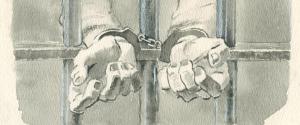
remembering-muted-voicesThe World War’s profound effect on the United States is often overlooked. Although the United States actively took part in the conflict for only 18 months, the war effort introduced mass conscription, transformed the American economy, and mobilized popular support through war bonds, patriotic rallies, and anti-German propaganda. Nevertheless, many people desired a negotiated peace, opposed American intervention, refused to support the war effort, and/or even imagined future world orders that could eliminate war. Among them were members of the peace churches and other religious groups, women, pacifists, radicals, labor activists, and other dissenters.

Intolerance and repression often mute the voices of war critics. Almost overnight in 1917, individuals and groups who opposed the war faced constraints on their freedom to advocate, organize, and protest. The Selective Service Act of 1917 made few concessions for conscientious objectors. The Espionage Act of 1917—reinforced by the Sedition Act of 1918—prohibited many forms of speech and made it a crime to interfere with the draft. Peace advocates, antiwar activists and conscientious objectors confronted not only external hostility from the government, the press, and war supporters, but also internal disagreements over how to respond to the war and advance the cause of peace. The experience of American dissenters was not unique; their counterparts in other belligerent countries and colonial dependencies found themselves in comparable situations. Yet, those who opposed World War I helped initiate modern peace movements and left a legacy that continues to influence antiwar activism.

We invite proposals for papers, panels, posters, roundtables, and workshops that engage in diverse ways with issues of conscience, dissent, resistance, and civil liberties during World War I, in the United States and around the world. We encourage proposals that examine historical and contemporary parallels to the war. Strong conference papers will be given consideration for publication in special issues of Mennonite Quarterly Review and Peace & Change.

Topics Might Cover:

  • War Resistance as an Expression of Religious Conscience (Amish, Brethren, Catholics, Hutterites, Latter Day Saints, Mennonites, Methodists, Nazarenes, Pentecostals, Quakers, etc.)
  • Secular Dissent and Resistance to War (feminists, socialists, and other movements and communities)
  • The Costs of War (economic, political, social, physical, psychological, etc.)
  • Civil Liberties in World War I and War Today
  • Race, Empire, and World War I
  • The Legacy and Relevance of World War I Peace Activism to the Present
  • The Causes and Prevention of War: World War I and Since
  • Teaching World War I and Peace History in High School and College
  • Memory, Memorialization, and the Public History of World War I

The program committee invites interested participants to send a 1-page proposal focused on the theme of the conference by January 31, 2017 to John D. Roth at johndr@goshen.edu.

For more on the conference, click here.

Tell Me Your Stories and I’ll Tell You Mine

This is a response to “Mennonite Genealogy and Racial Privilege” by Ben Goossen.

Steve Ness

As librarian and archivist at the Lancaster Mennonite Historical Society (LMHS), a question that I hear quite often is, “Do the genealogical records in your library only include Mennonites?” My response is to encourage any researcher with an ancestral connection to southeastern Pennsylvania (and Lancaster County in particular) to spend some time digging into the many genealogical resources that we make available. While our focus is on the history of the Mennonites of this area, the genealogies and other resources in our collections contain many non-Mennonites as well. Any good genealogist will understand that they cannot claim that all of their ancestors were of a particular denomination any more than they can claim that they were all admirable.

Any good genealogist will understand that they cannot claim that all of their ancestors were of a particular denomination any more than they can claim that they were all admirable.

Ben Goossen, in his post, “Mennonite Genealogy and Racial Privilege,” states that little has been written about how Mennonites have historically approached the field of genealogy. I agree that it is a subject that warrants proper investigation.1 Despite the dearth of research, however, Goossen makes the claim that, “Over the past century, white Mennonites have expressed uncommon interest in their ancestry.” I suspect that this cannot be substantiated and that Mennonite interest in genealogy is not significantly different than one would find among the rest of the population.

As is the case with many historical societies, the majority of visitors to the LMHS library arrive with the purpose of conducting genealogical research. A conservative estimate would be ninety percent. Of these, probably fewer than half consider themselves to be Mennonite. Some suspect or have been told that they have some Mennonite or Amish ancestry; some already know that they do, and some are surprised to learn of a Mennonite connection. This is due to historic migration patterns that have interwoven Mennonites into the fabric of broader Pennsylvania German culture in southeastern Pennsylvania. Many people across the United States—both Mennonite and non-Mennonite—have ancestral connections to this area which they value.

If Mennonite family and religious identity is so tightly bound, why aren’t more Mennonite individuals, congregations, and institutions expressing greater interest in their history?

Many LMHS members are not Mennonite and, despite the fact that the Historical Society serves as the official repository for Lancaster Mennonite Conference (LMC) and Atlantic Coast Conference (ACC) records, LMC and ACC congregants represent a disappointingly-small percentage of LMHS membership overall. If Mennonite family and religious identity is so tightly bound, why aren’t more Mennonite individuals, congregations, and institutions expressing greater interest in their history? Even one of the examples Goossen provides of a “Mennonite genealogical publication”—Theodore W. Herr’s 1908 book on the descendants of Hans Herr—was neither written by a Mennonite nor printed by a Mennonite publisher.2

Genealogy is one of the most popular hobbies in the United States.  A 2008 poll cited by USA Today identifies only gardening as being more popular.3 The air time that major television networks have provided for shows focused on genealogy is additional evidence of its general appeal. The article’s author recognizes that genealogy has been used as a tool for exclusion but, unlike Goossen, emphasizes instead the value of genealogical research in helping us—all of us—understand better the stories of our past that help to shape us today.

Is there such a thing as “Mennonite Genealogy?” I am doubtful. Certainly there is privilege in the ability of white Mennonites to trace many of their ancestral lines back multiple generations with relative ease. I would argue that honest engagement with our past reveals a richer diversity in our stories than we might first imagine. Rather than seeing genealogy as a tool to build walls, we should embrace it as a technique to learn from and value the stories of everyone. Let’s sit down and listen to each other. You tell me your stories and I’ll tell you mine.


Steve Ness is a graduate of Eastern Mennonite College (B.S., History and Social Science) and Clarion University (M.S.L.S., Library and Information Science). His ancestry includes persons who were Amish, Church of the Brethren, Lutheran, Mennonite, United Brethren, and others.


See also:


  1. Such research should include a more comprehensive examination of Christian Z. Mast, whose words in A Brief History of Bishop Jacob Mast… sound troubling to our twenty-first-century ears. Good historical research will look more carefully at the context in which Mast was writing, how the words quoted by Goossen fit with Mast’s other writings, and how representative Mast was of the larger Mennonite community at that time. Until such research is done I think it wise to temper condemnation. 
  2.  The book was republished twice by the Lancaster Mennonite Historical Society—in 1980 and 1994. The third edition contained updates and corrections by Phillip E. Bedient, former emeritus professor at Franklin and Marshall College and member of the United Methodist Church. 
  3. Rodriguez, Gregory. “Roots of Genealogy Craze.” . Online at  http://www.usatoday.com/story/opinion/2014/05/12/genealogy-americans-technology-roots-porn-websites-column/9019409/. 

David Rempel Smucker Responds to “Mennonite Genealogy and Racial Privilege”

This is a response to “Mennonite Genealogy and Racial Privilege” by Ben Goossen.

David Rempel Smucker

Mennonites doing genealogical research may or may not have undesirable attitudes about racial privilege. Goossen works from one case—Christian Z. Mast—out of the thousands of Mennonites who have done genealogical research. In my twenty-two years (1981-2003) of assisting people doing historical and genealogical research at the Lancaster Mennonite Historical Society library and archives (Lancaster, Pa.), I encountered many people in the following two categories: Mennonites who discovered information about non-Mennonite ancestors, and non-Mennonites who discovered their Mennonite and Amish ancestors. Both gained an enlarged sense of lineage from their genealogical study. These researchers emerged with an expanded identity that incorporated people of varied religious and ethnic persuasions.

These researchers emerged with an expanded identity that incorporated people of varied religious and ethnic persuasions.

Goossen also calls the vigorous interest in family history research among Mennonites “uncommon,” as if that interest is higher than that of other denominations. My years at Lancaster Mennonite Historical Society acquainted me with many other denominational and ethnic groups with historical and genealogical organizations. Of course, the Latter Day Saints (Mormons) is perhaps the denomination with the most interest in genealogy. In my experience, they were very generous in their willingness to share their vast historical resources with all researchers. They also quickly discovered how many contemporary Mormons had non-Mormon ancestors, and vice-versa.

To suggest that “Mennonite family history research is intimately connected to issues of racial privilege,” as Goossen does, is far too sweeping. It is similar to saying that I know a racist plumber, so I conclude that plumbing has an affinity to racism. Christian Mast’s ideas on race and culture are mistaken and lamentable, but one case does not constitute sufficient proof. Nor does that racism totally ruin the genealogical value of his book.  To show that Mennonite genealogy in Germany in the 1930s was influenced by Nazi ideology on race does not support generalizations about all Mennonite genealogy.  


David Rempel Smucker, Ph.D., former staff of Lancaster Mennonite Historical Society, a resident of Winnipeg, Manitoba.


See also:


Who Calls Whom Racist, and What’s the Privilege With That?

This is a response to “Mennonite Genealogy and Racial Privilege” by Ben Goossen.

Philipp Gollner

I would rather not smoke a pipe with Mr. Mast. He’ll compliment me on my German accent, and how tall and “sterling” I am. Privilege, for this outsider. But I would rather not chat it up with “Genealogists against Inequality” either. They’ll tell me that it’s really, really, really, ok that I don’t have Mennonite relatives. They’ll say “diversity” thirty-four times. And, oh no, we’re not a tribe. Only peace and justice, that’s what we’re tracking.

I cheer Goossen’s probing of the artifacts of Mennonite belonging. Mennonite material culture remains understudied, even as Mennonites’ merging of ethnic and religious cultures continues to yield plenty of sacred stuff.

On a larger scale, however, I wonder if there aren’t eerie similarities between early twentieth-century version of American Mennonite purity and contemporary highbrow Mennonite longings for the post-ethnic. And I suspect that any real investigation of privilege in Mennonite history in the United States is ill-served by the N-word (that is, Nazi)—because too often, the N-word hits bottom as a convenient, anachronistic catch-all; because most “Mennonite ethnicity” in North America is much older and more complex; and because Mennonite privilege, even purity, are now passed on through more than blood.

Might enlisting genealogy again in the cause of a more perfect church—a post-ethnic one, this time—continue, not disrupt, this puritan streak of Mennonite mapping?

Those with enough brains to write, and enough politics to pull in the church, mapped Mennonite racial purity in early twentieth-century America. They weren’t only keepers of memory—they also pruned the family tree, made it more presentable. They were activists for the church’s present relevance and its future purity. (Mast, by the way, represented a progressive group that soon dropped the term “Amish” altogether.)

Might enlisting genealogy again in the cause of a more perfect church—a post-ethnic one, this time—continue, not disrupt, this puritan streak of Mennonite mapping? Doesn’t it simply perpetuate the original Mennonite desire for a fresh break, a clean sheet? And could such an exculpation make authentic relationships with non-white Anabaptists, who often rely on the messy transmission of ancestry and culture for a vital faith community, even more awkward?

More importantly, the building blocks of Mennonite aristocracy have changed from Blut und Boden to subtler forms of privilege: educational opportunities, denominational connections, the right ideas. Mennonite parents of my and Goossen’s generation won’t tell their young ones what a “stern” race theirs is. They access other privilege: they will tell their children to be “world-changers,” before they ever show a photo of their great-grandmother. They will humblebrag that their child has never eaten at McDonald’s, but loves vegan curry. Doesn’t know football, but is the bestest peacemaker of them all in second grade. Swims in a pool of Mennonite social capital, but grows up with the assumption that the virtue of studying its history lies chiefly in uncovering its oppressive character.

Therein, too, is purity. Therein, too, is privilege—and its passing on. And to the extent that an openly worn revulsion against the unbearable Teutonism of many North American Mennonite bloodlines helps us white progressives mask this privilege while accumulating another (think: “world changers”), it is no way forward.

I have no Mennonite ancestors. Sometimes I wish I would. The one grandparent who was an National Socialist soldier was a socialist, and deserted in 1944. Sometimes I wish I had a Nazi Other to point at. My daughters are growing up binational, bilingual. Sometimes I wish their belonging was clearer. But my diverse non-Anabaptist students find us educated white Mennos most grating when we preach color-free virtue, not when we are a tribe, warts and all. And most times, I’m with them.

Whither genealogists? I don’t even know if it’s my business as a historian to tell them. Poking Mennonite privilege with the help of history, however, will take more than the obvious scrutiny of race science. Instead, it might make collateral damage out of many of us white progressives.


Philipp Gollner (Ph.D., University of Notre Dame) is an Assistant Professor of U.S. History at Goshen College. Most recently, he is the author of “How Mennonites Became White: Religious Activism and Cultural Power.” Mennonite Quarterly Review 90 (April 2016). Catch up with him on twitter, or philippgollner.com


SEE ALSO:

Mennonite Genealogy and Racial Privilege

Editor’s Note: In keeping with the mission of Anabaptist Historians to foster lively debate on important topics, we have solicited responses to this post from several experts. Check in over the coming weeks to follow the discussion or contact us to submit your own contribution.

Ben Goossen

A tour of my parents’ house is also a journey into our family’s past. Tables, china hutches, and clocks carry stories of craftsmanship in Europe or of pioneer life in Nebraska, Kansas, or South Dakota. Here a bowl that crossed the Atlantic, there a Bible from Prussia. All are bound up with tales of our ancestors’ faith, of the Anabaptist values that—so the story goes—led them from country to country in search of peace, shelter, and good, hearty land.

14914599_3711188936990_746584616_n

A “memory box” depicting the pioneer life of Mennonite immigrants from Russia.

Like other “ethnic” Mennonites across Europe and the Americas, I learned from a young age to associate my religion with genealogy. A “memory box,” perched in a place of honor in my parents’ library, shows how family stories and material objects can interweave the threads of faith and ancestry. Constructed by my great-grandmother, the box contains photographs of her own grandparents, Jacob and Suzanne Balzer, who emigrated from southern Russia to Minnesota; an invitation to the wedding of their daughter; dried straw flowers; silk worm cocoons and a silk spool; nineteenth-century German-language storybooks; heirloom seeds; and part of a shirt sewn in Russia. The box uses artifacts to build a cultural atmosphere around memories of Mennonite immigration to the United States. My forebears, the objects imply, were straight-laced and pious. They spoke German. They worked with their hands and found fulfillment in tending the soil.

Over the past century, white Mennonites have expressed uncommon interest in their ancestry. Children’s books, historical scholarship, and memoirs often follow family narratives or depict the supposedly upright and persevering character of the “Mennonite people.” I can only begin to enumerate the ways my own life has been shaped by ancestral knowledge: The largest book in my childhood room was a genealogy compiled by my grandmother. Whenever I meet “ethnic” Mennonites from Europe or the Americas, new acquaintances hear my last name and recognize me as one of their own. As a historian of Anabaptism, I frequent websites maintained by amateur genealogists, who have located an amazing number of rare documents; a printout of my own family tree from one Mennonite database revealed hundreds of direct forebearers over seventeen generations, the earliest dating to the sixteenth-century Reformation.

It is remarkable that although Anabaptist studies is a well-developed field, no scholar has yet written a history of Mennonite genealogical practices. Family researchers themselves often assume that genealogy has always been a normal and important part of Anabaptist life. Yet as historians of ancestry are beginning to demonstrate, genealogy as we understand it today is quite a recent concept, finding widespread acclaim only in the last hundred and fifty years. While some communities, Anabaptist and otherwise, had long recorded birth, death, and baptismal dates in family bibles or congregational record books—perhaps finding inspiration in the genealogies of Jesus as presented in the New Testament—it was not until the second half of the nineteenth century that such information became subject to rigorous study and publication.1 And far from an ideologically neutral undertaking, genealogy in the modern era emerged largely in the context of scientific racism and social exclusion. “From the 1860s to the mid-twentieth century,” writes François Weil in his recent book, Family Trees: A History of Genealogy in America, “racial purity, nativism, and nationalism successfully dominated the quest for pedigree.”2
14881727_3711189216997_391176032_o

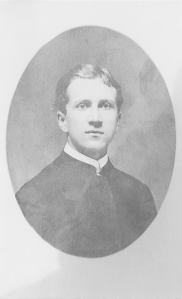
Christian Mast (1885-1974), Amish Mennonite historian and genealogist.

To what degree can this charge be leveled at Mennonite genealogy? I have argued elsewhere that the blossoming of Mennonite family research in 1930s Germany intimately reflected Nazi-era concerns with blood purity and racial hygiene.3 Comparable practices in other countries developed under different, if interrelated, circumstances. My hope is that this essay will spur more sustained inquiry into the origins and nature of Mennonite family research, especially in North America. This is not the space to provide a full sketch of what such an undertaking might entail. But I can indicate some of the possibilities through a short case study: a look at the genealogist Christian Mast and his book, A Brief History of Bishop Jacob Mast and Other Mast Pioneers, printed in 1911 by the Mennonite Publishing House.

The son of an Amish Mennonite Bishop from Pennsylvania, Christian Mast wrote his Brief History while still in his mid-20s. It appeared at a time when genealogical interest was rising among Anabaptists as well as wider American society. “Never before have people been more inquisitive and diligent in investigating the study of their ancestry than at this time,” Mast explained in his introduction, noting that although only a minority of US citizens knew much about their heritage, “it is a matter of congratulation that some are turning attention to family genealogy.”4 The author himself gathered material from relatives scattered across Pennsylvania, Ohio, Iowa, and Indiana—and he corresponded with other Anabaptist genealogists researching the Funk, Oberholzer, Hostetler, and Wenger families. Upon completion, Mast sent a copy of his book to the United States’ oldest and largest repository of ancestral knowledge, the New England Historic Genealogical Society.5

Although his extensive papers await detailed analysis, it is clear that Mast was well-read in both American history and the scientific study of ancestry. His Brief History opens with a discussion of the alleged racial prowess of America’s white pioneers, supported by quotations from the likes of Daniel Webster and Henry Clay. In a section on heredity, the author dwelled extensively on the relationship between ancestry and virility, invoking the nineteenth-century phrenologist George Combe to advocate a far-reaching eugenic program. “As a nation’s greatness depends upon the character of her population,” Mast wrote, “it is the duty of every government to bestow at least as much attention upon the improvement of her human stock, as agricultural societies expend upon the improvement of the breeds of their horses and cattle.”6 Warning in particular against degeneration through endogamous marriage, he praised spousal selection as a means of preventing heredity diseases, bodily deformities, mental retardation, and even moral failings.

14914934_3711205817412_702325373_n

This frontispiece to Christian Mast’s Brief History shows the homestead of the author’s ancestor, Jacob Mast, who migrated from Switzerland to Pennsylvania in 1750.

In its discussion of American nationhood, Mast’s Brief History identified a privileged role for Anabaptist bloodlines. “[O]ur Swiss and German ancestors,” the genealogist opined, “were the pure material of the Teutonic nation; being stern, sterling and frugal.” While Mast acknowledged that some of his relatives had become soldiers, fallen into evil ways, or otherwise lived “without God,” he maintained that most had led exemplary Christian lives of nonviolent witness. The writer especially contrasted Anabaptist qualities with those of Native Americans, whose “physical and mental power have… melted into weakness.” While the diligence, industriousness, and farming acumen of Amish and Mennonite settlers were said to exemplify the “bone and sinew of a nation,” inbreeding had supposedly left people of color with limited mental and physical abilities. When narrating Indian attacks against early Anabaptist immigrants, for instance, Mast emphasized the animal-like nature of these “savages,” in turn justifying his forebearers’ seizure of native lands.7

To what extent were Mast’s views typical of Mennonite genealogists at the beginning of the twentieth century? And in what ways do racist undertones continue to inform family research in Anabaptist communities today? A full answer to these questions awaits further study. It is nevertheless telling that although most Mennonites living across the world today are people of color, popular stereotypes continue to associate the denomination with white “ethnic” members of Germanic descent. Genealogy has remained an avenue for white Anabaptists to identify their families’ longstanding adherence to the faith, and in many cases, to trace their ancestry to the religion’s origins in Reformation-era Europe—a possibility unavailable to most members of color. Moreover, the recent advent of DNA testing and genetic research among “ethnic” populations are once again privileging the notion that Anabaptism is as much an inheritable trait as a religious conviction.8

Mennonite family research is intimately connected to issues of racial privilege. Whether in the seemingly innocuous memorial culture of my parents’ home or in the overtly racist language of historic figures like Christian Mast, it is time to take seriously its ideological power. It is time to ask how genealogists, along with the rest of us, can respond to inequalities within the church and beyond.

Thanks to Rachel Waltner Goossen and Joel H. Nofziger for their assistance with this essay.


SEE ALSO:


  1. Early examples of Mennonite genealogical publications include Jacob N. Brubacher, The Brubacher Genealogy in America (Elkhart, IN: Mennonite Publishing Co., 1884); John H. Hess, A Genealogy of the Hess Family from the First Emigrant to this Country Down to the Present Time as Far as Could Be Ascertained (Lititz, PA: Express Print, 1896); Franklin Keagy, A History of the Kägy Relationship in America from 1715 to 1900 (Harrisburg, PA: Harrisburg Publishing Company, 1899); Theodore W. Herr, Genealogical Record of Reverend Hans Herr and his Direct Lineal Descendants from his Birth A. D. 1639 to the Present Time Containing the Names, etc., of 13223 Persons (Lancaster, PA: The Examiner Printing House, 1908). 
  2.  François Weil, Family Trees: A History of Genealogy in America (Cambridge: Harvard University Press, 2013), 6.  
  3.  Benjamin W. Goossen, “From Aryanism to Anabaptism: Nazi Race Science and the Language of Mennonite Ethnicity,” Mennonite Quarterly Review 90 (April 2016): 135-163. 
  4.  C. Z. Mast, A Brief History of Bishop Jacob Mast and Other Mast Pioneers and a Complete Family Register and Those Related by Inter-Marriage (Scottdale, PA: Mennonite Publishing House Press, 1911), 12. See also the co-authored volume, C. Z. Mast and Robert E. Simpson, Annals of the Conestoga Valley in Lancaster, Berks, and Chester Counties, Pennsylvania (Scottdale, PA: Mennonite Publishing House, 1942), which contains extensive genealogical information on Anabaptist families. 
  5.  The New England Historic Genealogical Society thanked Mast in Wm. P. Greenlaws to C. Z. Mast, March 21, 1912, Mast, Christian Z., Papers, box 2: Correspondence C. Z. M. (Annals-N.C.), folder 4: Mast Genealogy, Lancaster Mennonite Historical Society. Mast’s name also appeared in “List of Donors to the Library,” The New England Historical and Genealogical Register (Supplement to April Number, 1913): xxxi. 
  6.  Mast, A Brief History, 749. On pages 748 and 749, he quoted a passage on physical and mental degeneracy from George Combe, Moral Philosophy; Or, The Duties of Man Considered in His Individual, Domestic, and Social Capacities (New York: Fowler and Wells, 1863), 85. Scholars have noted the centrality of such arguments, as well as of genealogical practices generally, to the rise of eugenics programs in the late nineteenth and early twentieth centuries. See Alison Bashford and Philippa Levine, eds., The Oxford Handbook of the History of Eugenics (Oxford: Oxford University Press, 2010), 9-10. 
  7. Quotations from Mast, A Brief History, 12-13, 18, 748. 
  8.  On genetic testing among “ethnic” Mennonite populations, see for example Cheryl Rockman-Greenberg and Marlis Schroeder, “Mennonites, Hypophosphatasia and Severe Combined Immunodeficiency Disease: The Story of Two Genetic Disorders,” Journal of Mennonite Studies 34 (2016): 89-104. Recent scholarship on the genetic reinscriptionof race includes Nadia Abu El-Haj, The Genealogical Science: The Search for Jewish Origins and the Politics of Epistemology (Chicago: University of Chicago Press, 2012), and Alondra Nelson, The Social Life of DNA: Race, Reparations, and Reconciliation After the Genome (Boston: Beacon Press, 2016). 

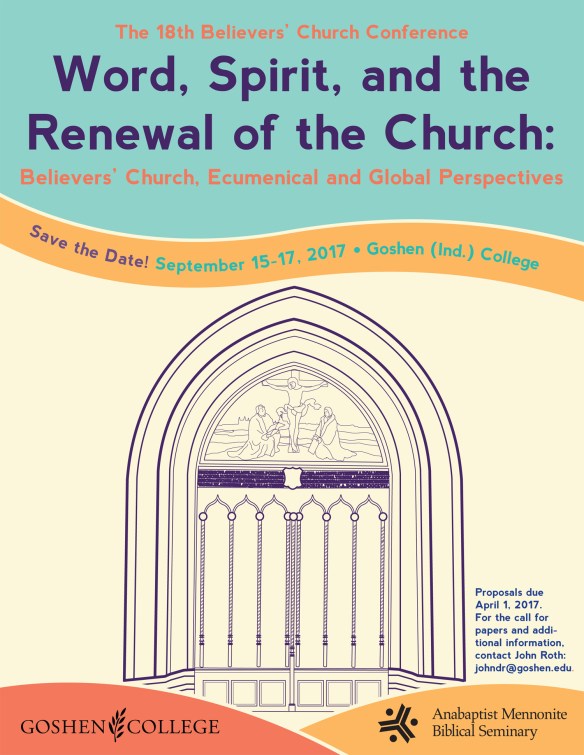
Call for Papers: Word, Spirit, and the Renewal of the Church

believerschurchconfwordspiritrenewalposter

In the fall of 1517, Martin Luther’s challenge to the authority of the papacy and church tradition—along with his appeal to Sola Scriptura (Scripture alone)—inspired various reformers to read scripture and to understand the liberating power of the Holy Spirit in new ways. But what started as a renewal movement within the Catholic Church soon led to a host of divisions, giving rise to Protestant, Anabaptist, and other traditions, including those groups known as the Believers’ Church. Among the latter, the deep debts to the renewal impulses of late medieval Catholicism and the Protestant Reformation are unmistakable. In the 500 years since then, the church—including the Believers’ Church movement—has further expanded globally in a great diversity of forms.

This conference seeks to explore the gifts and tensions of the Reformation legacy for the Believers’ Church tradition, with a view toward its ecumenical and global dimensions. The gathering will focus especially on the debates that have swirled around the themes of Biblical authority, the movement of the Spirit, and the renewal of the church.

The conference theme “Word, Spirit, and the Renewal of the Church” can encompass a wide range of disciplines, approaches, and topics. We seek proposals from theologians, biblical scholars, ethicists, historians, pastors, and graduate students that address how the debates of the sixteenth century continue to find expression in contemporary understandings of Word, Spirit, and the renewal of the church. We are especially interested in papers that bring voices from the Believers’ Church into conversation with other Christian traditions.

Possible questions and topics to address include:

  • How does a given understanding of Word and Spirit, and their relation to each other, interact with another doctrine (e.g., creation, Christology, ecclesiology, etc.)?
  • What are some of the theological and sociological dynamics of past and present renewal movements within the Believers’ Church tradition?
  • How do groups in the Believers’ Church tradition interpret the Bible and its authority vis-à-vis other Christian traditions?
  • How has the Reformation called into question the location of the church: where/who is the church today?
  • What are some of the key issues facing comparative theologies, ethics, and practices of grace, discipleship, tradition, enculturation, church unity and renewal, worship and preaching, etc.?
  • How are the central issues of the Reformation relevant to the Believers’ Church, especially in its global dimension?

Presentations should reflect a thoughtful engagement with scholarship but be accessible to a broad audience, including interested lay people. A limited number of travel grants will be available, with highest priority going to presenters coming from the Global South and students.

Please submit a one-page CV and a 250-word abstract for a paper or a complete panel/workshop session (with presenters indicated) by April 1, 2017 to John D. Roth (johndr@goshen.edu). Conference organizers will respond by May 1, 2017.

Encounters with the Spirit: Anabaptists in the Charismatic Movement (Part 1)

At the start of this year, I queried the Anabaptist-Mennonite scholars I follow on Twitter and Facebook:

My scholar friends suggested a few books — mostly theological/pastoral texts, rather than historical treatments. Fortunately, they weren’t the only ones to respond: my pastor friends (especially in Mennonite Church USA) offered lots of suggestions. They pointed me to groups such as the Hopewell Network, a group of formerly Mennonite churches born through charismatic outpourings that split off from Atlantic Coast Conference in 2001 after it developed a more “interdenominational vision” of ministry, as well as to specific Mennonite individuals and congregations influenced by the charismatic movement. They even offered to set up some oral history interviews for me! But they also couldn’t point to any historical treatments of the subject.

The whole interaction confirmed what I already suspected: Anabaptist-Mennonite historians have paid very little attention to charismatic expressions within the traditions they study. While much—though not enough—ink has been spilled trying to understand the roles played by Anabaptists in the post-World War II evangelical renewal movement, little to no scholarly effort has been directed toward Anabaptists’ role in charismatic renewal. But as my pastor-friends’ comments showed, the historiographical silence belies the reality that lots of Mennonites and Brethren in Christ have embraced and been influenced by charismatic beliefs and practices.

This silence is telling, because it reminds us of the problematic ways that Mennonite historians have typically framed the influence of renewal movements (especially post-World War II evangelical renewal) on Mennonites. Here’s how David R. Swartz has described the conventional historiography:

The usual narrative is one of declension, a story of evangelicalism’s insensitivity to the perils of militarism, of getting into bed with American culture, of more concern for theological particularities and not enough concern for ethics, of its easy denunciation of abortion and its defense of capital punishment. . . . Its logic assumes both a caricatured evangelicalism (pictured as fundamentalist vultures) and Mennonitism (pictured as pristine pacifists). 1

Historians will recognize that the declension mode frames other stories of Mennonite encounter, including the colonial-era encounter between North American Mennonite immigrants and radical Pietists.2 Yet as Swartz concludes, while there is truth in the declension narrative critique, this framework is too simplistic.3 Telling the story of Anabaptists in the charismatic movement offers historians an opportunity to move beyond the “simplistic” declension narratives and to explore alternative ways of talking about Mennonites and the broader Protestant world.

A conference held at Wycliffe Hall, Oxford University, UK

A conference held at Wycliffe Hall, Oxford University, UK

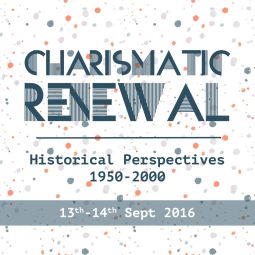
I’m still in the process of sorting out how and why Mennonites and Brethren in Christ took part in charismatic renewal, and what their involvement means for the story of North American Anabaptism in the twentieth century. I shared some of my initial thoughts at a conference in September — “Charismatic Renewal: Historical Perspectives, 1950-2000,” a two-day event at Wycliffe Hall at Oxford University in the UK. In the next couple of posts in this series, I’ll draw on the paper I presented at that conference to set out a few tentative ideas about Anabaptist-Mennonites and the meaning of their encounters with the Spirit in the last half of the twentieth century. Stay tuned!


  1. David R. Swartz, “New Directions in North American Mennonite History,” The Mennonite Quarterly Review 81 (January 2007): 72. 
  2. Ibid. 
  3. See, for instance, the first half of Robert Friedmann, Mennonite Piety Through the Centuries: Its Genius and Its Literature (Scottdale, Pa.: Herald Press, 1949). For a critique of the “Friedmann thesis” when it comes to Anabaptism and Pietism, see Chris Gehrz, “The Friedmann Thesis,” The Pietist Schoolman, https://pietistschoolman.com/2011/07/05/the-friedmann-thesis/