Tobin Miller Shearer
In an era when the sitting president of the United States is able to re-tweet highly racist and inflammatory videos with apparent impunity, we need ever more sophisticated and historically grounded means of analyzing the problem before us. Although the use of historical analysis for political ends is fraught with difficulty, careful attention to specific historical trends can be illustrative. This graph-based analysis of Lancaster Mennonite Conference’s engagement in and response to racism from 1900 through 1970 may offer some insight for our present moment. This kind of analysis may show us the pieces we are missing in our present response.
* * * *
I expect that I am far too fond of charts. My friends, when they’re being honest, tease me about my nerdy ways. Workshop participants shake their heads bemusedly in response to my excitement when I comment on a new handout.
So it is not surprising that I would turn to graphic representation for a new study of racism in Lancaster Mennonite Conference.
Actually the research is not entirely new. I simply revisited the database I developed when writing my dissertation and subsequent book Daily Demonstrators: The Civil Rights Movement in Mennonite Homes and Sanctuaries (Johns Hopkins: 2010). I then mapped the ways in which white Lancaster Mennonite Conference leaders and members dealt with external and internal race relations. The charts emerged from conversations that Cheryl Miller Shearer, my life partner, and I had as we prepared to lead a Sunday School class on racism and white supremacy at our congregation. I’ve chose Lancaster Mennonite Conference as the focus of my study because of their geographical location in a region representative of much of the kind of racism we see resurgent in society today.
 The first graphic (Chart A) positions acts of racism on a grid with a public/private y-axis (vertical line) and an individual/collective x-axis (horizontal line). While by no means representative of every conceivable type of racist action, the graphic demonstrates that acts of racism in the twentieth century have been carried out across the full spectrum of public/private arenas and by a wide array of individuals and groups. The chart also suggests that collective manifestations of racism have been far more prevalent – and therefore damaging – than have individual acts of racism.
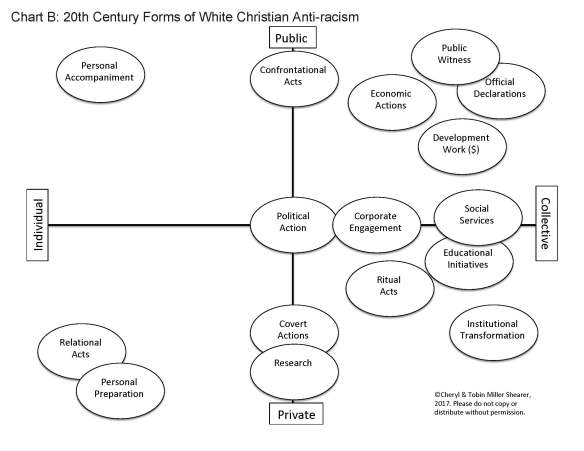 The second graphic (Chart B) positions acts of anti-racism on the same public/private|individual/collective grid. In particular, the named categories are representative—though not comprehensively so—of the kinds of anti-racist actions taken by white Christians in the twentieth century. This chart indicates that—across the white Christian community—responses to racism have been fairly robust and, to a degree, addressed racism in all its manifestations. What the chart does not indicate is the degree to which these responses are common in various Christian communities. For example, few white-majority Christian groups have been comfortable with confrontational acts or covert actions (for descriptions of the categories used on this chart see Appendix One below). Responses to racism on the individual end of the horizontal axis have been somewhat anemic, suggesting that white congregations have done less well at preparing and equipping their congregants to resist racism on an individual basis even though many white church leaders claim that they do encourage their congregants to take individual action.
 The third graphic (Chart C) highlights a sampling of the kinds of racism that white Mennonites in Lancaster Conference participated in between 1900 and 1970 according to the records I have surveyed below and anecdotal evidence shared with me over the years (for citations and complete source listing, see Appendix Two). White Lancaster Conference Mennonites display a pattern consistent with the broader society during the first seven decades of the twentieth century. The Lancaster Conference actively and knowingly participated in racial segregation, promoted paternalistic programs like Fresh Air summer hosting ventures, invested far more money and resources in white congregations than in congregations of color, told racist jokes, and regularly hired those who looked like them.
None of this is surprising.
 The fourth graphic (Chart D) highlights the kinds of anti-racism that white Mennonites in Lancaster Conference participated in between 1900 and 1970. Here again, most of the actions conform to patterns consistent with the broader society. As Christian Smith and Michael Emerson have demonstrated, white Protestant Christians—of which Lancaster Mennonites would be a sub-category—have been far more comfortable engaging in relational acts, non-political social service projects, and some types of educational initiatives. In short, actions in the public-collective quadrant are rare.
It is somewhat surprising, then, to note that Lancaster Mennonite Conference did pass a public “race relations statement” in 1960 and then assigned a committee to revise it in 1970. Much could be said about the content of the 1960 statement. I will limit my comment here to note that the 1960 statement is strong on integrationist thought and action but does not deal with systemic manifestations of racism. Nonetheless, the statement did put Lancaster Mennonite Conference on record as opposing “race prejudice” and the “segregation of races.”
The other outlier that Chart D points to is that Lancaster Mennonite Conference went through a rather substantive shift from an overtly and unapologetic segregated institution to an, at least officially, desegregated institution. Prior to the passage of the 1960 statement, Lancaster Conference institutions practiced racial segregation in congregations, Vacation Bible Schools, Sunday Schools, mission outreach, and retirement communities. They did so deliberately, by official decision, and with little record of hesitation. The decision to integrate all such facilities did result in integrated congregations, retirement communities, etc., but the implementation of that integration was slow, attenuated, and incomplete a decade later.
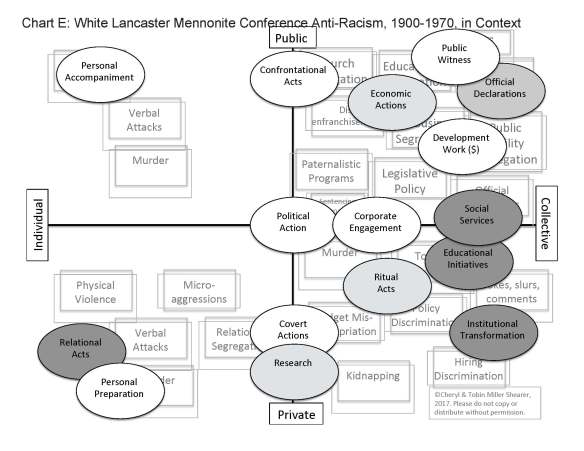 The fifth and final graphic (Chart E) superimposes this record of anti-racist response on the breadth of racist actions in society. As the chart makes evident, white Lancaster Conference Mennonites were historically far more prepared to address acts of racism when they occurred in private and were non-confrontational in nature. With the exception of passing their race relations statement, white Lancaster Conference Mennonites did little if anything to respond to the public-collective—and therefore systemic—acts of racism and were likewise ill-prepared to respond to institutional racism in the form of lending practices, hiring decisions, policy determinations, etc.
I was, however, surprised to encounter the founding documents of Menno Housing, a Lancaster Conference related initiative to promote racially integrated neighborhoods. Leaders of Menno Housing did so by providing housing for “minority group families … in white neighborhoods” and for “white families” in historically black and brown neighborhoods. This kind of economically focused programming addressed the public issue of housing segregation and drew attention to the lending and realty practices that supported it.
The biggest take-away from my charting exercise is that white Lancaster Conference Mennonites were best equipped to respond to racism when it took interpersonal forms in the individual-private quadrant. Between 1900 and 1970, members of this community learned the lessons that they should not use racial epithets or tell racist jokes and that they should have friends from other racial groups. During that time period, they did not learn, however, of the overwhelming, sustained patterns of systemic and institutional racism both within and without their community. They lacked the theological and programmatic resources necessary to dismantle racism in all of the four quadrants in which racism operated in their churches and the society around them.
According to available research, what was true for white Mennonites in Lancaster Conference was true for most white members of mainline denominations in the United States. The question then, as now, is how will we equip our white congregations to be ready to respond to racism in its collective forms—that is both systemic and institutional—whether publicly or privately manifested?
White church leaders often contend their congregants are prepared to deal with racism on an individual basis. If that is all they do, if that is the only piece of the puzzle they have to offer, the kind of overt racism practiced by our current president —not to mention the less overt and systemic kinds—will remain with us for a very long time. We need to add the missing pieces of public, collective action to our faith-based responses.
Appendix One: Categories Used in Chart B
- Ritual acts (prayer, liturgy, worship, etc.)
- Public witness (marches, picketing, vigils, etc.)
- Confrontational acts (meeting disruption, sit-ins, personal confrontation, etc.)
- Educational initiatives (classes, workshops, book clubs, etc.)
- Personal preparation/education (fasting, reading, personal prayer, etc.)
- Research development (local history, institutional analysis, writing, etc.)
- Institutional transformation (changing policy, procedure, mission statements, practices, etc.)
- Development work ($) (giving drives, fundraisers, budgetary allocation, etc.)
- Relational connections (one-one-one conversations, personal challenges, interrupting racist jokes, etc.)
- Social service programming (food drives, housing initiatives, emergency monetary provision, etc.)
- Official declarations (statements, pastoral letters, sermons, etc.)
- Personal accompaniment (night watches, witnesses, being present, etc.)
- Political actions (letter writing, voting, advocacy for candidates, etc.)
- Covert actions (hiding refugees, secret taping, group infiltration, etc.)
- Corporate engagement (stock purchasing, board membership, board ownership, etc.)
- Economic actions (boycotting, strikes, work slowdowns, etc.)
Appendix Two: Citations for Chart C
Ritual acts (prayer, liturgy, worship, etc.)
- 1963 ordination of “first colored minister” James Harris in Lancaster conference (1963b)
Public witness (marches, picketing, vigils, etc.)
- 1970 Lancaster conference leaders make specific statement not to become involved in marches or demonstrations (1970b)
- 1970 Pastoral Messenger editorial repeats opposition to marches (Baer 1970)
Confrontational acts (meeting disruption, sit-ins, personal confrontation, etc.)
Educational initiatives (classes, workshops, book clubs, etc.)
- 1926 Publication of article by black author (Faust 1926)
- 1939 Publication of article about mission work among African-Americans (Good 1939)
- 1946 Publication of article describing racism within and without the church (Erb 1946)
- 1946 Publication of editorial asking whether the church is equipped to engage in “Negro missions” (Wert 1946)
- 1950 Publication of advice on relating to “negroes” including call for fresh air hosting (Brubaker 1950)
- 1952 Publication of article on “Winning the Negro with Love” (Lehman 1952)
- 1960 Publication of article on “Building Interracial Churches” that includes quote “We don’t want to be your brothers-in-law; we want to be your brothers in Christ.” (Landis 1960)
- 1960 held panel with white mission workers and black church leaders on “understanding racial difficulties” (Stoltzfus et al. 1960)
- 1964 Lancaster Conference leaders attend and speak at conference on race relations in Atlanta (1964)
- 1965 Lancaster Conference leaders attend urban racial meeting in Youngstown, OH (Gingerich 1965)
- 1968 Peace Committee of Lancaster Conference aims to change white attitudes (Landis 1968a)
- 1968 Article published about the privilege of white people, white supremacy, and call for healing on the occasion of MLK, Jr.’s assassination (Landis 1968b)
- 1969 letter and response to Black Manifesto warns against calling the police (1969a, Good and Landis 1969, Hess 1969)
- 1970 program developed to get preachers of color in white congregations (Wenger 1970)
Personal preparation/education (fasting, reading, personal prayer, etc.)
Research development (local history, institutional analysis, writing, etc.)
- conducts attitude survey on interracial housing in New Holland PA (Bomberger and Longenecker 1967)
Institutional transformation (changing policy, procedure, mission statements, practices, etc.)
- 1915 Establishment of separate, segregated “Colored Mennonite Congregation (1915)
- 1933 Establishment of segregated Sunday School for black people in Lancaster (Herr 1933)
- 1936 Segregation of vacation bible schools in Philadelphia (1936); (Eshleman 1936)
- 1938 Purchase of property for Lancaster “colored mission” (1938)
- 1941 Purchase of property for Philadelphia “colored mission” (Lutz 1941)
- 1948 Proposal to integrate retirement facilities (1948)
- 1950 Listing of eleven mission statements to the “colored” (Stoltzfus 1950)
- 1954 Establishment of integrated retirement community in Philadelphia (1954)
- 1954 Starting of new missions to “Negro People” in Harlem and Tampa (Garber 1954)
- 1954 evidence of small integration at LMS and of prejudice on the part of the principal (Weaver 1954)
- 1955 move away from segregation in Tampa mission facilities (Kraybill 1955)
- 1960 set up committee on race relations and call for full integration of all Lancaster Mennonite institutions (Thomas 1960)
- 1962 Evidence of segregated churches starting to integrate (Shenk 1962)
- 1963 Congregation in Lancaster Conference – Monterey – conducts interracial marriage but places stipulation that it cannot be a public wedding (Hershberger 1963)
- 1963 previously segregated congregations in Steelton, integrate (Kraybill 1963)
- 1969 committee on peace and industrial relations has extensive conversation about John Powell’s statement at Turner, Oregon, that give rise to Minority Ministries Council (Landis 1969)
Development work ($) (giving drives, fundraisers, budgetary allocation, etc.)
Relational connections (one-one-one conversations, mission and evangelism)
- 1928 Call for missions to North American blacks (1928)
- 1932 Decision to engage in African Missions (1932)
- 1935 Maintenance of segregated mission in Philadelphia (Herr 1935)
- 1944 Witness to migrant workers (Mosemann 1944)
- 1961 report by Tampa missionaries exposes strong prejudice and paternalism of missionaries posted there (Lehman 1961)
- 1962 Lancaster Conference church plant in Atlanta says that “the church of Jesus Christ overlooks race” (1962)
Social service programming (food drives, housing initiatives, emergency monetary provision, etc.)
- 1926 Relief and mission work at Welsh Mountain (Weaver 1926)
- 1929 Service to black children at Welsh Mountain (1929)
- 1943 Purchase of building for elderly black woman in Welsh Mountain (Miller 1943)
- 1950 Founding of Mission Children’s Visitation Program (Buckwalter 1947-1953);(Kraybill 1950)
- 1951 High profile of Fresh Air program (Thomas and Thomas 1951)
- 1952 Query by Lancaster Conference official over Fresh Air children carrying venereal disease into Mennonite homes (Kraybill 1952)
- 1957 appreciation banquet for migrant laborers (1957)
- 1957 article about “caring for the little brown-faced children” while parents, deemed to be in poverty because of sin in their lives, worked in the fields (Sensenig 1957)
- 1961 Fresh Air Program for children from city missions in full swing (Shenk 1961)
- 1966 Fresh Air Program still going strong (Benner 1966)
- 1968 Fresh Air Program still active (1968b)
- 1970 use Black Manifesto money to help out black member of an urban congregation (1970a)
- 1970 Fresh Air program still ongoing (Lapp et al. 1970)
Official declarations (statements, pastoral letters, sermons, etc.)
- 1955 statement by Lancaster Conference offered (1955)
- 1959 Lancaster Conference race relations statement developed (1959)
- 1960 Lancaster Conference on race relations released (1960)
- 1963 Bishop board prints 5,000 copies of race statement for distribution (1963a)
- 1963 bishops call attention to racial strife and urge additional use of conference race relations statement (Landis 1963)
- 1970 Committee formed to revise race relations statement (Stauffer 1970)
Personal accompaniment (night watches, witnesses, being present, etc.)
Political actions (letter writing, voting, advocacy for candidates, etc.)
Covert actions (hiding refugees, secret taping, group infiltration, etc.)
Corporate engagement (stock purchasing, board membership, board ownership, etc.)
Economic actions (boycotting, strikes, work slowdowns, etc.)
- 1967 Mennonites in Lancaster found Menno Housing to promote integrated housing (Voth 1967, Wenger 1967)
- 1968 Menno Housing founding documents incorporated and passed (1968c, 1968a)
- 1969 Menno Housing still focused on interracialism (1969b)
Works Cited
- Lancaster Conference Bishop Board Minutes. Rohrerstown, Pa.: Lancaster Conference.
- “The Stranger That Is Within Thy Gates.” Missionary Messenger, February 15, 1-2.
- SIXTH QUARTERLY JOINT MEETING OF THE EASTERN MENNONITE BOARD OF MISSIONS AND CHARITIES WITH THE BISHOP BOARD OF THE LANCASTER CONFERENCE DISTRICT HELD AT THE LANCASTER VINE STREET MISSION, JAN. 14, 1929. Lancaster, Pa.: Eastern Mennonite Board of Missions and Charities.
- Minutes of the Twenty-first quarterly Meeting of the Board of Bishops and the EMB of M & C held at the E. Chestnut St. Church. Lancaster, Pa.: EMBMC.
- Mennonite Mission for Colored, Philadelphia, Pa. In LMHS – Diamond Street Cong. Lancaster, Pa.
- Minutes of the Forty-Fourth Quarterly Joint Meeting of the E.M.B. of M.&C. and the Board of Bishops held at the Ephrata Church, Ephrata Pa. April 5, 1938 at 9:30 A.M. Ephrata, Pa.: Eastern Mennonite Board of Missions and Charities.
- EASTERN MENNONITE BOARD OF MISSIONS AND CHARITIES Executive Committee Meeting Mellinger’s Meeting House. Lancaster, Pa.: Eastern Mennonite Board of Missions and Charities.
- Eastern Mennonite Board Executive Committee Meeting 3/6/54.
- Lancaster Conference Bishop Board Minutes. Lancaster, Pa.: Lancaster Conference.
- “Migrant Workers Meet In Lancaster.” Christian Living, March, 10.
- Statement on Race Relations. Salunga, Pa.: Lancaster Mennonite Conference.
- From the East West North South: God is no respector of persons…. Are you? Salunga, Pa.: Lancaster Mennonite Conference.
- “Mennonite Faith Called ‘Total Love’.” Gospel Herald, August 14, 720-721.
1963a. Lancaster Conference Bishop Board Minutes. East Petersburg, Pa.: Lancaster Conference.
1963b. “News Notes.” Pastoral Messenger, July, 6-7.
- “Mennonite Churches in South Hold Conference on Race.” The Mennonite, March 31, 203-204.
1968a. Menno Housing Executive Committee Meeting Minutes. Lancaster, Pa.: Menno Housing.
1968b. Mission Children’s Visitation Program July 15-29, 1968. Lancaster, Pa.: Eastern Mennonite Board of Missions and Charities.
1968c. Statement of Purpose. Salunga, Pa.: Menno Housing, Inc.
1969a. “Lancaster Conference Peace Committee Responds to Black Manifesto.” Gospel Herald, August 12, 702.
1969b. “Menno Housing Works to East Poverty, Race Discrimination.” Mennonite Weekly Review, April 10, 2.
1970a. “A Proposal for the Use of Black Manifesto Funds.” Salunga, Pa., April 13.
1970b. “Report to the Lancaster Mennonite Conference, Mellinger Mennonite Meetinghouse, Lincoln Highway East, Lancaster, Pennsylvania.” Pastoral Messenger, October, 3-5.
Baer, Russell J. 1970. “Editorial.” Pastoral Messenger, January, 4.
Benner, N. 1966. Boys on bus on the way to fresh air placement.
Bomberger, Luke R., and Charles B. Longenecker. 1967. Attitudes regarding interracial housing in the New Holland area. Lancaster, Pa.: Menno Housing.
Brubaker, J. Lester. 1950. “Colored Missions.” Missionary Messenger, May, 11.
Buckwalter, Ira J. 1947-1953. Colored Workers Committee Notes 1947-1953. Colored Workers Committee.
Erb, Ruth G. 1946. “Meeting the Challenge of Negro Missions.” Missionary Messenger, January, 3-4, 12.
Eshleman, Merle W. 1936. “Mission for Colored, Philadelphia.” Missionary Messenger, February 16, 11.
Faust, Jessie. 1926. “A Negro View of the Color Problem.” Missionary Messenger, June 15, 10-11.
Garber, Henry F. 1954. FORTIETH ANNUAL REPORT EASTERN MENNONITE BOARD OF MISSIONS AND CHARITIES 1953. Elizabethtown, Pa.: Eastern Mennonite Board of Missions and Charities.
Gingerich, Simon G. 1965. Report of the Findings Committee Urban Racial Meeting, Youngstown, Ohio. Elkhart, Indiana: Mennonite Board of Missions and Charities.
Good, Noah G. 1939. “Our Witness to the Negro.” Missionary Messenger, April 16, 14-15.
Good, Noah G., and Paul G. Landis. 1969. “Dear Brethren.” Salunga, Pa., July.
Herr, Barbara H. 1935. “Philadelphia.” Missionary Messenger, October 20, 12.
Herr, H. L. 1933. Minutes of the Twenty-fifth Quarterly Meeting of the Eastern Mennonite Board of Mission and Charities of Lancaster Co., and The Board of Bishops, held at Mellinger’s Church, Tuesday, Oct. 3, 1933. Lancaster, Pa.: Eastern Mennonite Board of Mission and Charities.
Hershberger, Guy F. 1963. “Dear Abram.” Goshen, Ind., August 27.
Hess, Mahlon M. 1969. “Editorial.” Missionary Messenger, August, 24, 23.
Kraybill, Paul N. 1950. Mennonite Mission Children Visitation Program. Salunga, Pa.: Eastern Mennonite Board of Missions and Charities.
Kraybill, Paul N. 1952. “Dear Mr. Lewis.” Salunga, Pa., June 25.
Kraybill, Paul N. 1955. EASTERN MENNONITE BOARD OF MISSIONS AND CHARITIES and LANCASTER CONFERENCE BOARD OF BISHOPS Bimonthly Joint Meeting. Lancaster, Pa.: Eastern Mennonite Board of Missions and Charities.
Kraybill, Paul N. 1963. That Middle Wall Falls Again. Salunga, Pa.: Eastern Mennonite Board of Missions.
Landis, Paul G. 1960. “Building Interracial Churches.” Missionary Messenger, January, 6-7.
Landis, Paul G. 1963. “Lancaster Mennonite Conference Report, Mellinger Meetinghouse, Lincoln Highway East, Lancaster, Pennsylvania.” Pastoral Messenger, October, 3-5.
Landis, Paul G. 1968a. COMMITTEE ON PEACE AND SOCIAL CONCERNS Executive Secretary’s Report. Lancaster, Pa.: Lancaster Conference.
Landis, Paul G. 1968b. “Dr. King’s Message Often Misunderstood.” Mennonite Weekly Review, April 18, 4.
Landis, Paul G. 1969. Peace and Industrial Relations Committee. Salunga, Pa.: Lancaster Conference.
Lapp, Elmer, Dale Stoltzfus, Esther Petersheim, Evelyn Buckwalter, Jim Moyer, Velma Landis, Maria Lugo, Doris Stoltzfus, Dorothy Kruse, Ray Siegrist, Anna Kuhns, Jesus Cruz, Lorraine Weaver, Alton Longenecker, and Dick Frey. 1970. Glad Tidings Mennonite Church Program Evaluations. New York city: Glad Tidings Mennonite Church.
Lehman, Joseph S. 1952. “Winning the Negro with Love.” Missionary Messenger, November, 7, 9.
Lehman, Martin W. 1961. “Dear Bro. Charles.” Tampa, Fl., October 13.
Lutz, Henry E. 1941. Lancaster Conference Bishop Board Minutes. Lancaster, Pa.: Lancaster Conference.
Miller, Orie O. 1943. SIXTY-THIRD QUARTERLY MEETING OF E.M.B. OF M. & C. and LANCASTER CONFERENCE BOARD OF BISHOPS held at Chestnut Street, Lancaster Church. Lancaster, Pa.: Eastern Mennonite Board of Mission and Charities.
Mosemann, Alta M. 1944. “Witnessing In Southern Migrant Labor Camps.” Missionary Messenger, June 11, 5,12.
Sensenig, Velma. 1957. “Migrant Ministry.” Missionary Messenger, April, 2, 14.
Shenk, Norman G. 1961. “Dear Brethren.” Salunga, Pa., December 14.
Shenk, Norman G. 1962. Joint Members’ Meeting of Steelton, Myers Street and Sharon Congregations. Steelton, Pa.: Eastern Mennonite Mission Board.
Stauffer, Leon. 1970. Peace Committee Minutes. Salunga, Pa.: Lancaster Mennonite Conference Peace Committee.
Stoltzfus, Luke, William Weaver, George Nolley, James Harris, and John H. Kraybill. 1960. “Understanding Racial Difficulties.” Missionary Messenger, January, 6.
Stoltzfus, Robert. 1950. “A Short History of Mennonite Work Among the American Negro.” Missionary Messenger, October, 12.
Thomas, Amos, and Martha Thomas. 1951. “Dear Bro.”, March 21.
Thomas, David N. 1960. Lancaster Conference Bishop Board Minutes. East Petersburg, Pa.: Lancaster Conference.
Voth, Arthur A. 1967. Lancaster Area Housing Group. Lancaster, Pa.: Menno Housing.
Weaver, Amos W. 1954. Response to LeRoy Bechler Survey. Lancaster, pa.: Lancaster Mennonite High School.
Weaver, John H. 1926. An Experience at the Welsh Mountain.
Wenger, A. Grace. 1967. “”No Room” – in Lancaster?” Missionary Messenger, July, 5-7.
Wenger, Chester L. 1970. “Dear Pastors.” Salunga, Pa., August 24.
Wert, Daniel D. 1946. “What About Our Negro Missions?” Missionary Messenger, January, 2.


![Bagged peppernuts ready for distribution. Image courtesy Tom Wedel.]](https://i0.wp.com/anabaptisthistorians.org/wp-content/uploads/2017/12/traditions_image_2-1.jpg?w=256&h=320&ssl=1 "traditions_image_2 (1)")



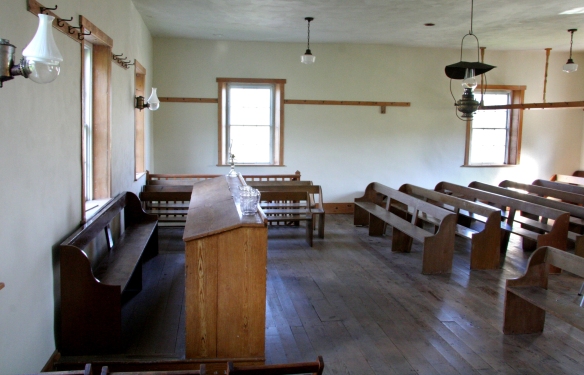 Interior of the restored Brick Mennonite Church located one mile west of Richfield. The restored building is used for an annual public hymn sing, the third Sunday in September, and other special events by appointment.
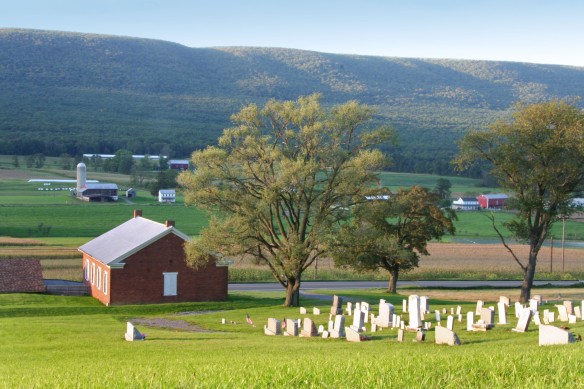 Brick Mennonite Church cemetery in foreground with south end of the church in view. Directly across the road is the former John Kurtz farm. This family lost five infants and toddlers before 1872. When the diphtheria epidemic came through the Juniata Valley in 1872, they lost six of the seven surviving children in one week. The parents and eleven children are buried in this cemetery.

 Anabaptist Historians