Women Talking:  An Anabaptist Fable for our Times?

This week Anabaptist Historians welcomes Dr. Kimberly D. Schmidt. She divides her research interests between Amish and Mennonite women’s social history and women’s histories of the Southern Cheyenne. For over twenty years, Dr. Schmidt worked as a history professor and Director of Eastern Mennonite University’s Washington Community Scholars’ Center.

Women Talking:  An Anabaptist Fable for our Times?

Kimberly D. Schmidt

Miriam Toews’s novel that became an academy-award winning movie (Best Adapted Screenplay) has generated much debate among the Mennorati on websites and in social media. Toews presents a story drawn from real-life events that transpired between 2005-2009. In a remote Bolivian Old Colony Mennonite community women were drugged and violently raped. For years they woke in semi-stupor to injury and pain. Some women were impregnated. After a perpetrator was caught, he confessed and identified seven more perpetrators. A number of women came forward, eight men were convicted and are serving twenty-five year prison sentences–the longest sentence allowed under Bolivian law. These real-life events form the backdrop for Toews’ story. The “Ghost Rapes,” as they came to be called, have justifiably horrified the world and Toews’ novel struck a powerful chord. On Facebook and other social media sites some have argued that the book and movie are, as the novelist claims in an introductory note, “an act of female imagination.” While based on recent, real events, proponents argue that Women Talking is not a documentary but a fable for our times. Is Women Talking a powerful fable? If it can be argued that it is a fable, perhaps it is an Anabaptist fable. Could Women Talking have been written by someone unfamiliar with Mennonite culture and history? There are several aspects of Women Talking that seem to be taken straight out of Anabaptist theology and history.  

The Mennonite emphasis on the congregation as the discerning body provided the narrative arch. The women worked through their choices and differences in a group setting. Women confronting violent abuse addressed their anger, confusion, and heartbreak not from positions of weakness but from the strength that comes from collective discernment. It was a priesthood of believers that met, in this case a group of women, who talked, listened, reflected, argued, comforted, guided, prayed and sang together. No one woman had the leading voice. There was no one leader (priest?). There was no one protagonist or heroine and no one villain. It was a community where all were heard and no one’s voice was dismissed.

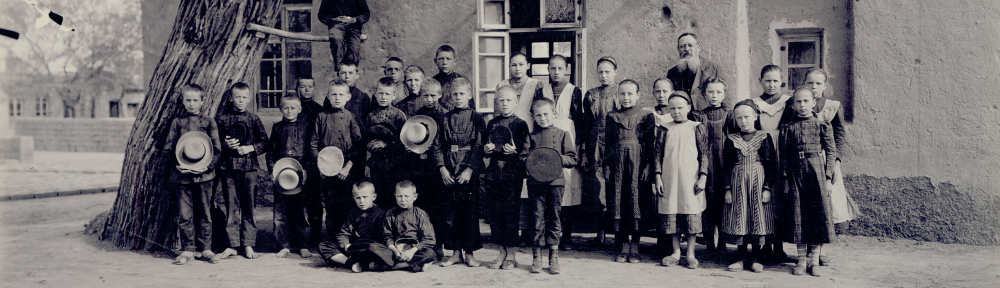
The women met in a hayloft. That’s not the first time women of Anabaptist traditions have met in secret. In early Anabaptist history, Mennoists and other early Anabaptists met in haylofts, caves, boats, and “around the distaff,” that is, craft production or what might be considered sixteenth-century corollaries to modern-day sewing or quilting circles.1 The women in Women Talking, like sixteenth-century Anabaptist women, used a women’s craft meeting to disguise their secret meetings. However, Elisabeth Harder Schrock, who worked extensively with women in the Bolivian colonies during the time of the Ghost Rapes noted that women’s gatherings and craft circles in Bolivia are not regulated by men. It’s not unusual for Old Colony women to visit and share work and meals with no males present. There is not necessarily a need for secrecy when women meet together in contemporary Old Colony society.”2 Meeting in secret seems particularly drawn from Anabaptist history and not contemporary practice.   

The women were closely related by kinship networks and relationships interwoven by years of living in close community with one another and through the generations. These identities are still often used to place Mennonite individuals within a matrix of family, extended family, church, and community, even by those who live on the margins or who have rejected much of Mennonite belief. These closely woven connections informed the women’s actions. When the women in Women Talking fled they left not as individuals or small family units but as a large collective–reminiscent of the numbers of extended Russian Mennonite families that came to the United States and Canada during the 1870s. Entire churches packed up and left southern Russia for the Great Plains of North America. The last, powerfully visual scene in the movie is of women leaving together in a long line of horses and buggies. They packed up their bundles of clothing, blankets, cookware, bibles, and canned goods (zwieback?), hitched their horses to buggies and one following the next left in a long solemn line. Flight or immigration in large family groups is a time-honored Anabaptist tradition and the end of Women Talking should not come as a surprise to those familiar with Anabaptist and Mennonite history. 

The women’s final decision, to leave the colony, was informed by their deeply felt religious beliefs in forgiveness and healing. They had to leave so that they could heal and learn to forgive. The choice to flee is particularly emblematic of Anabaptist and Mennonite decisions. As I’ve written elsewhere, Helena von Freyberg, a woman who chose flight, should be as celebrated as the martyr Dirk Willems.3  Willems turned back over a frozen pond to save his jailer who had fallen through the ice. He was recaptured and burned at the stake. In contrast, von Freyberg kept running. She was a prominent noblewomen from Kitzbühel, a town in Tirol, Austria. Her family castle is still extant and Mennonite heritage tourists can visit the homeplace of a woman who not once but three times outwitted local Catholic authorities and fled to Augsburg via Constance. She escaped from certain persecution to relative safety and died peacefully in Augsburg in 1545. In all three locations: Kitzbühel, Constance, and Augsburg, von Freyberg harbored Anabaptist refugees, hosted meetings in her home, and strengthened her community.

The book and movie were in many ways authentic to an Anabaptist ethos of community discernment and community action and both media (book and movie) portrayed the confusion, heartbreak and anger of forging a healing path away from abuse. There were several moments in the movie so authentic, so real, that I broke down. For example, the conversation between Mariche and her frail, elderly mother who offered to accompany her home to protect her from a violent husband could have been a word-by-word rendition of several conversations between my own elderly, frail mother and myself. Several scenes in the movie were closely and powerfully felt. 

In spite of heart-rending identification, there are areas in which Toews’ narrative and public pronouncements so blurs the lines between fiction and non-fiction that I have started to question her intentions and ethics. And here is where the argument as a Anabaptist fable for our times breaks down.

The novel’s setting is very specific to time, place, and recent memory. Places are named. There were news reports. Toews presents not a fable but a dystopian novel based on real-life, not that long ago, violence against women. This is no Margaret Atwood tale set in some distant future with characters we don’t know. There are a few places where Toews’ blurs her novel’s telling with the truth. She gave a 2018 interview with the Canadian Broadcast Corporation in which she made several claims, as if they were true, as if they were facts. 

For example, Toews asserted in her novel that Mennonite women in the Bolivian colonies are illiterate. Toews repeated this claim as if it’s fact during the CBC interview. Actually, many Bolivian Mennonite women are avid readers. Their favorite books are about the Titanic and Ben Hur.5 Harder Schrock noted to this author that many women are their community’s scribes, recording weddings, births, funerals and keeping their families in touch through lengthy letters.6

In Women Talking, women can’t travel; they are forced to stay on their farms. Toews claimed in the interview that women were “prisoners in their colonies.” Actually, Mennonite women in the Bolivian colonies love to travel. Harder Schrock noted how she often passed buggies filled with women and children traveling without men.7 In the book and movie they are so isolated that they don’t know how to read a map. In fact, globes were provided to most Bolivian schoolrooms by Mennonite Central Committee.8 Travel is a central aspect of life and it’s not unusual for families to carry passports from two-three different nations. The repeated references both in the book and movie and in Toews’ CBC interview to how Mennonite women don’t know anything about history and cultures other than their own are, quite simply, completely false.

If this is a fable what do we learn from it? That all men almost without exception are evil? The book/movie paints all men in the colony as evil, except for August, who is demasculinized both in the book and in the movie. As a teacher he occupies the lowest rung in Old Colony society. He can’t farm, so he must teach.9 In Toews’ interviews and in the book, all the other men were monsters who ignored and downplayed women’s pleas for help and discounted women’s experiences. In fact, the chemical concoction used on the women was also used on the men. Entire families were drugged so that the women could be raped. The rapes resulted in widespread fear. Men put up bars on windows, razor wire around homes, locks on doors, and installed alarm systems. They did their best to protect women in the colonies. The colonies raised $400,000 to keep the perpetrators in jail–not to bail them out, as read and seen in Women Talking.10 However, during the CBC interview Toews asserts that males completely dismissed the women as making things up. 

This kind of narrative is not only too easy–women good, men bad–but it fails to truly help women who are being victimized. Only rarely are abusers simply and purely evil. Many abusers have some redeeming qualities. This is what makes it so hard for some women to leave (I speak from experience). Empowering to me, and I’m sure to other women, would be narratives that delve into complex, nuanced characters for not just the women, but also the men.

In interviews and in the book, Toews hid behind fiction, behind “an act of female imagination” to vilify an entire group of people. She simplified, as she amplified, the very real events. What is the human cost to this kind of writing? What are the ethics of writing a supposed fiction about recent non-fiction trauma? I am concerned that her telling, as provocative as it is, could actually harm the women involved and result in even more trauma. The women involved will likely never see the movie though they might read the book. We will likely never hear their voices nor their responses to the book and the movie.

If Toews had refrained from making erroneous claims in her interview, it would be easier for me to accept the book as an act of female imagination, of female empowerment, and as a fable about surviving abuse. However, she crossed the line when she misrepresented colony women and men in these key ways during the interview. As an abuse survivor I look for the day when our stories embrace the complexity and subtlety of abuse dynamics.

In the end and at the end, Toews offers healing to the women in the novel, if not redemption to the community. Through collective action and in a spirit of forgiveness the women chose to protect themselves and their children and in a time-honored Anabaptist tradition, they fled and perhaps that is the moral of the story. Perhaps this is where I can accept the story as a provocative myth, as a powerful Anabaptist fable. 

[1] Jeni Hiett Umble,  “Meeting Around the Distaff: Anabaptist Women in Augsburg” in Schmidt, Umble and Reschly, eds., Strangers at Home: Amish and Mennonite Women in History (Baltimore: Johns Hopkins Press, 2002),121-135

[2] Email correspondence with Elisabeth Harder Schrock, March 17, 2023.

[3] “Run, Dirk, Run! Wrestling with the Willemas Story,” in Cameron Altaras and Carol Penner, eds. Resistance” Confronting Violence, Power, and Abuse within Peace Churches (Elkhart, IN: Anabaptist Mennonite Biblical Seminary, 2022), 238-249

[4] “Helena von Fregberg of Münichau,” in C. Arnold Snyder and Linda A. Huebert Hecht, eds. Profiles of Anabaptist Women: Sixteenth-Century Reforming Pioneers (Kingston, ONT: Wilfrid Laurier University Press, 1996), 124-135.

[5] Presentation by Willmar Harder, Dorothy Nikkel Friesen, moderator. Bethel College Mennonite Church, North Newton, Kansas, (Feb. 24, 2023). Harder is a former Mennonite Central Committee worker who worked and lived in the Bolivian colonies during the time of the Ghost Rapes. He presented material prepared by himself, his wife, Hannah Neufeld, and his sister, Elisabeth Harder Schrock.

[6] Email correspondence with Elisabeth Harder Schrock, March 17, 2023.

[7] Ibid.

[8] Willmar Harder presentation.

[9] Ibid.

[10] Ibid.
Breaking the silence catharsis through art

This week’s post comes from Dr. Patricia Islas Salinas. She is a research professor at the Universidad Autónoma de Ciudad Juárez, Chihuahua, México. Her books include: Mennonites of Northeastern Chihuahua: History, Education and Health and The Mennonite Colony in Chihuahua: Case Studies for Social Well-Being.


Since the beginning of times, different human groups have developed the patriarchal culture as the basis of interaction between genders, the role of women on different societies has been a reason of for vulnerability and discrimination.

In endogamic communities such as the Mennonites, the worldview is centered on a main axis: The religion. Since its formation, these communities took the Bible as their guide for behavior, beliefs, customs, and gender roles. Due to this, Mennonite women have been the target of gender violence within their own community, however, lately we can see that an interesting phenomenon of sorority and catharsis is occurring due to the amazing art creations in the kitchen between conservative and liberal women.

The Mennonite population in Cuauhtémoc, Chihuahua, Mexico are divided in two groups: 80% are traditionalist or conservative and the 20% are liberalist or progressist, both factions share the territory on two main colonies: ‘Manitoba’ and ‘Swift Curret’, the first one is characterized by the fact members that lives there and by the traditional type fields they have, both with different ways and lifestyle very different, while in the second the original houses and lifestyle originally inherited through the different countries are preserved.

The members of the liberal community even when they constitute the lowest percentage, have great economic power. They’re owners of enterprises located all long through Commercial Corridor ‘Alvaro Obregon’ (the biggest of Latin America). Additionallytheir schools are incorporated to the Mexican Educational System. The liberal community share some characteristics with the American System and the lifestyle of the families is similar to the American or Canadian with modern houses, modern cars and avant-grade electronic devices, use of internet and social network.

In the other way, families of the conservative or traditional faction posses austere houses, some work with Mennonite businessmen and another keep doing planting and cultivation work as a main economical activity. They have a country lifestyle even when they had added trucks, new technologies on their labor and they try to not interfere in the daily family life.

Traditional women follow the role imposed and inherited by their ancestors. Raising their offspring, the house, the kitchen, seam, the farm, the care of birds, cows and pigs, in addition to the cultivation of vegetables and fruit trees for family consumption, they conserve the traditional clothing, as well as the customs inherited from grandmothers and mothers.

On the other side, liberal women probably do not spend most of their time on the farm, but they’ll do on taking care of the family, a lot of them still have their vegetables and pretty gardens. Their kitchens are modern and well equipped, their dressing are not traditional, most of them drives a car and buy the products that they used to produce.

Despite this, the gender roles on both factions are very similar. The men can work outside the house, make commercial transactions, travel and speak Spanish, while the gender role of the Mennonite women has reminded static for almost six centuries. The conservative lifestyle and their behavior remains, even when the lifestyle of both liberal and traditional women are different both are deeply attached to the teachings of their mothers and grandmothers that indicate that the women has to be quiet, obedient and resigned.

Many churchmen condition women to believe that their prime duty is motherhood and household care. Headship for a husband, silence for women in the church, and primacy or normativeness of male experience characterize most Mennonite gender role teaching and practice. Based in androcentric (male-centered) interpretation of Scripture.  Nyce, (1989, párr. 6).

This role imposed from its formation as a religious group is patriarchal in nature, and affects them in the most important aspects of their daily life such as health and communication. In this sense, both traditional and liberal are represented by their husbands, fathers or brothers, since most of them cannot go on their own to receive medical care, they must be accompanied by a man from their family so that he can speak to the doctor or nurse on their behalf.

The social vulnerability of the majority of Mexican Mennonites also has its origin in the decision to maintain an endogamous community, they live the most isolated as possible from the mongrel community. Despite that the Mennonite colonies are very close to the urban sprawl and all people can transit through the settlements, there’s a cultural barrier imposed to women, children and seniors since for generations they have been instilled that they should not associate with the “mexas” because they become contaminated.

Implicit gender violence in the social sphere of Mennonite women can be observed when, despite being Mexican by birth, they don’t have the right to learn the Spanish language. Most of the traditional women don’t know how to speak it, while the liberals, even when they understand it, they consider it unnecessary because their relationship with the members of the dominant community is very scarce; in daily life, the traditional ones communicate in Plautdietsch and the liberals in Plautdietsch or English. Their vulnerability is evident in a Mexican context in which they are considered foreigners due to their worldview and imposition.

Gender violence occurs in the community, however, often these acts towards grandmothers, mothers and daughters aren’t considered that way because they have been normalized and there is a state of conformism that has caused mental and emotional disorders to appear among women.

According wit Islas (2016), between the Mennonite community there is a disease known as Narfenkrankheit (word in Plautdietsch that means Nerve Disease), individual phenomenon brought from the social, that is, it has to do with a state of anguish that involves feelings and emotions […] it is also related to a sense of discontent with social relations in situations of inequality of power and gender. (p.94)

It is common to see women go to pharmacies located in the commercial corridor buying anxiolytic and antidepressant drugs without a prescription that are consumed indiscriminately, these actions reflect the silent suffering and perhaps resignation to situations for which they do not fight.

When the problem is too strong, the council of the minister of the church is consulted, who determines if the woman should be admitted to a community rehabilitation center, meanwhile, their children are taking care by the family, neighbors or in a support center. Often this is not enough and the women relapse into their addiction.

The soroary catharsis

In the community of Cuauhtemoc, the members of the Mennonite community are recognized according to the church to which they belong (currently there is a great diversity of them). However, in recent years liberal women have taken up community artistic initiatives that involve “the others” regardless of what church they belong to or their customs and lifestyle.

The vast majority of Mennonite women have learned sewing, cooking, and growing plants, flowers and vegetables by collective inheritance since they were little girls.These capabilities have begun to be used to generate projects for artistic creations and for gastronomy.

Art and creativity are manifested in different ways in the elaboration of homemade articles and art such as soaps, patchwork quilts, dolls, drawing, paintings, bags, kitchen utensils such as tablecloths, thermal gloves, tortilla holders, and have turned the kitchen and the vegetable garden in cathartic spaces. This activity is not frowned upon by the male gender since it has to do with the gender role of women in the family.

Sorority is a concept that is unknown among Mennonite women but that is observed in actions that indicate otherness and solidarity with each other, based on communication and support networks that generate empowerment.

Some liberal women have managed to convince traditional housewives to participate in artistic and gastronomic shows and seasonal markets (Christmas festival, pumpkin festival). Thanks to these initiatives, a resilience process can be perceived when they verify that their items and meals are valued and bought by the Mennonite and mixed-race community, and they also feel useful because they contribute to the family livelihood.

According to the research of Islas and Trevizo (2016) “some women look at art as an opportunity to express […] what is light and what is dark, protest, modern trends, the evolution of thought […]”. (p. 163)

On the other hand, the love of gardening, growing vegetables and harvesting for cooking has been preserver for generations. These spaces in the home are totally significant, it is there where women identify themselves, feel useful and valued, they also practice reflection and self-discovery to reach catharsis. “Cooking gives me an outlet for creative expression that is inspired by God’s creativity. As I move through adulthood, I find freedom in the inspiration I take with my kitchen and garden”. (Thiessen, 2017)

Gender violence is a deeply rooted social phenomenon in different societies with a patriarchal system, among Mennonite women there are still more who are violated and vulnerable, however, society is evolving, traditional women talk to each other and communicate more with liberal ones, they seek to learn their rights from each other and act accordingly.

Liberal artist and cooks say catharsis through art and sorority can lift their community out of the isolation and vulnerability of women without losing a sense of their worldview and cultural identity.

References:

Islas, P. y Trevizo, O. (2016). La salud: una perspectiva desde el rol de la mujer menonita. En Mujeres menonitas, miradas y expresiones. Ed. ICHICULT, ISBN 978-607-8321-53-7

Nyce, Dorothy Yoder. (1989). Gender RolesGlobal Anabaptist Mennonite Encyclopedia Online. Retrieved 1 March 2023, from https://gameo.org/index.php?title=Gender_Roles&oldid=143578

Thiessen, D. (2017). Food and Spirituality. Preservings N° 37. P.30-32. Plett Historical Research Foundation Inc.

Women Talking: A Displaced Act of Female Imagination

This week’s post comes from Anabaptist Historians’ contributor Rebecca Janzen. She is Associate Professor of Spanish and Comparative Literature at the University of South Carolina in Columbia. Dr. Janzen is a scholar of gender, disability and religious studies in Mexican literature and culture whose research focuses on excluded populations in Mexico.


This blog post will contextualize Women Talking by examining the events on which it is based and alluding to the history of the portrayals of Old Colony Mennonites across the Americas. Women Talking (dir. Sarah Polley, 2022) is based on Miriam Toews’ 2018 novel of the same name.

Both the film and the book bring events from 2005 to 2011 to life. Between 2005 and 2009, women in the Manitoba Colony of Old Colony Mennonites in Bolivia reported waking up after experiencing various forms of sexualized violence, including rape, and not having any memory of what had happened. Others in their community accused them of fabricating the events from what was called a “wild female imagination.”

This is a common accusation levied against victims of sexualized violence and rape, and, as experts in trauma have demonstrated, survivors typically do not have memories of the events that can be shared in a logical, narrative order, that would satisfy the demands of any legal system. In 2009, the Bolivian authorities arrested nine men, and in 2011, it convicted seven of them for the crimes of rendering women unconscious via horse tranquilizer and raping them. These events reached international attention.

The events were covered by international news media in English, as well as national and international news in Spanish, and I believe it was so well reported because Mennonites (like Amish people) often attract attention when the community deviates from the idealized portrayals that I believe are rooted in problematic white supremacist ideas. Films like Silent Light have reached international acclaim for similar reasons (see my discussion of this on the Just Plain Wrong podcast). As I have shown in my previous academic work, when Old Colony Mennonites (and related groups) in Mexico and in Bolivia, are portrayed either as too perfect, or prone to crime or other questionable behavior, this says more about the surrounding culture and how it conceives of nationhood than of the particular group in question (listen to a brief summary of the book here).

The film, I think, tries to use these events to comment on the universal experience of sexualized violence and rape – the many positive reviews of the film focus on how this rings true, and I would emphasize that the film’s comments on the criminal legal system are true in Bolivia and  anywhere else. Unfortunately, much like the novel, and most reporting, it is not based on women’s versions of events. Indeed, as I noted in a 2016 article that I wrote about Bolivian reporting on the events, I could not find recordings or statements of or by women affected by the events. I hope that Kerry Fast’s post in this series will give us more of that perspective.

The problem with this is that it has stopped being a story about these Old Colony Women. The maps in the film were based either on allusions to place in the book (rather than the well-known street village pattern of settlement) or to an otherworldly place that is no place, a Foucauldian heterotopia of horrors. And yet there are some very Bolivia elements to the story. First of all, the community was isolated on purpose. Mennonites migrated from Mexico to Bolivia between 1967 and 1969 in order to preserve the most traditional elements of their way of life, away from encroaching ideas of progress and larger urban centers. They joined a smaller group of Paraguayan Mennonites who had already established themselves there. The Bolivian government wanted to populate a strategically important region of the country with people who would be loyal to them, and who would, in their estimation, improve its economy. As Ben Nobbs-Thiessen’s analysis of the press from that time shows, the group was welcomed because of their perceived expertise in farming, although there were some concerns regarding language, dress, and religious beliefs.

The film removes this group of people from this place and this makes its discussion of the issues that face women who would like to leave a high demand religious community after experiences of violence general, rather than specifically focusing on issues that Old Colony Mennonite women in Bolivia would face, and extrapolating from there. The discussion of the issue of forgiveness, for instance, relies more on prevailing evangelical ideas of forgiveness and of the Kingdom of God than on the Old Colony Mennonite understanding of salvation as a communal enterprise that is never assured. This would undoubtedly make anyone’s decision to leave the community more difficult. The film also focuses on the colony’s purported pacifism. In my opinion it is extremely unlikely that an Old Colony Mennonite would use that word – while Mennonites in Bolivia have continually negotiated with the Bolivian government to ensure that men are exempted from military service (see Nobbs Thiessen), it is in order to preserve a separation from the broader world rather than articulated  pacifism – the way Mennonites in my own background would discuss our aversion or resistance to military service.

I would add that the issues of education and language are also not addressed in the film. The film portrays what appears to be much like the inside of Old Colony Mennonite schools that I visited during my research in Mexico, it fails to mention that girls are educated. While they may receive fewer years of schooling than boys, in both cases, this is an education designed to prepare people to participate in the religious life of the community. Moreover, there are efforts in several Old Colony Mennonite communities to improve education while allowing people to stay in their own communities (see for example Abe Wall’s work in the Thames Valley District School Board in Ontario in Low German, summary of project here, or Amish teachers in Mexico, which I wrote about in the Journal of Mennonite Studies).

This education, moreover, is in German, and the community’s language is Low German. I suspect that the women I spoke with during my research knew more Spanish or English than they claimed, but they thought that because my father is fluent in Low German I should be able to speak it as well, and, according to my casual observations, they seemed to be able to conduct business with non-Mennonite people. I would emphasize that it is different to be able to conduct business than to establish oneself in a new community in a new culture and a new language. The line of buggies leaving the community at the end is a beautiful act of sorority, but, when we think about the women in Bolivia, and people everywhere who have survived sexualized violence, how can you leave when you have no education, no language to speak to anyone outside of your community? How could you leave everything behind?

“Women Talking: The Dilemma of Fight or Flight for Historic Female Anabaptists”: An Introduction

Starting tomorrow, March 9, and running weekly through April 13, Anabaptist Historians will feature a series of posts around the theme of “Women Talking: The Dilemma of Fight or Flight for Historic Female Anabaptists.” Using as its starting point the critically acclaimed film, Women Talking, this series features the work of female contributors as they explore the stories of women throughout Anabaptist history who faced the decision—to varying degrees—of challenging or leaving the religious communities of which they were a part. Its intent is to highlight the work of female scholars and the historic individuals, moments, or sources where Anabaptist women made their voices heard.

Image: Internet Movie Database (Fair Use)

What medieval historian Katherine French observes about her subjects in The Good Women of the Parish also holds true for the historic Anabaptist women covered in this series:

Religious practice was an important source of self-expression, creativity, and agency for women of every social status. The Church promoted submission, modesty, and motherhood as traditional Christian values for women. . . . Yet the Church also provided religious significance to women’s everyday lives and tasks . . . the universal Church, offered women opportunities for leadership, visibility, and even occasional authority, all in the name of religious devotion and in seeming contradiction to the goals of submission and silence.[1]

Growing up in the Mennonite tradition, my own study of female Anabaptists didn’t occur until graduate school, and in the same course where I first read French’s book. Beth Allison Barr’s class “Medieval Sermons” provided me an opportunity to examine the intersection of agency and religion in the life and ministry of Mennonite preacher Ruth Brunk Stoltzfus.[2] The questions engendered by this class alongside misperceptions about religion in Women Talking prompted the creation of this series.

The contributors, several of whom study Latin America, come from various disciplines. Some stories contain dramatic resistance, others much more ordinary. The series opens with Rebecca Janzen’s contextualization of the film. She notes how the particularity and voice of the women in the Bolivian Old Mennonite Colony gets lost in telling a broader story about sexualized violence. Patricia Islas follows by sharing how Mexican Mennonite victims of gender violence experience healing and hope by the kitchen art they create. Other scholars will narrate the stories of Mennonite women from various times and places, before Kerry Fast closes with her ethnographic description of the religious lives of the Old Colony Mennonite women in Bolivia.

To learn more about the history and lives of female Anabaptist/Mennonites during this Women’s History Month, see the following—non-exhaustive—list of recommendations:


[1] Katherine L. French, The Good Women of the Parish: Gender and Religion After the Black Death (Philadelphia: University of Pennsylvania Press, 2008), 4-5.

[2] An earlier version of this Anabaptist Historians post appeared on the Anxious Bench blog at Dr. Barr’s invitation. It compares Ruth Brunk Stoltzfus’ life and ministry with that of her evangelist brother, George R. Brunk II. See: A Tale of Two Mennonite Pastors: Siblings, Gender, and How to Disagree | Beth Allison Barr (patheos.com).