Collection Spotlight: The John Wallace Minnich diaries

I was reshelving some boxes in the Eastern Mennonite University Archives when I noticed a small, nondescript box with a label that simply read, “John W. Minnich Diaries”. Inside I found three diminutive diaries, one for 1870, 1871, and 1872 and some photocopies of genealogical information, including the marriage certificate of J. Wallace Minnich and Elizabeth Coffman, who were wed on February 22, 1872. On the eve of their 150th wedding anniversary, I thought it would be nice to highlight this collection and explore the customs, culture, and daily rhythms of life in Rockingham County, Virginia. 

John W. Minnich was born March 30, 1839 and died August 4, 1917. His obituary recounts that during his life he was a “post master and merchant at Dale Enterprise”.1 He was not raised or baptized into the Mennonite church, but many of his close friends and associates were Mennonite and his first wife, Elizabeth Coffman, was the daughter of Bishop Samuel Coffman and Frances Weaver. Through this marriage he was brother-in-law to John S. Coffman and Lewis J. Heatwole.  His second wife was Lucinda Gaines.

Minnich helped to establish the post office at Dale Enterprise, and Minnich’s friend C.H. Brunk was the first postmaster.2 Through his diary entries we can see the work he put into establishing his store and the post office in the beginning of 1872.

His daily notes recount the weather, his personal and business accounts, travels around the county, and activities of daily life. He was a faithful journalist from January until the end of March, when I imagine that both his work and home life became too busy to retain the habit. 
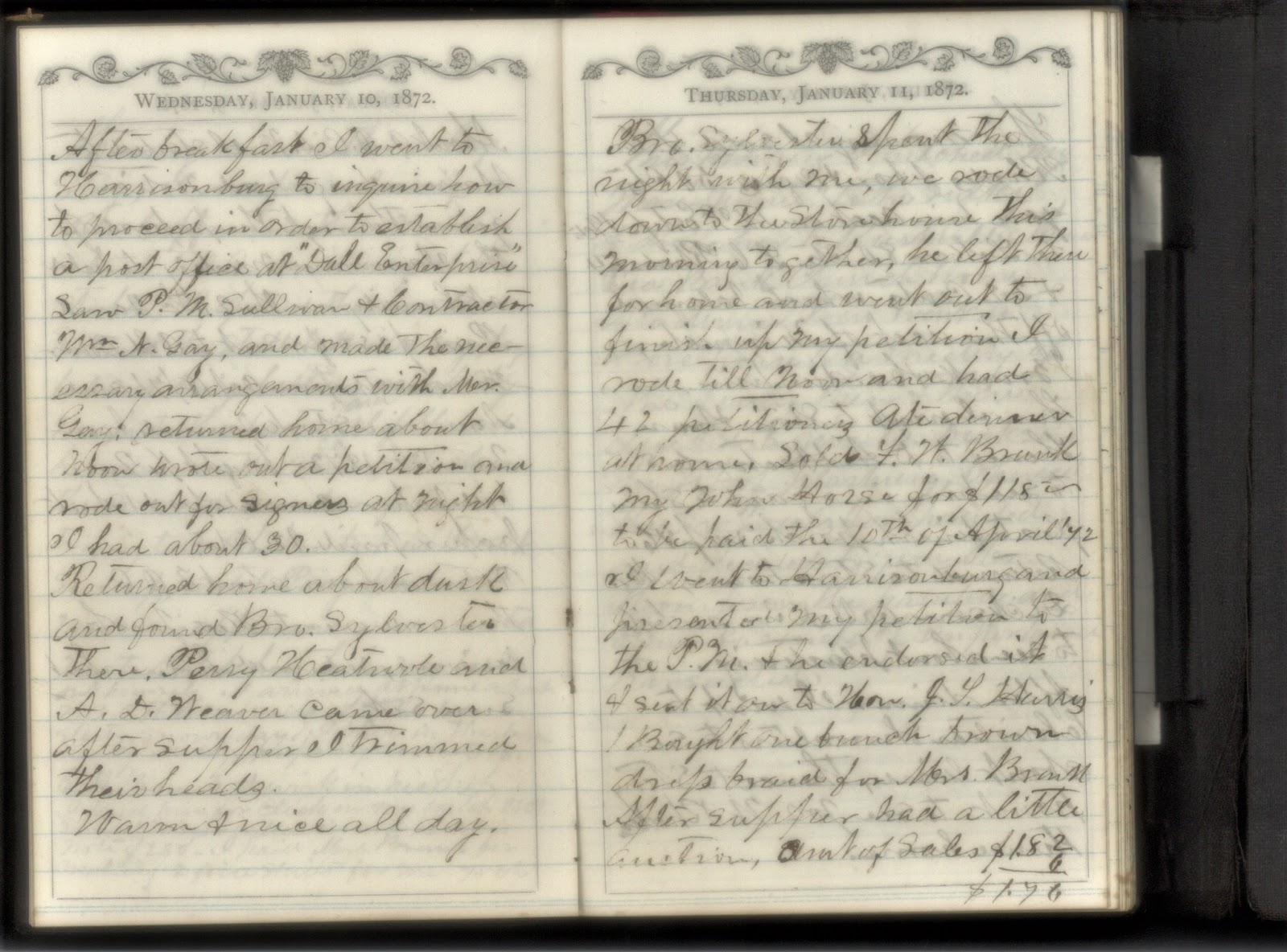
Wednesday, January 10, 1872

“After breakfast I went to Harrisonburg to inquire how to proceed in order to establish a post office at “Dale Enterprise”. Saw P.M [Postmaster] Sullivan + contractor Wm A. Gay, and made the necessary arrangements with Mr. Gay, returned home about noon wrote out a petition and rode out for signers at night I had about 30.”

Thursday, January 11, 1872

“…went out to finish up my petition. I rode till noon and had 42 petitioners…I went to Harrisonburg and presented my petition to the P.M. + he endorsed it + sent it on to Hon J. T. Harris.”
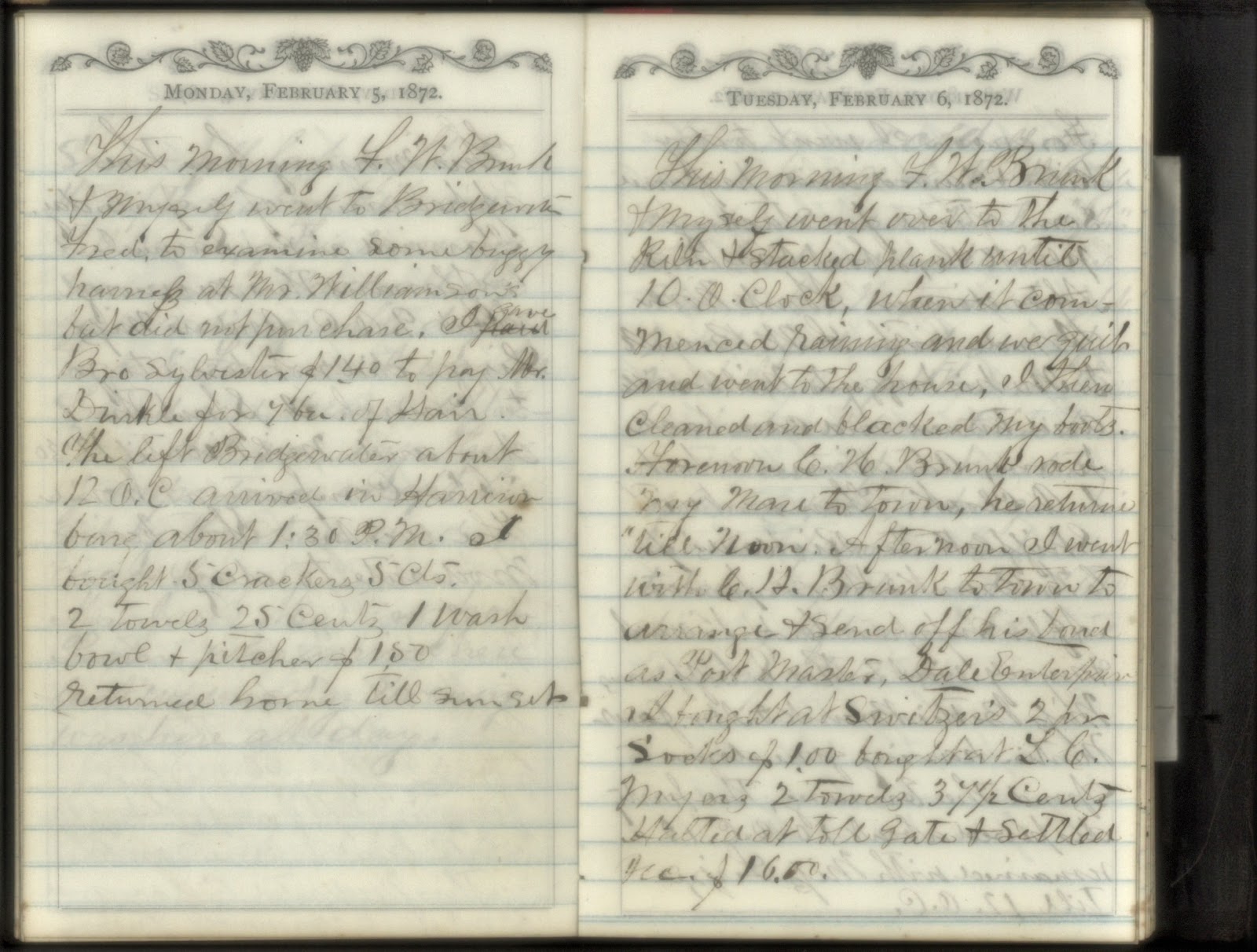
Tuesday, February 6, 1872

“…I went with C. H. Brunk to town to arrange + send off his bond as Post Master, Dale Enterprise.”
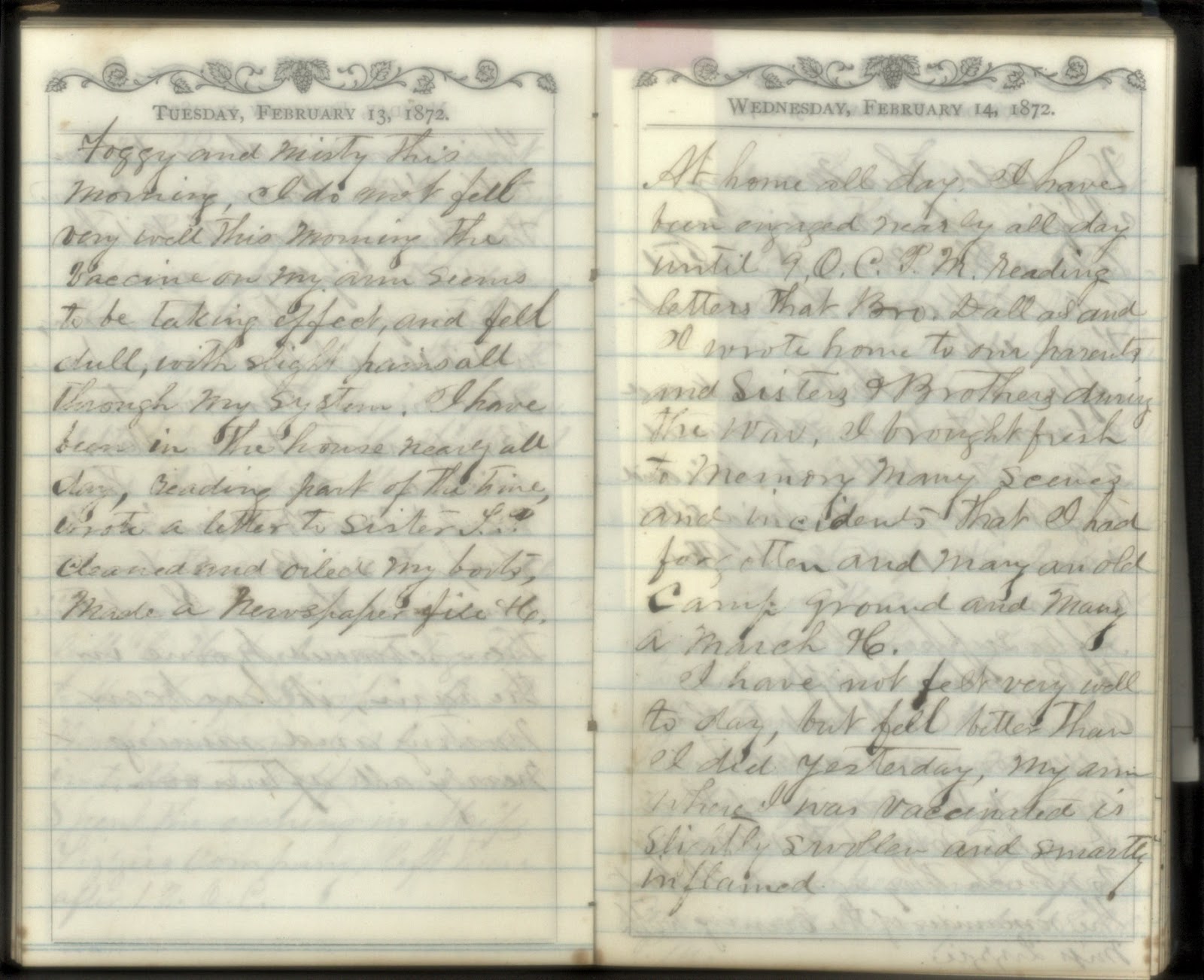
Tuesday, February 13, 1872

“Foggy and misty this morning. I do not feel very well this morning the vaccine on my arm seems to be taking effect, and feel dull, with slight pains all through my system.”

Wednesday, February 14, 1872

“….I have not felt very well to day, but feel better than I did yesterday. My arm where I was vaccinated is slightly swollen and smartly inflamed.”

[Though he never states it, I believe this was the smallpox vaccine.]
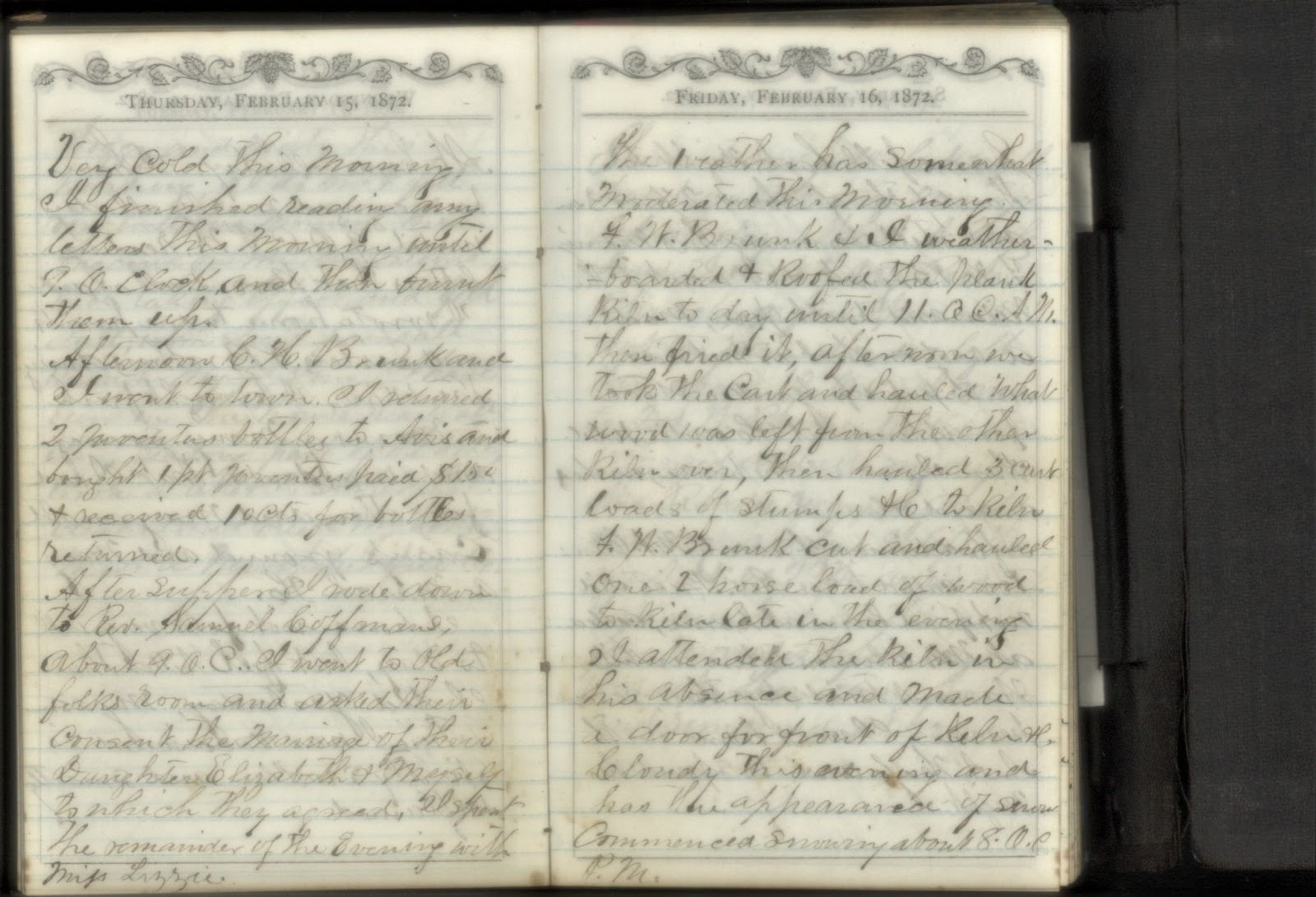
Thursday, February 15, 1872

“After supper I rode down to Rev. Samuel Coffman’s, about 9 O.C. I went to old folks room and asked their consent the marriage of their daughter Elizabeth + myself to which they agreed. I spent the remainder of the evening with Miss Lizzie.” 
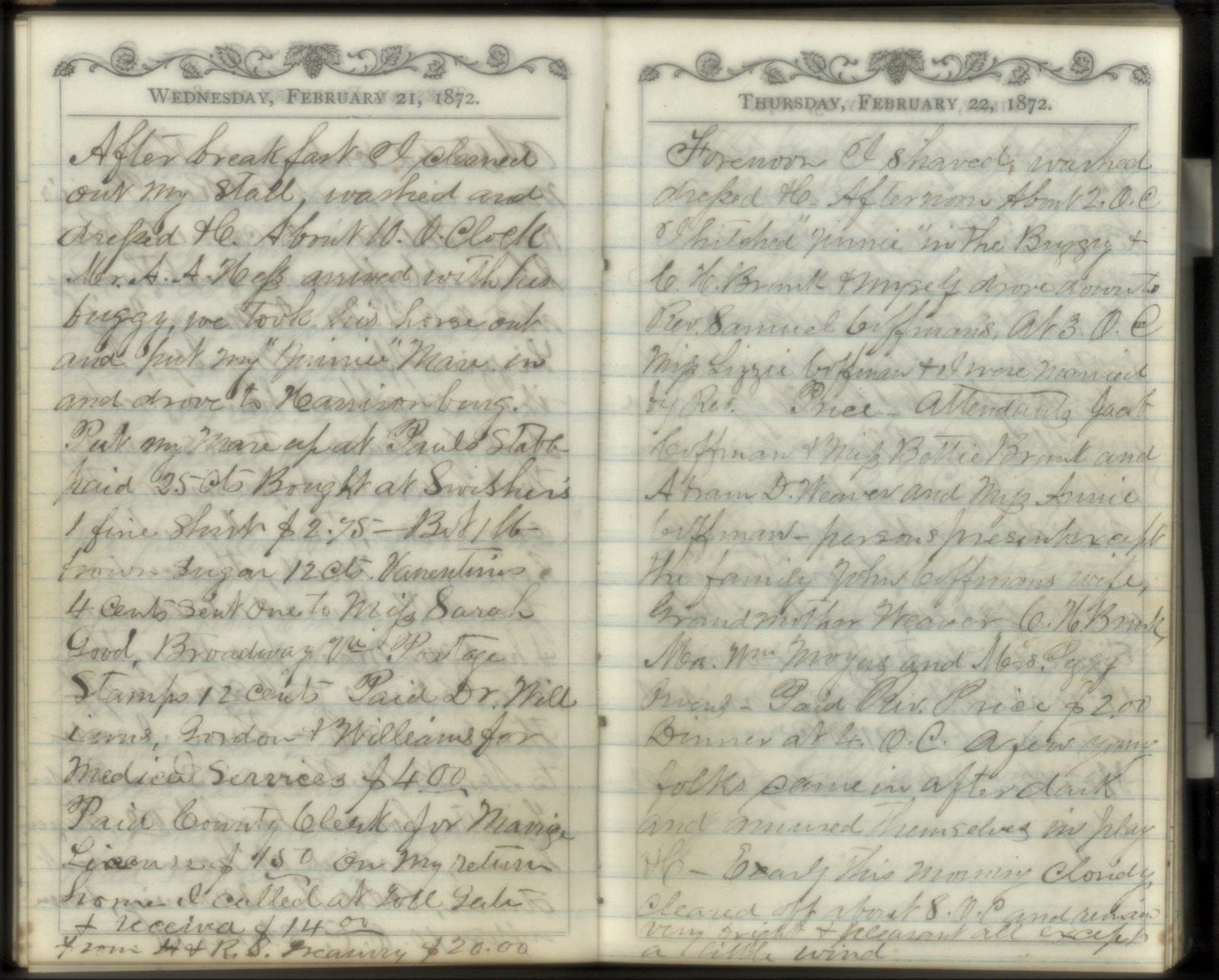
Wednesday, February 21, 1872

“After breakfast I cleaned out my stall, washed and dressed etc. About 10 O’Clock Mr. A. A. Hess arrived with his buggy, we took his horse out and put my “Jinnie” mare in and drove to Harrisonburg. Put my mare up at Paul’s Stable paid 25 cts. Bought at Swisher’s 1 fine shirt $2.75. [–] 1 lb brown sugar 12 cts. Vanentines [sic] 4 cents sent one to Miss Sarah Good, Broadway Va Postage stamps 12 cents Paid Dr. Williams, Gordon + Williams for medical services $4.00. Paid County Clerk for marriage license $1.50. On my return home I called at Toll Gate + received $14.00.”

Thursday, February 22, 1872

“Forenoon I shaved, washed, dressed etc. Afternoon about 2 O.C. I hitched “Jinnie” in the buggy + C.H. Brunk + myself drove down to Rev. Samuel Coffman’s. At 3 O.C. Miss Lizzie Coffman and I were married by Rev. Price. Attendants Jacob Coffman + Miss Bettie Brunk and Abram D. Weaver and Miss Annie Coffman–persons present except the family John Coffmans wife, Grandmother Weaver, C.H. Brunk, Mr. William Moyers and Miss Peggy [Arvers]. Paid Rev. Price $2.00. Dinner at 4 O.C. a few young folks came in after dark and amused themselves in play etc. Early this morning cloudy, cleared off about 8 O.C. and remained very bright and pleasant all except a little wind.” 

J.W. Minnich and Elizabeth Coffman’s wedding was mentioned in Barbara Coffman’s biography of her grandfather, John S. Coffman. In it, she imagines a conversation between John and his wife Bettie as they left the event:

“Well, that’s the second wedding in the family,” John said as he and Bettie were riding home from Father Coffman’s home that February evening. It was Lizzie’s wedding they had attended. There had been consternation at first when she insisted on marrying Wallace Minnich, a former quartermaster in the southern army, but everyone hoped for the best.

“Do you ‘spose they can really be happy together, not believing quite alike?” Bettie wondered.

“Oh, I reckon so,” drawled John. “They love each other, but it can’t be quite the same. We can pray that he’ll see things differently after a while. At least he’s not taking her away from the church.”

“He’s right gentlemanly, too,” added Bettie, “and a good talker. I like to listen to him.”

“You’re not trying to make me jealous, are you?” teased John.

“Land sakes, no,” replied Bettie with fervor, “There ain’t nobody half as good as my man.”

“But he’s a good businessman, And I reckon he’ll be able to provide for his family better than I can.”3
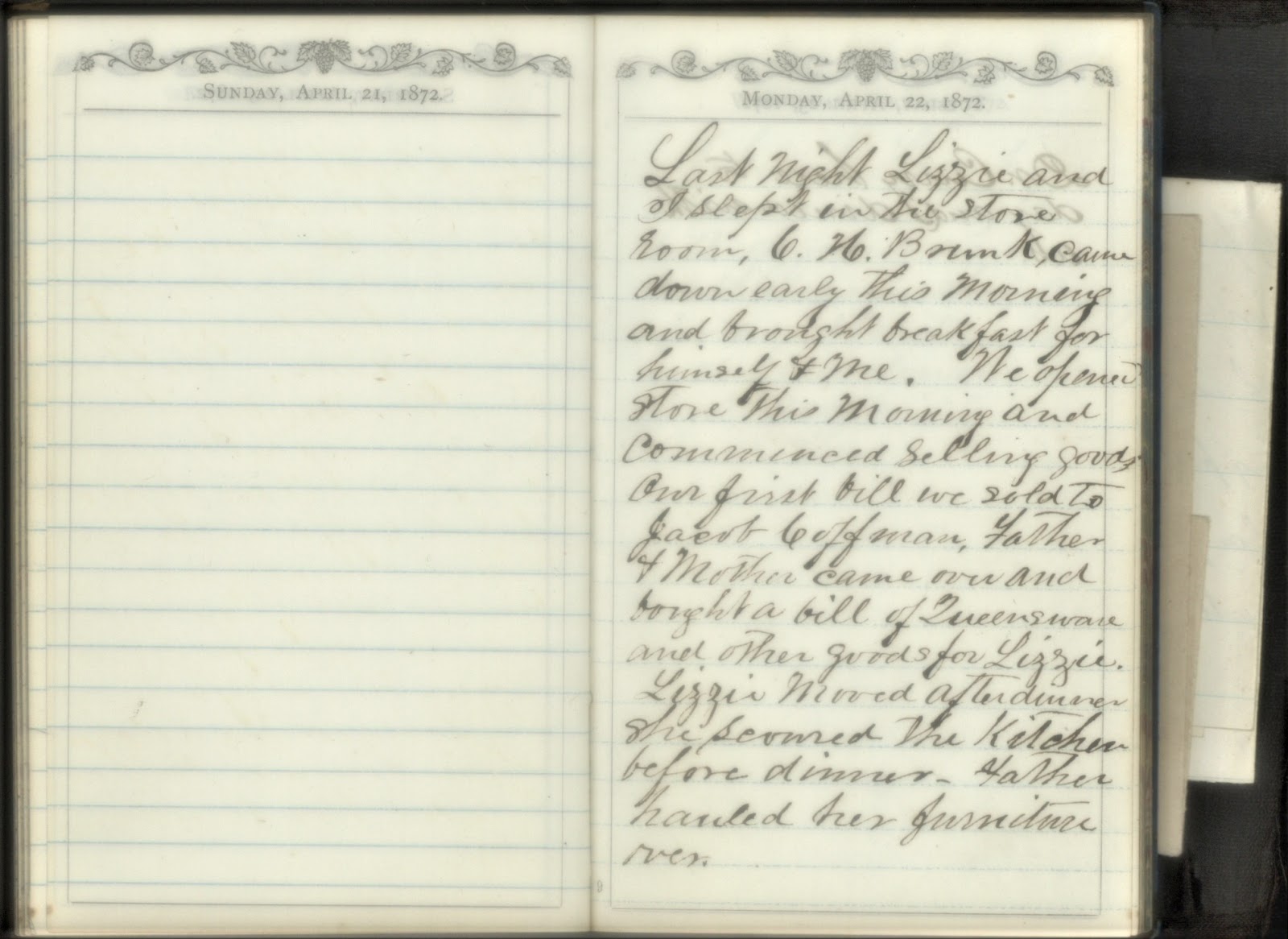
Monday, April 22, 1872

“Last night Lizzie and I slept in the store room. C.H. Brunk came down early this morning and brought breakfast for himself and me. We opened store this morning and commenced selling goods. Our first bill we sold to Jacob Coffman, Father and Mother [Coffman] came over and bought a bill of Queensware and other goods for Lizzie. Lizzie moved after dinner. She scoured the kitchen before dinner. Father hauled her furniture over.”

J.W. Minnich continued his work running the store and post office at Dale Enterprise for 45 years until his death in 1917. His wife Elizabeth had died twelve years prior,4 and their youngest son, Charles, died unexpectedly of tuberculosis the year after her.5 Minnich’s daughter, Lillian, ran the Dale Enterprise store and post office during his illness and after his death until her untimely passing in 1919.6 His middle son, Wade H. Minnich, also became a postal clerk. 

If you would like to learn more about this collection or the many other nineteenth-century diaries we have in our archives, come visit EMU’s Special Collections the next time you are in Harrisonburg. 


1. “Obituaries–Minnich.” Gospel Herald, September 20, 1917, 470.
2. John Walter Wayland. 1996. A history of Rockingham County Virginia. Harrisonburg, Va: C.J. Carrier Co., p. 208.
3. Barbara F Coffman. 1964. His name was John; the life story of an early Mennonite leader. Scottdale, Pa: Herald Press, p. 77.
4. “Obituaries–Minnich.” Gospel Herald, March 23, 1905, 95.
5. “Biedler Minnich’s Unexpected Death,” Daily News Record (Harrisonburg, VA), Nov. 3, 1906.
6. “MISS LILLIAN F MINNICH SUCCUMBS TO TUBERCULOSIS,” Daily News Record (Harrisonburg, VA), May 22, 1919.

Amish Mutual Aid during the Great Depression and what it implies for Modern Capitalism

This post revisits the theme of Anabaptist economics that I addressed in my last most on the moral economy of the Hutterite community. I now turn to Amish mutual aid as a functional equivalent to public welfare and commercial insurance/credit during the Great Depression.


On December 16 in 1939, the Baltimore Afro-American, a prominent newspaper, published a brief note regarding the imminent foundation of an Amish settlement in southern Maryland. It noted the religious, “cult”-like character of this Anabaptist group and went on to comment that

The most interesting thing about them [the Amish], however, is the success they have had all through this depression in solving their economic problems. They have good homes, money in the banks, and have religiously spurned State or Federal relief. They have been able to eke out their comfortable livelihood by tilling the soil. Since this matter of getting farmers off relief and government help is one of the New Deal headaches, the Federal farm authorities might find it profitable to do some of their investigating on Amish farms. Maybe they will find some method more simple and less involved than plowing in and limitation of production. Maybe, too, they will run across a procedure that the average farmer can use.1

Baltimore African-American, Dec. 16, 1939.

At this time, the Great Depression had run its course for a decade, bringing economic havoc and social destitution to all capitalist societies. In the United States, African-Americans were particularly hit hard by the Depression’s onslaught on an already racist and highly unequal economy.2 The Afro-American’s readership thus in all likelihood was interested in the fate of the marginal Amish group. After all, while not being exposed to systemic racism, the Amish still represented an unusual model of economic organization that differed substantially from the overall farming population that had transitioned towards a mechanized, commercial and business-oriented agriculture in the preceding decades. What, if any, were these “procedures” that would have been applicable to “the average farmer”?

Before providing a tentative answer to this question, it is important to note a couple of things. First, there was no such thing as “the average farmer.” Rural communities faced different challenges depending on geographic location and other factors. The Depression, for example, had a different impact on owners, tenant-farmers and sharecroppers. Moreover, the systemic racism clearly favored white farmers, with consequences particularly for African-Americans in the southern states.

Second, the Amish were not as unscathed by the Great Depression as the Baltimore Afro-American made it seem. Contemporary sources, as well as later memoirs, provide ample evidence that the Amish were hit hard by depleted prices for agricultural goods, debt and environmental problems caused by dust storms and droughts. In 1971, the Amish periodical “Family Life” published two issues that sections on “Amish life in the Great Depression.”3 The stories by several Amishmen to some degree resemble the experience of hardship by non-Anabaptists as collected in the oral histories by Studs Terkel.4

Yet, these memoirs also show an underlying narrative that in fact for the Amish, the Depression was not as bad as it could have been. This voice is exemplified by one Jonathan Zook from Lancaster County who wrote that

[A]s far as the depression was concerned, we as a family never felt the hardship that many did. I had two boys just out of school and willing workers which I think was a great help to take us through the depression. And I never came to the place that I could not go to the bank and borrow all the money that we needed. [. . .] We were able to meet our interest and taxes [. . . ] and my good wife could always get enough together to feed the family of 8 at that time.5

Family Life, August 1971.

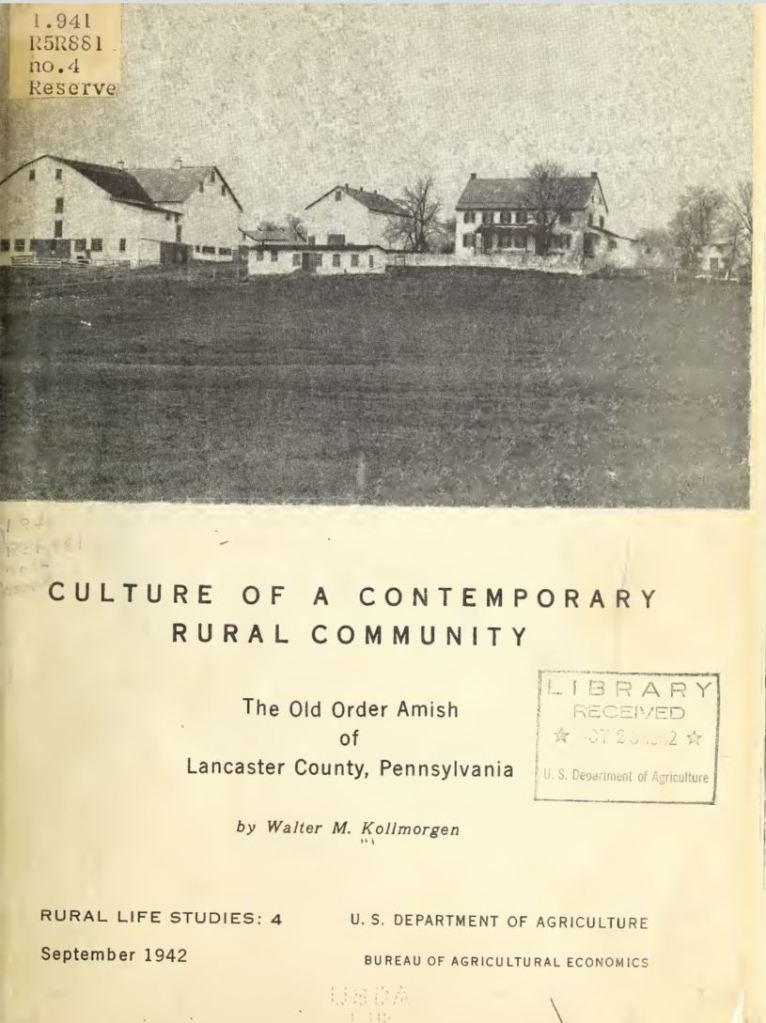
This overall narrative that “it could have been worse” is confirmed by the most prominent contemporary expert on the Amish, Walter Kollmorgen. His 1942 report on “Old Order Amish of Lancaster County, Pennsylvania” was part of the Rural Life Studies program sponsored by the U.S. Department of Agriculture’s Bureau of Agricultural Economics. This study program was established in 1939 to conduct field research on six rural communities to assess “the quality of rural life” based on a number of factors, including social, economic, cultural and environmental factors.6 Kollmorgen’s analyses has been considered the most important piece of scholarship on the Amish of his time, and possible the starting point of Amish Studies as a scholarly discipline.7 His results showed that the Amish were easily the most stable of all communities in the Rural Life Study. Mirroring Jonathan Zook’s emic assessment, Kollmorgen contended that the Lancaster Amish largely evaded the most negative effects of the Great Depression

Not surprisingly, Kollmorgen’s study results mentioned the likely suspects of why the Amish weathered the economic turmoil relatively well. These included superior farming expertise such as soil conservation and a relatively high degree of self-sufficiency.

Kollmorgen addressed another factor throughout his report: communal mutual aid. This form of intra-Anabaptist support extended to loans on no or low interest, non-monetary aid, care, and general support for the needy. While Kollmorgen does not provide a quantitative assessment of his observation – for example, the sums involved in this communal process of sharing financial resources – his overarching assessment leads me to assume that mutual aid was perhaps was the most important ingredient to Amish resilience during the Great Depression. He considered it an informal “program of brotherly love and mutual aid”8 that rested on solid Anabaptist principles and continued to operate in a capitalist environment. In particular, Kollmorgen noted the financial impact of this “program” that provided a form of communal economic empowerment:

The practice of eschewing investments outside of the community and loaning available money at low interest rates to members of the church has served to give these people a rural credit system enjoyed by few farmers elsewhere. The significance of this practice cannot be overestimated. The salutary features of the program are obvious (1) no money is borrowed unless it is necessary (2) when money is borrowed the interest rate is low (3) there are no foreclosures, (4) bank failures and business failures do not disturb the community greatly, (5) investment sharks cannot plunder these people, and (6) interest earnings remain in the community.9

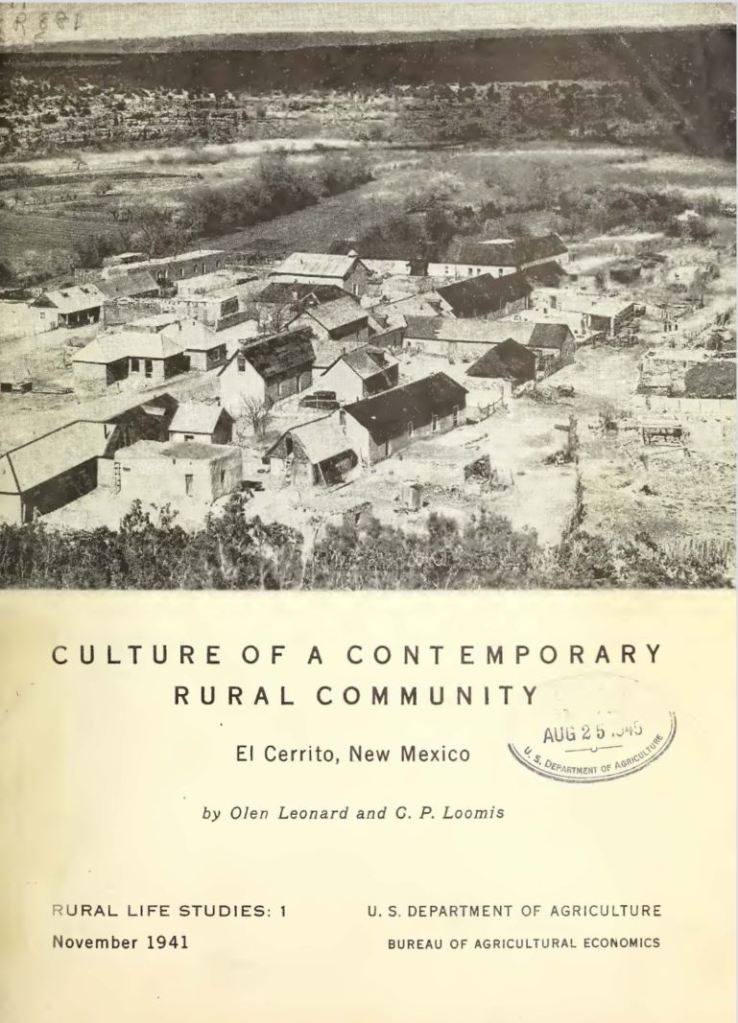
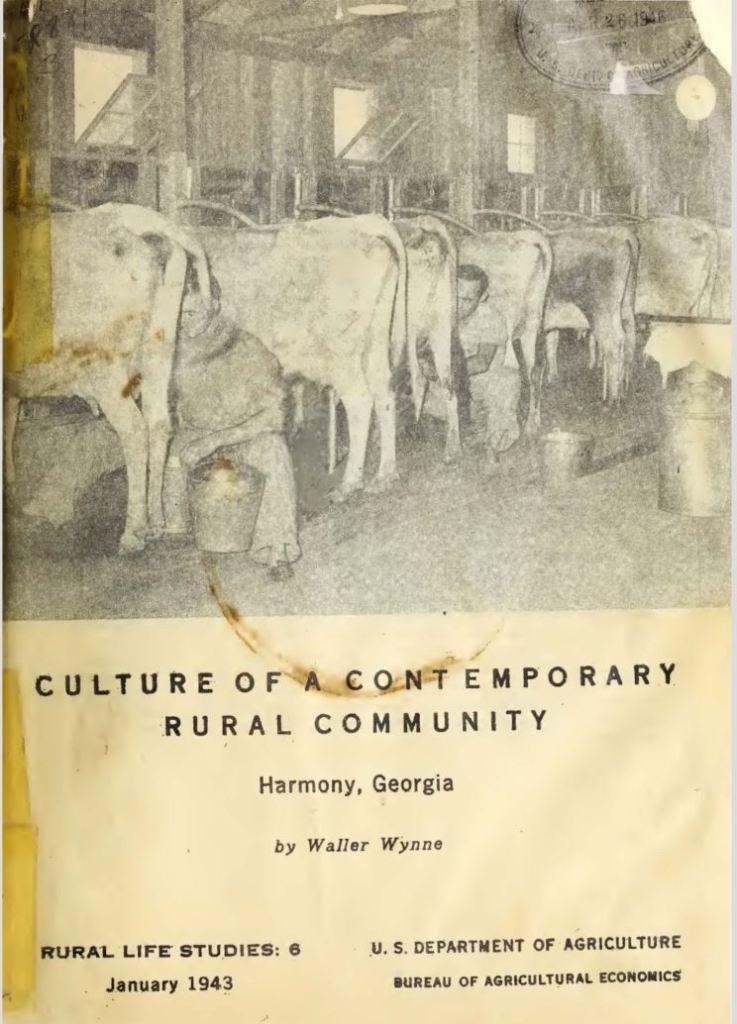
Walter M. Kollmorgen, Culture of a Contemporary Rural Community.

In this quote, Kollmorgen also indicated the comparative aspect in arguing that “few other farmers” had access to a similar form of mutual financial aid in a communal context. This comparative assessment becomes even clearer when comparing Kollmorgen’s study results to the other five cases in the Rural Life Study program, something that still lacks systematic assessment in the scholarly literature. Access to credit or non-monetary aid was considered a key problem across the board of the other case analysists. The case of Harmony, Georgia, with its large African-American population in particular highlighted the credit problem, something that the Baltimore Afro-American’s readership without doubt was quite familiar with.

What, if any, are insights to be drawn from Amish mutual aid during the Great Depression not just for “the average farmer” but in general for the common good in a capitalist economy? While Amish mutual aid is group-specific and unique in the sense that it is engrained in the Anabaptist notion of Koinonia, similar institutions in the form or mutual credit and mutual insurance are found in other contexts. In fact, research on and public debates about mutual aid have vastly increased in the recent decade or so.10 After the 2008 financial crisis, mutual aid has become a prominent theme in debates on how to alleviate social consequences of an economic downturn and to promote the common good.

In her contribution to The Nation periodical from December 2020 titled “Mutual aid can’t do it alone”,11 the political scientist Joanna Wuest criticizes this renewed focus on mutual aid. She pointedly refers to the gradual dismantling of public welfare in the United States under a neoliberal agenda so that “[o]ur country is coming to resemble a long-sought libertarian fantasy, with only atomized acts of compassion for those left out.” She calls for a much stronger role of the welfare state in providing comprehensive assistance to the needy.

From a European perspective, Wuest’s, demands for universal public welfare appear perfectly sound, reasonable and far from radical. After all, most European societies enjoy relatively universal public health insurance, unemployment insurance, retirement insurance, and more. Yet, it seems increasingly unlikely that the United States will soon – or ever – return to the path of public welfare expansion as tentatively established during the New Deal.

The case of Amish mutual aid during the Great Depression thus might hold some important lessons for promoting welfare on a communal level. This is not to say that an Amish institution should be taken as a fit-for-all model, let alone be idealized. In order to participate in Amish mutual aid during the 1930s, one had to subordinate oneself under the very strict regulations of the church, its religious tenets and underlying power structure. Such a rigid system of subordinance would not work for left-leaning communes, ethnic minorities or LGBTQ+ groups. At the same time, the Amish example shows how mutual aid provided an effective functional equivalent to public welfare and commercial credit at a time when the majority of Americans suffered from a lack of both.


1. Baltimore African-American, “Note on Amish Farmers,” Dec. 16, 1939, p. 9. ProQuest Historical Newspapers. Retrieved June 12, 2016.

2. Rauchway provides an accessible first overview of this era in: Rauchway, Eric. The Great Depression & the New Deal: A Very Short Introduction. Very short introductions 166. Oxford, New York: Oxford University Press, 2008.

3. Amish Life in the Great Depression, Family Life periodical, July 1971 (pp. 18-21) and August 1971 (pp. 18-21). Historical Heritage Library collection, formerly Aylmer, Ontario.

4. Terkel, Studs, ed. Hard Times: An Oral History of the Great Depression. New York: New Press; Distributed by W.W. Norton, 2000.

5. Jonathan Zook, in: Family Life, August 1971, p. 21.

6. U.S. National Archives II, RG 83 Entry 34, American Farm Community Study.

7. Anderson, Cory. “Seventy-Five Years of Amish Studies, 1942 to 2017: A Critical Review of Scholarship Trends (With an Extensive Bibliography).” Journal of Amish and Plain Anabaptist Studies 5, no. 1 (2019): 1–65.

8. Walter M. Kollmorgen, Culture of a Contemporary Rural Community: The Old Order Amish of Lancaster, Pennsylvania, Rural Life Studies 4 (Washington, D.C., 1942), 22

9. Kollmorgen, Culture of a Contemporary Rural Community, 49–51. See also pp. 52-57.

10. See for example: van Leeuwen, Marco H. D. Mutual Insurance 1550-2015: From Guild Welfare and Friendly Societies to Contemporary Micro-Insurers. Palgrave studies in the history of finance. London: Palgrave Macmillan, 2016.

11. Wuest, Joana. “Mutual Aid Can’t Do It Alone.” The Nation, December 16, 2020.