In her new book The Making of Biblical Womanhood, historian Beth Allison Barr disassembles the concept of “biblical womanhood” popular in a portion of evangelicalism. Mixing memoir and scholarship, Barr’s text also chronicles her personal journey away from complementarian theology. Studying history, Barr states, convinced her of the fallacy of complementarianism and biblical womanhood.1 The publication of Barr’s book prompted me to return to a figure I examined for Barr’s class during my first semester of doctoral work: Ruth Brunk Stoltzfus.
A twentieth-century Mennonite broadcaster and pastor, Brunk Stoltzfus had a life and ministry that encompassed dramatic shifts in the Mennonite Church’s understandings of women’s roles and leadership. In Barr’s class and a subsequent blog post, I examined the function of gender, authority, and the Holy Spirit in a sermon preached by Brunk Stoltzfus as well as a message delivered by her brother, the notable evangelist George R. Brunk II. Inspired by Barr’s declaration about the power of historical argument, I wanted to revisit Ruth Brunk Stoltzfus to see how she utilized history in making her case for women’s leadership in the Mennonite Church. Of particular interest to me was how Brunk Stoltzfus’ used Anabaptist history. Since her papers have yet to be deposited into an archive, I relied on Brunk Stoltzfus’ contributions to the Gospel Herald from 1963 to 1995 as well as her memoir, A Way Was Opened. My preliminary findings show that Brunk Stoltzfus vocalized her support for women’s leadership most ardently during the 1970s and ’80s, when the topic proved a matter of intense discussion within the Mennonite Church. Additionally, I discovered that, while she preferred arguing from Scripture, Brunk Stoltzfus did occasionally rely on historical evidence.2 Before continuing into my examination of Brunk Stoltzfus’ use of history, I want to contextualize my findings with a brief sketch of her life and ministry.
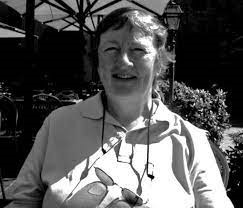
Photo: Mennonite Publishing House
Ruth Brunk Stoltzfus’ family and talents primed her for ministry. The eighth child of George R. Brunk Sr. and Katie (Wenger) Brunk, she was born on March 15, 1915. A fundamentalist with inclinations toward the holiness movement, George R. Brunk Sr. built a career as a Mennonite pastor and bishop in southeastern Virginia.3 Believing that “women, including his daughters, should [not] strive for incompetence because they were female,” Brunk Sr. trained his daughter in oratory and composition.4 Ruth Brunk married Grant M. Stoltzfus on June 17, 1941. While her husband edited the Mennonite Community periodical and began graduate work, Brunk Stoltzfus started the radio ministry “Heart to Heart” in 1950. She was the first Mennonite woman with a regular program.5 Initially broadcast by WCVI in Connellsville, Pennsylvania, and later Mennonite Broadcasts, “Heart to Heart” addressed the topic of marriage and family. In 1958, Brunk Stoltzfus handed over control of her program, and she and Grant formed Concord Associates, a Family Service Ministry that produced literature and media on the topic.6 They crisscrossed the nation speaking about marriage and family until Grant’s sudden death in 1974. Then Brunk Stoltzfus continued to deliver workshops solo. This platform and reputation increasingly drew her into discussions around women in ministry in the Mennonite Church.7 After her stirring defense of women in ministry at the 1981 Mennonite General Assembly, Brunk Stolzfus started to receive invitations to serve as an interim pastor or on pastoral teams.8 In 1989, Virginia Mennonite Conference recognized Brunk Stoltzfus’ calling by ordaining her at age 74. As the first women to be credentialed in the conference, her ordination caused controversy in both the conference and her extended family.9 Upon her retirement in the early 1990s, Brunk Stoltzfus remained active in matters of church and family. The self-described “radical evangelical Anabaptist” died on December 2, 2008, age 93.10
Brunk Stoltzfus used Anabaptist history to argue for women’s leadership in two distinct ways. First, she drew upon Anabaptist history to spur people toward active response in a present moment. Asked by Gospel Herald editor Daniel Hartzler in 1975 to encourage readers prior to that year’s Mennonite General Assembly, Brunk Stoltzfus appealed to readers – regardless of gender – to give their full allegiance to Christ in active discipleship.11 After urging support for conscientious objection and opposition to war, she highlighted the role of women in evangelism in Anabaptist history and the Bible:
We are little credit to our foremothers. In early Anabaptist days when men and women were baptized, it meant that they were also ordained to preach, teach, and baptize others. (It was more important to get the Gospel out than to fuss about which sex does it!) In Bible times women were wives, mothers, prophetesses, judges, managers, sheep tenders, employers, builders of cities, buyers of real estate, salespersons, teachers, deaconesses, co-laborers in the gospel [.] Jesus commended Mary, the meditative type, who put the kingdom before dishes. Isn’t it about time we stopped forcing all women into one mold?12
Brunk Stoltzfus read the baptism of early Anabaptist men and women as ordination for the work of the Christ and the Church. The commission compelled action, and she wanted her readers to feel that same urgency and allow all people to fulfill roles best suited to their gifts and callings regardless of gender.
Brunk Stoltzfus continued to find resonance between early Anabaptist baptism practices and women’s leadership. In her memoir, she recalled reflecting on a conversation she had on women in ministry with New Testament scholar Willard Swartley in the early 1980s: “[I told him] that we women leaders, like the early Anabaptists who baptized each other, should ordain each other. Willard had said, ‘But please let us men be present.’”13 For Brunk Stoltzfus, early Anabaptism’s defiance of political-ecclesial authority could provide a precedent for ordaining women in the Mennonite Church. By 1988, she faced the dilemma of whether she as an un-ordained women could baptize a college student in her congregation. Since neither were ordained, the agreement to baptize the young women with the congregation’s commissioned male pastor met with mixed reactions from Virginia Conference pastors and leaders. “Like the early Anabaptists, who baptized each other,” Brunk Stoltzfus recalled, “we served as representatives of the congregation [and thus could offer baptism].” Ultimately, she poured water in the male pastor’s hands as he performed the baptism.14 Within Anabaptist history Brunk Stoltzfus saw a freedom to follow the Spirit and encouraged others to respond to it as well.
Second, she found in twentieth-century Anabaptist history examples of women’s leadership. Brunk Stoltzfus spoke at the 1978 Women in Ministry symposium in Akron, Pennsylvania, on the topic of “Women in Ministry Among the Mennonites in my Lifetime.” Dutch Mennonites, she noted, started permitting female pastors at the beginning of the twentieth century.15 In addition, the title of her talk suggests she saw enough change and continuity in the Mennonite practice to make it a topic of interest to conference participants. Looking back in her memoir, Brunk Stoltzfus remembered, “I had an unusual audience response. It was like a good movie as we laughed and cried together…I received more affirmation than any other time in my life, and it felt good.”16 Her observations about contemporary Anabaptist history along with her personal experiences resonated with conference attendees. Brunk Stoltzfus showed that, in various eras of Anabaptist history, evidence existed to support women in ministry.
On occasion, she also relied on other religious history to make her case for women’s leadership. Rebutting some comments about the 1978 Women in Ministry conference, Brunk Stoltzfus quoted the nineteenth-century evangelist and educator Charles Finney. He stated, “No church that is acquainted with the Holy Ghost will object to the public ministry of women.”17 Such a statement meshed with Brunk Stoltzfus’ biblical and theological argument that the Holy Spirit equipped women and men to serve as church leaders or in other capacities that matched their gifts.18 Finney’s status as a revivalist lent credence to Brunk Stoltzfus’ claim that historically male leaders supported females exercising leadership in the Church.19 Precedent for women’s leadership existed outside the Mennonite Church.
My initial investigation into Ruth Brunk Stoltzfus’ use of history reveals that it influenced how she spoke and acted to advance women in ministry. In the future, I hope to further explore her conceptions of gender throughout all of her ministry to see how they shaped perceptions of family and gender in the Mennonite Church. A poem Brunk Stoltzfus’ wrote as part of her presentation at the 1978 Women in Ministry provides a fitting summary and a glimpse into how she understood gender, family, and ministry:
Who killed woman’s gift? “I ,” said the man of terror With his mix of truth and error. “I’d rather not hear a word of truth “Than to her it from a Jane or Ruth. “I killed woman’s gift.”
Who saw her gift die? “I,” said the woman who only knits. “These ministering women give me fits. Why can’t all women be of the same mold “And just look out the window “When they are old? “I saw her gift die.”
Who’ll be the chief mourner? “I,” said the freeing man “I never favored the put-down or ban. “Women should not wait till their 63 “To see if the church will set them free. “I’ll be the chief mourner.”20
1. Beth Allison Barr, The Making of Biblical Womanhood (Grand Rapids, MI: Brazos Press, 2021), 9-10.
2. An excellent encapsulation of Brunk Stoltzfus’ biblical case for women’s leadership is found in “Jesus and the Role of Women,” Gospel Herald, Vol. 79, May 20, 1986, 342-43.
3. Nathan Emerson Yoder, “Mennonite Fundamentalism: Shaping an Identity for an American Context” (Ph.D. Dissertation, University of Notre Dame, 1999),125-43.
4. Ruth Brunk Stoltzfus, A Way Was Opened: A Memoir, ed. Eve MacMaster (Scottdale, PA: Herald Press, 2003), 41.
6. “Field Notes Continued: Grant and Ruth Stolzfus,” Gospel Herald, Vol. 51, April 8, 1958, 336. In her memoir, Brunk Stoltzfus said this media ministry included “radio, newspapers, conferences, and literature […such as] ‘Mother’s Pledge’ and ‘Pledge for Husband and Wife.’” Stoltzfus, A Way Was Opened, 118.
7. Stoltzfus, A Way Was Opened, 197-98, 209, 215, 277-78.
8. From January to June 1982, she served at Bancroft (Toledo, OH) Mennonite Church, and a few months later filled the interim role at Grace Mennonite Church in Pandora, OH, until June 1983. In 1985, First Mennonite Church in Richmond, VA, called Brunk Stoltzfus to be part of their pastoral team. She served for two years.
9. Notable protest to Brunk Stoltzfus’ ordination came from her older brother, George Brunk II. He built his reputation in the 1950s as “the Mennonite Billy Graham.” In 1989, George II expressed to Virginia Conference leadership that, if they went forward with his sister’s ordination, he would withdraw his membership and credentials in protest. When leadership chose to proceed, George II departed Virginia Conference and formed his own congregation, Calvary Mennonite Fellowship.
15. “Mennoscope: Women, Men, and Power,” Gospel Herald, Vol. 71, September 26, 1978, 744; “Women Call for Greater Involvement, Akron,” Gospel Herald, Vol. 71, November 14, 1978, 906. Other speakers at the conference included: Williard Swartely, who helped make the case for women in ministry using biblical studies in his 1983 book Slavery, Sabbath, War, and Women; Emma Sommers Richards, the first woman ordained in the Mennonite Church (1973); and Dorothy Yoder Nyce, who in 1983 collected sermons by Mennonite women including Ruth Brunk Stoltzfus and published them in Weaving Wisdom: Sermons by Mennonite Women. Dutch Mennonite congregations began having female pastors in 1911. Harold S. Bender, Nanne van der Zijpp, Cornelius Krahn, Marilyn G. Peters, Anneke Welcker and M. M. Mattijssen-Berkman, “Women” Global Anabaptist Mennonite Encyclopedia Online, 1989, accessed May 4, 2021, https://gameo.org/index.php?title=Women.
17. “Readers Say,” Gospel Herald, Vol. 71, December 19, 1978, 744. I have yet to determine where Brunk Stoltzfus read this quote, or from which source this statement originally appeared.
18. For example, see: Ruth Brunk Stoltzfus, “Gifts of the Spirit…to US,” in Weaving Wisdom: Sermons by Mennonite Women, ed. Dorothy Yoder Nyce (South Bend, IN: Womansage, 1983), 33-36.
19. As president of Oberlin College, Finney advocated for women’s public ministry and presence in theology classes, but did not support women as pastors. Andrea L. Turpin, A New Moral Vision: Gender, Religion, and the Changing Purposes of American Higher Education, 1837-1917 (Ithaca, NY: Cornell University Press, 2016), 77, 79-80, 87.
20. Titled “Who Killed the Women’s Gift,” Brunk Stoltzfus modeled it on the nursery rhyme, Who Killed Cock Robin? Stoltzfus, A Way Was Opened, 209.
Grace Jantzen grew up in a Mennonite church in Waldheim, Saskatchewan (either the Mennonite Brethren church or the General Conference church), but she left the Mennonite church and spent most of her career as a feminist philosopher of religion at the University of Manchester in the United Kingdom. As I write at the conclusion of my update to the GAMEO entry on philosophy, and as I argue in my dissertation “Ontologies of Violence,” Jantzen is an important but neglected voice in Mennonite-adjacent philosophical and political theology, both because her work is expressly concerned with the problem of violence and because she sympathizes with the Anabaptist peace witness. Strangely, the reception of Jantzen’s work by Mennonites has been very limited, and so in the interests of furthering the reach of her work I provide the bibliography below.
This bibliography builds upon the one included in the edited volume, Grace Jantzen: Redeeming the Present, and also includes a developing list of secondary sources. When I have been able to find them, I have included links to Jantzen’s publications so that interested readers can access them. If readers of Anabaptist Historians are aware of other scholarly works by Mennonites that engage with Jantzen’s work please let me know by email or through the comments section.
Over the course of his career, Gary Waite has published widely on Dutch Anabaptism, witchcraft, Jews and Muslims in Early Modern Europe and taught courses on the same at the University of New Brunswick in Fredericton. In March, I had a conversation with him, excerpted below, about how he sees these topics reflected in the modern QAnon movement.
On Anti-Semitism in Premodern Europe and in QAnon
GW: As an historian of anti-Semitism and its development, I see all of these things interconnecting in QAnon. It’s not that the members of QAnon or whoever is the leader of QAnon is aware of all of these predecessors, but they’re clearly continuing to shape how these people are thinking. And some of the some of the stuff in the Q Anon is hundreds of years old and goes back to the medieval anti-Semitic tropes of a vast global conspiracy of Jews plotting the overthrow of Christendom.
CM: Now with space Laser Tech.
GW: Now with space lasers and drinking the blood of children. They’ve just made it a more modern version with this extract from children’s blood that the celebrities of Hollywood, i.e., the Jewish conspiracy group, are supposedly consuming to extend their lives.1 Jews were accused of ritual murder of Christian infants starting in the twelfth century in England and spreading from there to the continent and continuing on into the twentieth century. In case after case after case, a Christian child may go missing or someone says a child’s gone missing, it may not actually be a real child, and the Jews are rounded up and tortured into confessing that they have kidnapped his child, that they do this globally as an organized conspiracy against Christendom. They pick one place in Europe every year to kidnap a Christian child and that child stands in for Christ. And according to these Christians, that child represents Christ by virtue of its innocence, and therefore the Jews want to kill Christ over and over again. But they also want the blood of the infant for their various nefarious things, so they bleed it to ritually murder the child, and then they are almost always caught afterwards. Even the use of the of the blood is very similar to what I see in the QAnon propaganda, that fear that children are being kidnapped for their blood to extend the life of the drinker. It’s the same kind of argument made against Jews that they needed it to, not so much extend their life, but to remove the odor that they were apparently born with, to remove the horns that Jewish males were supposed to be born with and that sort of thing. Just absolutely bizarre beliefs that were taken seriously by Christians and led to the deaths of countless numbers of Jews and the destruction of Jewish communities. The expulsion of Jews from England in 1290 was based largely on ritual murder accusations. The last known ritual murder accusation in Europe was in 1948 in Poland. So it even survived the Second World War and the Holocaust.2 So that’s just one strand.
How did that get to modern America to such an extent that parents, all these adults who joined QAnon think there’s a grand conspiracy against their children, even though the children aren’t disappearing in the numbers that are alleged? Well, it’s become part of—I won’t say subconscious, but I think it’s just wrapped up into the fabric of European/North American discourse and beliefs. It’s in fairy tales and it’s also there in a lot of Christian preachers who disseminate this kind of conspiratorial thinking. It’s kept alive in the propaganda of the eighteenth, nineteenth, and twentieth century, in the Protocols of the Elders of Zion, which still is a best seller in parts of the world. So all this stuff resides below the surface, all this anti-Semitism and all this conspiratorial thinking, and it just keeps popping up almost every generation we see a new variant, and this is just the latest one.
There’s also elements of racism in Q Anon. It arose when there was a black president in power and a lot of what’s been happening is a reaction against having a person of color in the highest office of the land. And of course—and this is one of the points I make in one of my books on Christian views of Jews and Muslims in the seventeenth century—one of the major determinants of how a population responds to others such as Jews or Muslims is the attitude and the statements made by those at the top, the political elite.3 And in the Dutch case, the Regents and magistrates of the realm said, “yeah, it’s okay to have Jews, they’re fine as long as they don’t cause any trouble, and we’ll start negotiating with Muslims” and they set a tone of acceptance of religious diversity, which included Mennonites and Catholics even to a point, and various others. Refugees started flooding into the Dutch Republic because of this and the magistrates said: “we will treat everyone equally, even though they are not all citizens, we will treat them as if they are.” And they said that about Jews. Jews could not be citizens, “but we will treat them as if they are,” and that really set a tone. So when I went through all of the propaganda and pamphlets and the news sheets and so on of the period, I found very little of the kind of anti-Semitism that you can see from the English side or the German side, and it’s the leadership at the top. And when you get a guy like Trump who believes in conspiracy theories, who’s got a racist, white supremacist streak through him, who loves to cater to the worst of American fears and anxieties, then of course you’re going to get all of these conspirators, white supremacists, racism suddenly coming back up to the surface where it had been suppressed beforehand. It’s people’s desire to know the future, to have someone to lead them in a way that they can feel confident in the future.
And the pandemic…Disease outbreaks almost invariably lead to targeting of others, typically the Jews. I just lectured this week on the Jews being targeted as responsible for disease outbreak in southern France in 1321, and the King of France used that to get money from the Jews. Then when the plague strikes in 1347, 1348, suddenly it’s the people who are saying the Jews are responsible and without any kind of organization they go to the Jewish communities and they burn them down. So this notion that others are to blame whenever there’s an epidemic of any kind is still with us, and I think that has really exacerbated everything. And it’s interesting, it’s nerve wracking to be an historian watching this stuff happening on the news every night. It is really, really strange. I like to study the past. I don’t want to live the same kind of stuff that I study though.
On QAnon and Early Modern Fears of the Devil and Witches
GW: I think Q Anon comes out of that particular form of American evangelicalism, which emphasizes the literal interpretation of prophecies and the Scriptures themselves, and especially the devil, or Satan…I know most modern people don’t believe the devil is real, but I think a lot of people still fear that there is this malign figure. And as Elaine Pagels wrote years ago in her book, The Origin of Satan, the devil was created by Christians in the way that we know him—there was Lucifer and Satan before in the Old Testament—but the devil that the Christians developed and that really became big in the later Middle Ages and in the early modern period is a creation of the need of Christians to target another group, the Jews, to prove to the Romans that it’s the Jews that deserve to be punished in AD 70 because of their father, the devil, and that Christians are distinct from it.4 And the devil plays that role. The devil allows one group to create a self identity that we are of the good, we are of God, you are of the devil. There seems to be a need for people to have these binary opposites so that we’re good and they’re evil, and so the groups that emphasize the reality of the devil—if you believe that the devil is real, as I said before, just about anything can be possible.
CM: And it allows you to say, if you have, you know family members or people you really love on the other side, it allows you to say “it’s not that they’re fundamentally evil. They’re taken over. It’s not them, it’s Satan.” And you need to try to rescue them.
GW: There were, even in the early modern period, as you know with the witch hunts, they identified two sets of victims of the devil—there were several, but two relating to witchcraft. One were witches who made a voluntary pact with the devil and therefore didn’t deserve any mercy. But there were those who were possessed by demons involuntarily, and therefore they were treated differently. So there were a lot of times when the jurists and the preachers and the medical personnel were trying to distinguish, is this person possessed by demons, and therefore we treat them with an exorcism? Or is this a person who’s made a pact with the devil? And we would like to think we don’t ask those questions anymore, but we do. In the Atlantic magazine just recently there was a long article on the rise of demonic possession and how the demand for exorcism in the United States is on the increase.5 And then this pandemic has simply escalated those anxieties that there is some malign thing out there that is causing this and we need to do something to protect ourselves and our children. And QAnon—every time I see all their signs saying that there are pedophiles who are drinking the blood of children I say here we go again, because in the witch hunts it was fears of what was happening to children, mysterious deaths of children, kidnapping of children, that led to parents and the authorities taking this very, very seriously, when otherwise they wouldn’t take these accusations seriously. I mean, these are learned people who, in the sixteenth and seventeenth centuries actually came to believe that women were getting on broomsticks—I know this is part of the stereotype, but this is this is in court records and learned discourse—and flying to a distant Sabbath meeting (there’s the Jews again) to worship the devil and to cause harm to children.6 It is such a powerful force, this parental drive to protect children, that all you have to do is say “they are kidnapping your children, we need to do something and you can get people involved who would not normally believe this stuff because their children are at risk. You saw that with the ritual murder panics of the 1980s and 90s.7 It was like the witch hunts had come back, that there were these groups of Satan worshippers who were kidnapping children and ritually murdering them in front of other children and worshipping the devil. And you would say nobody would believe that, except dozens, hundreds of social workers, prosecutors, police, and so on did believe it. Because of the fear that this is involving children. So using leading questions they got children to answer in the right way that yes, they saw a child being ritually murdered and people were arrested and put on trial and jailed, including Canadians—Richard Klassen out in Saskatchewan about fifteen years ago won a wrongful prosecution suit against the government of Saskatchewan based on the testimony of children.8 And so when I look at that and then I look at the early modern witch hunts and the role of children in making confessions, it’s like we haven’t changed. The dynamic remains that if our children are threatened, it doesn’t matter if there’s any truth to the matter, we will go and defend them.
And in all the cases in the Satanic ritual abuse cases, in the investigation reports after the fact…they could not find any evidence that any of the children had actually gone missing. There’s no correspondence between missing children and the alleged events, no evidence that any children were being killed. And the same thing was happening in many cases in the sixteenth and seventeenth centuries. My favourite example is the Spanish Inquisition’s one and only witch panic, started around 1610 when two of the three Spanish inquisitors got involved in listening to women who were saying that they had been to a witches’ Sabbath just across the border in France. And that snowballed as these two inquisitors took seriously the testimony not just of adults but increasingly of children. And they would interrogate the children in such a way, ask them leading questions. Of course the children are going to respond to that. And so they ended up with hundreds of children as part of this ongoing investigation, and everybody is concerned that their children are being taken to the witches’ Sabbath to be sacrificed to the devil. The third inquisitor, Alonso de Salazar Frías, joins them finally. This team was supposed to always be three inquisitors in a local investigation, and so he finally joins. At the start he was supporting it and then he began to rethink and said “wait a minute, what is the evidence here?” And the Spanish Inquisition, to its credit, emphasized hard evidence. If you’re going to convict someone of a crime like witchcraft, you need evidence. What kind of evidence do you have? A confession in your own words is it. Eyewitnesses? Well, the only eyewitnesses to someone going to a witches’ Sabbath would be somebody already at the witches Sabbath, therefore you’re a witch, therefore your testimony does not count. So there’s always a problem. So he said, “no, I’m going to conduct my own investigation.” He went back to the facts, he reinvestigated thousands of confessions and depositions, he went and he talked to all of the children, but without the leading questions, and he finally wrote up a report that he sent to the Suprema, the headquarters of the Spanish Inquisition, saying “there’s not a single shred of evidence that there’s been any act of witchcraft or any abuse of children in all of this, I recommend we put a halt to it.” The Suprema agreed, and in 1614 it said release all the prisoners. There were about two thousand people waiting trial and burning on these charges and because this one guy had doubts about it and pushed against his fellows at great personal risk he saved them all.9 And that’s one of the things that I’m afraid has gone by the board with the whole fake news business and this whole not trusting experts and not trusting the media. How do you say “show us the evidence”? I’ve watched reporters asking QAnoners: “Where’s your evidence for all this?” Well, their answer is: “is there evidence that it’s not happening?” And this is how they work. So no, your belief in a conspiracy is not evidence, and yet, we’ve lost the ability to say we need hard facts, because facts are no longer taken at face value like they used to be just two years ago, four years ago, before Trump. So that’s a real problem.
On Connections Between QAnon, Apocalyptic Movements, and Early Anabaptism
GW: Another element [of QAnon] is this belief in prophecy. Q keeps making these prophecies as to when Trump will be revealed and there will be a great reckoning and each time it fails. As a scholar of sixteenth century Anabaptism that, of course, resonates with me because you’ve got all these Anabaptists who were caught up in this belief that Christ was coming any moment and they picked the dates and they set the location and they all waited and it didn’t happen. And so some of the members left—such seems to have happened with QAnon—and others remained and just revised the interpretations and the prophecies. And so these kinds of prophetic moments when you’ve got these expectations that build up and people devote themselves to it to such an extent, they can’t just walk away. It is very hard for someone who says “I believe in all this stuff: that Q is real, that Trump is the Messiah-President, that he’s going to be returned to power, and they invest in it so much that they go marching. They go to Congress, they invade the buildings, they do violence. And then to just say, “oh whoops, I was wrong . . . ”? The same thing happened with the Anabaptists. Psychologically it’s very difficult.
CM: I think there’s a real family relationship element to it as well. If you’ve torpedoed your marriage for this, or if your kids aren’t speaking to you anymore because of this, if it’s caused a real rift in your family, then that’s another dimension where it’s much too hard to say “I was wrong” and try to get back.
GW: That certainly happened with the Anabaptists. It divided families and you make these decisions to join and to follow, and then whoops, and you’ve lost your family, you’ve lost your livelihood, you’ve lost your property, you’re in jail or you’re running from the authorities. You see that for example in the group that was around David Koresh, the compound in Waco, Texas, there are still people who believe that he was the Messiah. And so one of my thoughts as I’m watching QAnon is I think we’re watching the rise of a new religious movement. It’s got all the same kinds of expectations and hopes and dreams, zeal, everything that you need and a Messiah-like figure and a Prophet who’s behind the scenes… So I’m expecting that Q will remain in some fashion as a new religious movement of some kind. The Americans are pretty good at creating these new religious movements. One of the examples that I use in teaching is the Great Disappointment in the 1840s in the States, with the Millerites. Miller was an evangelical Christian who believed that he could figure out precisely when Jesus was returning through close interpretation of Scripture. And so he got it down to a particular date and place and by the thousands the Millerites came out to watch for Jesus’ return. It didn’t happen. So many left, and Miller himself and others stayed and revised their interpretations. A lot of people were angry—if you look up the Great Disappointment, as this was called, you’ll see a lot of popular print stuff that was made satirizing these poor folk. Well, that Millerite movement is the foundation of the Seventh Day Adventist Church.10 And David Koresh was a member of a branch group called the Branch Davidian sect of the Seventh-day Adventists. So even with all of the failed prophecies—and you could talk about the Jehovah’s Witnesses prophecies here—people will continue to believe because, as you say, they’ve invested so much of their personal lives, so much of their identity in this group and in these beliefs. It’s very hard for people to walk away. So you’ve got the Great Disappointment in nineteenth century and then you have the David Koresh group. . . . The Mormons started as an end of the world group, the Church of the Latter Day Saints.
CM: I find myself thinking a lot about the aftermath of Münster and how the Melchiorites disperse after that, and particularly thinking of the fairly large numbers who were successfully brought back into their regional churches in part due to, in the end, the concerted efforts of Tasch and Eisenberg, who had been Melchiorites and then decided to work somewhat covertly with the regional churches to facilitate this return. And of course, Lienhard Jost also then returns to the established church in Strasbourg. And I’m curious to know, when you study new religious movements, if you can think of other examples of this sort of successful reintegration and what some elements of that look like.
GW: Well, certainly it happened. It happened in in the Dutch side too. . . . You know this is one of the frustrations as historians working the Anabaptist field. We all know that so many people disappear from the record because they’re no longer part of the group. They’ve left it and therefore they’re not being arrested anymore, and that’s good for them. I wouldn’t want to have brought them back into the courtroom just so I would have a record of their beliefs. Certainly in the Dutch scene David Joris played a major role in keeping some of the Münsterite Anabaptists within the movement, but he did so by moving them away from a sectarian or confessional identity and moving them towards spiritualism, which says religion is interior, the letter of Scripture isn’t as important as the spirit within, that sort of thing.11 But his movement was actually more long lived than we had thought even just a few years ago. There’s a new book out on the Reformation Movement in the region east of the Dutch border in Germany, where Joris was very active, and his name and his ideas are stamped throughout.12 And even with the Dutch Mennonites, who are Menno’s heirs, he kept fighting against this David Jorisism, the spiritualism, but he never succeeded, and so there’s an element of that that runs right through the Dutch Mennonites into the 17th century. There’s a sort of a two-word debate. For most people, I would say for most of these new religious movements, once there’s the crisis, once there’s the great disappointment, once there is the failure of prophecy, a lot of the followers sort of disappear from the record. We don’t know where they went. It’s those who remain within it and help shape it into something else that we know that they are there. How many of them go back to a mainstream church or two? I don’t really know.
Menno Simons worked diligently to bring these disillusioned Anabaptists into his orbit, and he succeeded. He and the other fellow preachers, Dirk Phillips, Adam Pastor and so on did get a lot of these people back into the Mennonite Church, which is the heir to the Anabaptists. But they didn’t succeed entirely. There are a lot of people who just abandon anything like Anabaptism. Ben Kaplan, for example, has shown that around 1600 in the Dutch Republic a large minority of people and in some places a majority people did not belong to any church.13 And I think this is part of this whole disillusioning experience of the real bloodshed and violence of the Reformation in the Netherlands. And not just the Anabaptist persecution and Anabaptist Münster, but also the Catholic versus Calvinist battles and the Civil War. And so there were a lot of people who just said “not joining any of them.” And this is noticed by observers who came to the Dutch Republic. The Reformed Church is the public Church of the Realm, but not a formal state church. You don’t have to join it to be a citizen, to be a resident of the realm. The result is a lot of people decided not to. And so I think that there can be several different responses. Some people are successfully reintegrated into a more mainstream kind of church, a lot of people just drop away, and some people take an intentionally distinctive approach to religion. And in the Dutch Republic that was spiritualism, which really had a powerful impact on the mentality of people after the turmoil of the Reformation and Civil War.
CM: And even the more sectarian churches that do survive like the Mennonites, it’s a form of reintegration into society in a way to have developed a symbiotic relationship with the governing authorities rather than to view them as enemies to be overcome as soon as possible.
GW: Yeah, you need to make nice with the government and the Anabaptists found that a very difficult adjustment to make. And there’s always a sense that we are the persecuted people of God. It’s still a major force among some evangelical churches and other churches today. How do you know that you are God’s chosen people? Well, if you’re being persecuted, then that’s one of the signs as Jesus said. Problem is, if you’re not being persecuted, you have to find ways in which you can say that you are being persecuted. So saying Happy Holidays instead of Merry Christmas means we are being persecuted for faith—no you’re not!
The Mennonites did very well [in the Dutch Republic].14 You couldn’t be a Mennonite and be a citizen, and that’s okay. They didn’t mind that, they were happy to be an ignored minority. But they had all the economic rights and they could take on business. Some of them became fabulously wealthy. I’ve seen some of the houses. Piet Visser has taken me on tours and it’s just incredible the wealth that these heirs of the Anabaptists achieved. They would join with the merchants of the East India Company, but their ships could not have cannons on them because they’re pacifists. But they would sail with the Dutch Reformed who had plenty of cannons on their ships. And some of them became fabulously wealthy. You’ve got artists galore, you’ve got writers of great fame in the Dutch Republic who are of this Mennonite heritage. By 1600 the Mennonites were a significant part of the population and really influencing things. Some cities, some towns in the Dutch Republic, in particular North Holland in the Waterland area are almost entirely Mennonites and the economic prosperity is just incredible. But that leads to the new problem. They then become the social equals of the elites. Why not just marry into the elites? Why not just join the elites? Why not just reconvert to the Reformed Church then you can have all the full formal memberships and citizenships and so on. And that’s what most of them did. So by 1700 the Mennonite population had really shrunk not by persecution, but by assimilation, by social, cultural, economic motivations that it’s actually nicer to just join with this side. So I imagine some of that will happen. I have no idea what’s going to happen with the QAnoners now that as far as I know all of their prophecies have failed. What are they gonna do next? Go back to your churches, I would think but I’m waiting to see is it going to continue? Are they going to start a separate or distinct quasi denomination or religion? I don’t know. This could be the beginnings of a new Mormonism or a new Seventh Day Adventism or something of that nature, that has elements of Christianity, but with this new Q conspiracy Donald Trump is Messiah thing.
2 For more on ritual murder accusations, see Hannah Johnson, Blood Libel: The Ritual Murder Accusation at the Limit of Jewish History (Ann Arbor: University of Michigan Press, 2012).
3 Gary Waite, Jews and Muslims in Seventeenth-Century Discourse, From Religious Enemies to Allies and Friends (London: Routledge, 2018.)
4 Elaine Pagels, The Origin of Satan (New York City: Vintage Books, 1996).
6 For more on early modern witch hunts, see Gary Waite, Heresy, Magic and Witchcraft in Early Modern Europe (London: Palgrave MacMillan, 2003); Gary Waite, Eradicating the Devil’s Minions: Anabaptists and Witches in Reformation Europe (Toronto: University of Toronto Press, 2007).
7 See Jeffrey S. Victor, Satanic Panic: The Creation of a Contemporary Legend (Chicago: Open Court Press, 1993).
9 See Gustav Henningsen (Ed.), The Salazar Documents: Inquisitor Alonso de Salazar Frías and others on the Basque Witch Persecution (Leiden: Brill, 2004).
10 See David L. Rowe, God’s Strange Work: William Miller and the End of the World (Grand Rapids: Eerdmans, 2008).
11 On David Joris, see Gary Waite, David Joris and Dutch Anabaptism (Waterloo, ON: Wilfrid Laurier University Press, 1990); Gary Waite (Ed.), The Anabaptist Writings of David Joris, Second Edition (Walden, NY: Plough Publishing House, 2019).
12 See Karin Förster, Das reformatorische Täufertum in Oldenburg und Umgebung (1535-1540): Unter des besonderen Berücksichtigung des Täufertheologen David Joris (Berlin: Lit Verlag, 2019).
13 See Benjamin Kaplan, Reformation and the Practice of Toleration: Dutch Religious History in the Early Modern Era (Leiden: Brill, 2019).
14 For more on Dutch Mennonite assimilation over time see Alastair Hamilton, Piet Visser, and Sjouke Voolstra (Eds.), From Martyr to Muppy (Mennonite Urban Professionals): A Historical Introduction to Cultural Assimilation Processes of a Religious Minority in the Netherlands, the Mennonites (Amsterdam: Amsterdam University Press, 1994).
Mennonites experienced dispossession throughout the early modern period, including a late, violent, and dramatic expropriation in 1694. The noble von Bylandt family had favored the Mennonite community in the city of Rheydt, which lay within the duchy of Jülich and was ultimately ruled over by the Elector Johann Wilhelm of the Palatinate. The situation became tenuous, however, after a fire destroyed approximately fifty houses within the city in May 1694. The Mennonite community, relatively rich and stable due to their success in the local textile industry, was accused of starting the blaze. In 1705 Johan Scheiffart, an official involved in the dispossession, was “asked if he knew that this Sect had the teaching to make secret blazes [heimlicheFeuersbrünste], in such a way that it would burn the goods of their neighbors?” He was forced to concede that this had been reported to him by others in Rheydt, but could not recall why.1
The expelled Mennonites of Rheydt narrated their own story more clearly. An extraordinary document, known as the Instrumentum Publicum, was presented to a notary on the evening of February 9, 1696, in the house of Peter Janssen within the city of Krefeld.2The Mennonites had prepared the document themselves and then presented it to the imperial notary public, Herman Marthens, and some “Gentleman witnesses.”3 These men confirmed and attested to the contents of the document, a species facti that allowed Mennonites to tell their side of the story. The document covered events between July 16, 1694, and August 28, 1694, and the Mennonites began by asserting their absolute innocence and civil obedience within the city of Rheydt. Their own coexistence within Rheydt had been exemplary, which they supported with descriptive words of obedience (“peace,” “tranquility”) and evidence of their consistent payment of taxes and fees.4
According to the Instrumentum Publicum, the violence of the Elector’s commissioners broke both this peace and their longstanding economic settlement. Those explicitly in the service of Elector Johann Wilhelm were Baron van Bongart of Paffendorf, Doctor Heyden and Doctor Scheiffart; others, however, such as “Captain of Horse, Mr. Wedding” and Paulus Katz of Jüchen lent their aid to the violent dispossession despite the fact that they were not electoral agents. These leaders arrived in Rheydt with “large number of armed peasants,” clearly ready for a fight.5 The unnamed peasants interrogated the inhabitants of Rheydt about the Mennonites and where they lived. They pounded and broke down doors, and even struck a Mennonite man with a pistol: he was “so severely wounded that blood streamed over his clothing.”6 The peasants dragged Mennonite men, women and children together and left them to be “guarded” by the Commissioners’ forces, with the exception of a few nursing infants allowed to remain with servants or neighbors. While this group of Mennonites huddled together, four peasants from within Rheydt tried to shake them down for any valuables on their person or in their pockets.
Lord Doctor Scheiffart then interrogated prominent members of the community, and focused specifically on any “money or bonds” that they may have owned.7 This line of questioning went on all afternoon and into the evening, while, simultaneously, the rest of the Commissioners dealt with the issue of Rheydt Castle. Baron von Bylandt was absent but the “fortress” appeared impassable, as it was “fortified with ramparts and moats and the gates of which remained closed.”8 The commissioners convinced Herr Gangelt to appear before them, and then compelled him to lower the bridge and allow the Elector’s forces access to the area inside – access to those Mennonite homes that had been particularly protected by von Bylandt’s favor. After this chaotic day of invasion and interrogation, the commissioners split the community into two main groups. About thirty of those within the city who had been interrogated, and who had their valuables pillaged by the Commissioners and their followers, were put in restraints and marched from Rheydt to Jüchen, a distance of about ten kilometers.9 Of those within the castle compound, many of the men appear to have escaped during the delay; the women and children left were threatened by peasants and commissioners for another week or so, at which point thirteen or fourteen of them were chosen to be marched and held in Jüchen along with the others.10
Imprisonment in Jüchen lasted for two weeks. Guarded and detained, the Mennonite community was first interrogated by Scheiffart within a few days of their arrival. He accused them of possessing “an accursed and damnable faith,” and threatened them with death if they did not convert to Catholicism. Further interrogations followed, largely individually, in the Jüchen home of Paulus Katz and in the presence of multiple of the Elector’s Commissioners. Mennonites were threatened with the 1529 mandate proclaimed at Speyer which specified death by fire or, in special circumstances, by the sword. Moreover, it was not just Mennonites threatened with the outstanding imperial ban; others associated with the Rheydt Mennonite community were similarly rounded up and intimidated. Johann Floh, a local textile merchant who had possessed a special letter of protection for nearly fifty years, had married a non-Mennonite woman who had a child from a previous marriage. This child, Peter Schloter, was now 43 years old and mostly likely worked in the same bleaching business that his stepfather had fought to protect decades earlier. This association, however, gave the Elector’s forces the pretext to arrest him outside of Gladbach and bring him to be imprisoned and interrogated alongside the Rheydt Mennonites in Jüchen, despite the fact that he was “of the reformed religion.”11 Another man, Peter Tomps, was also reportedly part of the Reformed faith, but this did not spare him from either threat or interrogation.12 These interrogations were repetitive and often nakedly avaricious. In one instance commissioners questioned each member of the community, and asked on “whether they still had outstanding money, cotton thread and pieces of linen on the looms and where the weavers lived.”13
Indeed, while these ordeals played out in Jüchen agents of the Elector were hard at work converting Mennonite possessions into cash. The houses, initially pillaged on July 16 for cash and small valuables, were in the next twenty days “stripped” of all furniture and “the floors, ceilings and tiles were destroyed and the boards carried away.”14 The commissioners made detailed lists of possessions for each family, with expected values totaled. Everything of value was sold at markets in Jüchen, Rheydt and Gladbach. The loss of possessions was swift, but this was not the end of the Elector’s attempt to squeeze money out of the Mennonite community. In the course of the interrogations, the attitude of the commissioners hardened into an explicit extortionate threat: pay 12,000 imperial Thalers or face execution.15
It is unclear whether the Elector and his commissioners demanded such a sum because they believed the Mennonites to have hidden some of their own money elsewhere, or if they had prior knowledge of the communication networks that existed among Mennonites in the area – and that therefore the Rheydt Mennonites might be able appeal to the nearby the Dutch Mennonite community.16 In any event, this was an exceedingly large sum of money, even for a community whose goods and property had not just been confiscated by the same extorting power. Smaller sums were suggested by the imprisoned Mennonites (1,200 Thalers as a first offer, then 4,000) before the still exceedingly high price of 8,000 Thalers was agreed upon.17 Yet, when the Mennonites agreed to this sum they believed themselves to have been granted access to any of their own furniture or goods still remaining, and this did not come to pass. They had no personal assets at all, and a bill of 8,000 Thalers due to preserve their lives. The imprisoned Mennonites hoped to write to their Dutch co-religionists, they claimed, but before the money could be collected they were threatened again. Baron von Bongart, a commissioner involved since the beginning, returned from the Electoral seat of Düsseldorf with two orders of execution. Two men of prominent families, Jan Klaasen van Aachen and Godschalk van Elten, were to be put to death.18 This did not immediately occur, however, and instead the whole of the community was moved again on August 1, 1694. Roughly bound together, the Mennonites were marched to Paffendorf, about twenty-one kilometers away from their former place of imprisonment in Jüchen.
In Paffendorf, events turned violent. Peter Schloter was “found…dead with his head cut off; …the dead body was dragged out like a dead carcass (or carrion) to the place of execution and left under the gallows under the blue heavens until the [next] day and was kept with a guard, but was afterwards hanged like a dog with the limbs aloft on the gallows standing there.”19 This gruesome scene was used to further intimidate prominent Mennonite men; three of them were brought to the gallows, threatened with similar treatment if any of them tried to escape, and then again threatened with this punishment if they did not recant their faith or pay the 8,000 Thaler within three days. The gallows were also used to intimate Gertrude Fieten, “of the Reformed religion” and a servant who had been imprisoned in an effort to gain information on her rich Mennonite master’s property.20
The conditions in Paffendorf were dire for everyone, however, and stretched on for weeks despite the fact that both William III of England, in his capacity as the Duke of nearby Mörs, and Lord Bildebeq of the Dutch States General were petitioning forcefully throughout August.21 Yet these outside intercessions bore no immediate fruit. On August 28 the Mennonites were compelled to pay those 8,000 Thaler – plus 800 Thaler in “expenses” related to their own imprisonment – with the threat that the fee would double to 16,000, and the imprisonment conditions worsen, if this payment did not come through.22
By September of 1694, then, the Mennonites of Rheydt had lost their property, all savings and anything of value, and had been officially exiled from the territory: “the prisoners were finally set free and conducted to the frontier of the country [where] they were banished and exiled with forfeiture of person, life and property should they return.”23 Though negotiations over the property, debts associated with the property, and their restitution continued for years, the Instrumentum Publicum ends here. Many of the impoverished and exiled Mennonites ended up in the city of Krefeld, forty-eight kilometers north of their last place of imprisonment; a city where much of the money for their release had been raised, and where a group of formerly-Rheydt Mennonites would come together two years later to produce this extraordinary document. The names of these twenty-six Mennonites close out the document. Though the Mennonites now residing in Krefeld printed their side of the story in early 1696, it was not until the latter half of 1697 that they won any recompense.
1 Quoted in Karl Rembert, Die “Wiedertäufer” im Herzogtum Jülich (Berlin: R. Gaertners Verlagsbuchhandlung, 1899), 410, in a footnote beginning on 409 (fn. 2).
2 The original document was printed in Krefeld in 1696. A Dutch copy was made in 1771 by Godschalk Godschalks, and the original version was “found by an unknown person in an old library” in Krefeld and printed in 1803; Ernst Weydmann, “Über die Vertreibung der Mennoniten aus Rheydt und deren Einwanderung in Crefeld im Jahre 1694,“ in Mennonitische Blätter(1891): 21-6. All quotes here are taken from the English translation, made by N.B. Grubb, and checked against the German version printed as an addendum to Ludwig Schmitz-Kallenberg, Geschichte der Herrschaft Rheydt (1887). I use the names found in the German version, however, as the English version was translated from the Dutch and has retained names modified for a Dutch audience. N.B. Grubb, Pro Copia Instrumentum Publicum, Concerning That Which was Considered in Facti, by the Lord Commissioners of the Palatine Electoral Prince in Reference, To the Protestant Mennonites at Reijdt in the Year 1694, and what Transpired (Philadelphia, Pennsylvania: 1909). German: Franke, “Instrumentum Publicum wegen desjenigen, was bei denen Churfl. Pfaltzischen Herren Commissarien gegen die Protestante Menoniste zu Rheydt in Anno 1694 in facta vorgenohmen und sich zugetragen,” edited by J. H. Franke; in Ludwig Schmitz (-Kallenberg), Rheydter Chronik. Geschichte der Herrschaft Rheydt, Erster Band (Rheydt: Verlag von D. Rob. Langewiesche, 1897), 265ff.
16 It seems probable that, as Elector Palatine, he would have been aware of the efforts of Dutch Mennonites on behalf of expelled Swiss Mennonites who settled in the Palatinate in the 1670s. For a general overview of that period, see Rosalind J. Beiler, “Dissenting Religious Communication Networks and European Migration, 1660-1710,” in Soundings in Atlantic History: Latent Structures and Intellectual Currents, 1500-1830, edited by Bernard Bailyn and Patricia L. Denault (Cambridge, MA: Harvard University Press, 2009), 215-216.
18 Grubb, 13-14; Franke, 270. They were to be executed by the sword and the rope respectively. The meaning of these execution methods is unclear, but perhaps reflected differentiated status.
19 Grubb, 16; Franke, 271-272. The death of Peter Schloter is a bizarre episode that hangs in the middle of the story without much explanation. Much remains unclear, but his death was used by the commissioners to put fear into a population that they had detained for economic reasons. A report from the Elector to his commissioner Baron van Bongart of Paffendorf mentioned another Mennonite death while in prison, this time in November 1694. It was reported to be a suicide and they released the body to the family to be buried. See LNW-Rheinland, Jülich-Berg Nr. 257, 107r: “Ihr sollet den Jenigen Menschen, so Juengstens in der gefangnuschaff in seiner kranckheit sich selbsten ermordet, vnd ein Menonist zue seyn vermeinet worden, dessen bey euch derentwillen sich angebanden befreunden: oder anderen ohn verlangt außfolgen, vnd Ihne gleich wolen nach ihrem belieben begraben zulaßen”
20 Grubb, 19-21; Franke, 273-274. Her employer, Cornelius Floh, lived within the castle walls of Rheydt and had presumably been one of the men who escaped and left women and children behind. Floh was eventually compelled to pay 150 imperial Thalers to free Gertrude, who was kept in Düsseldorf for weeks longer than the rest. Floh’s account books were also part of this deal.


 Anabaptist Historians